Bayou Music
Terrebonne and Lafourche parish musicians contributed to Louisiana’s rich musical milieu
Published: March 1, 2026
Last Updated: June 1, 2026
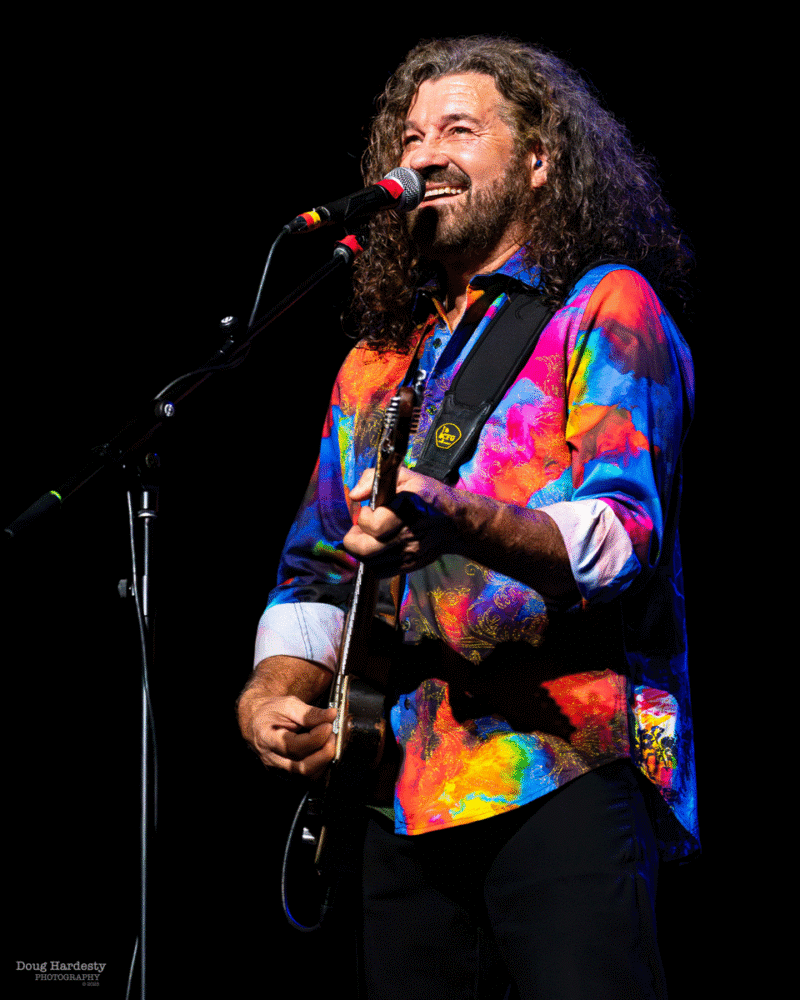
Photo by Doug Hardesty, courtesy of Tab Benoit
Tab Benoit playing in Warren, Ohio in 2025.
New Orleans is famous for jazz, funk, and rhythm and blues. Acadiana is the land of Cajun music, zydeco, and swamp pop. Baton Rouge birthed the swamp blues. Alongside those noted south Louisiana music spots, Houma in Terrebonne Parish and Thibodaux in neighboring Lafourche Parish made major contributions to the state’s musical renown.
Tab Benoit, a singer, guitarist, and songwriter from Houma, has been among Louisiana’s most recognized performers since the early 1990s. Benoit forged a road warrior reputation through the scores of scorching concerts he plays every year. He continues to play more than 200 shows annually. Benoit’s seventeen albums include his Grammy-nominated 2006 collaboration with LeRoux, Brother to the Blues, and two albums with the Louisiana super group Voice of the Wetlands All-Stars.
Benoit wasn’t the only Houma–Thibodaux talent to achieve national significance in the 1990s. Acid Bath, a seminal sludge-metal rock band formed in 1991, released two studio albums that sold a combined hundred thousand copies. After Acid Bath’s 1997 breakup, the band’s frontman Dax Riggs drew national media attention for his project Deadboy & the Elephantmen (2000-2007), particularly for the 2006 album We Are Night Sky, recorded when the band comprised a duo with Riggs and New Orleans native Tess Brunet. The reunited Acid Bath returned to the national spotlight in 2025.
Two original members of LeRoux—the Louisiana band that placed three songs in Billboard’s Hot 100 pop singles chart in the early 1980s—also have roots in Terrebonne and Lafourche. Houma’s Rod Roddy played keyboards for LeRoux. Tony Haselden, a longtime Thibodaux resident, wrote and sang LeRoux’s biggest hit, “Nobody Said It Was Easy,” which reached number eighteen on Billboard’s Hot 100 in 1982. Haselden later became a successful songwriter in Nashville, composing hits for George Strait, Collin Raye, Shenandoah and Keith Whitley and songs recorded by Shania Twain, Reba McEntire, and Martina McBride.
Houma-born trombonist Tony Dorsey joined Paul McCartney’s 1970s post-Beatles band, Wings. His important early work with the group included co-arranging seven songs for Wings’ made-in-New Orleans 1975 album, Venus and Mars. Dorsey later cited his dream job with McCartney as validation for dropping out of the music education program at Southern University in Baton Rouge. He could earn more money, he reasoned, “selling pencils” than teaching music. “The job with Wings was proof that I had made a good choice,” he says in the 2014 Venus and Mars deluxe box set notes.
Dorsey toured with McCartney and Wings throughout the second half of the 1970s. He also brought Thibodaux native Thaddeus Richard to the Wings horn section. Richard credited Dorsey with smoothing his entry into years of touring with McCartney. “He (Dorsey) took me by the hand and led me,” Richard told Houmatoday.com in 2014. Richard’s soprano saxophone solo for McCartney’s 1975 hit “Listen to What the Man Said” is a highlight in the Wings concert film Rockshow. In 2022, nearly fifty years later, McCartney filmed a birthday greeting for Richard’s seventy-third birthday celebration in Thibodaux, at the Thibodaux Regional Wellness Center. “Hey, Thad,” he sang. “You’re quite a lad. You know we love ya. No one above ya.” Everyone, Richard told the attendees at his party, asks about his work with McCartney and Wings. “For a twenty-five-year-old boy from Thibodaux, you’ve got to be joking,” he said. “It was heaven.”
In the early 1950s, Houma-born brothers Hayward “Chuck” Carbo and Leonard “Chick” Carbo formed the nucleus of New Orleans’s top rhythm-and-blues vocal group, the Spiders. In 1953, the Carbo brothers, along with their bandmates in the Delta Southernaires, applied their skillful gospel harmonizing to risqué R&B. With the shift to secular music, the group was renamed the Spiders, and their Imperial Records debut, “I Didn’t Want to Do It,” backed with “You’re the One,” reached number 3 and number 8 respectively on Billboard’s R&B chart. In 1954 and ’55, the Spiders placed three more songs—“I’m Slippin’ In,” “21,” and “Witchcraft”—in the R&B Top 10.
Friction between Hayward and Leonard Carbo and other members of the group sealed the Spiders’ breakup by 1958. “They had a terrible time functioning as a group, and it was their undoing, really,” New Orleans studio owner and engineer Cosimo Matassa says in Rick Coleman’s liner notes for the Spiders compilation The Imperial Sessions. But during the Spiders’ brief heyday, Coleman adds, the group was a treat to see and hear: “On stage, all their problems disappeared. They danced nifty steps in their matching suits to the pounding rhythms of their hits, or cooly wrapped their listeners in a blanket of airtight harmonies.”
The past seventy-five years of creativity by Terrebonne and Lafourche Parish singers, songwriters, instrumentalists, arrangers, and bandleaders show the global impact of artists from our smaller Louisiana communities.
In the early 1950s, Thibodaux-born trumpeter and songwriter Renald Richard, father of Thaddeus Richard, performed with his cousins Ray and Plas Johnson and blues stars Guitar Slim and Ivory Joe Hunter. In 1954, Richard became Ray Charles’s bandleader and co-writer of the soul music pioneer’s chart-topping first hit, “I Got a Woman.”
Two cousins from Cut Off—swamp-pop singer-guitarist Joe Barry and Cajun-country singer-guitarist Vin Bruce—played the weekend dance circuit along Bayou Lafourche in the 1950s and ’60s and also released national hits. Bruce’s hit debut, 1951’s “Dans La Louisianne,” launched a five-year run with Columbia Records. The label dropped him in 1956 following the rise of rock and roll, but he resumed recording in 1961 and became a beloved regional performer.
Barry’s heartbreak ballad, “I’m a Fool to Care,” released by the Chicago-based Smash Records, reached number 24 on the Billboard Hot 100 in 1961. His studio performance of the song sounds uncannily like New Orleans music star Fats Domino, in part because the song was recorded at Cosimo Recording Studio in New Orleans, the studio where Domino recorded.
Drug abuse hindered Barry’s career, but he later recorded for other labels, including Houma Records. From 1966 to 1974, the Houma label—founded by producer Anthony “Rod” Rodrigue Sr. and recording engineer Eldridge Robichaux—released swamp pop, Cajun, country, blues, and soul music by many Terrebonne and Lafourche musicians. The first Houma label collection, Houma Records: Volume 1, appeared in 2024.
Millard Leon West, aka Willie West, a singer from Raceland in Lafourche Parish, recorded with New Orleans producer and songwriter Allen Toussaint in the 1960s and early ’70s. In the same era, the renowned Toussaint produced and/or composed recordings for Joseph Maryland, the Houma native and deep soul singer professionally known as Diamond Joe. All of Maryland’s recordings appeared on the New Orleans labels Minit, Sansu, and Deesu.
The previously mentioned Tony Dorsey and Thaddeus Richard as well as Houma multi-instrumentalist Webster Smith and Raceland guitarist Lee “Leroy” Hadley Sr. are among the Terrebonne and Lafourche musicians who played with bands that backed such 1960s and ’70s soul stars as Joe Tex, Percy Sledge, Clarence Carter, Joe Simon, Johnnie Taylor, Otis Redding, Al Green, and Candi Staton.
The state’s major cities are renowned for being rich in culture, a source of world-changing art. The past seventy-five years of creativity by Terrebonne and Lafourche Parish singers, songwriters, instrumentalists, arrangers, and bandleaders show the global impact of artists from our smaller Louisiana communities.
John Wirt is the author of the New Orleans music biography Huey “Piano” Smith and the Rocking Pneumonia Blues. He’s also written thousands of music and film features and reviews for newspapers and magazines.