Magazine
In Pursuit of Persimmons
Lush, honeyed sweetness rewards those who learn to wait for this fruit
Published: June 1, 2026
Last Updated: September 1, 2026
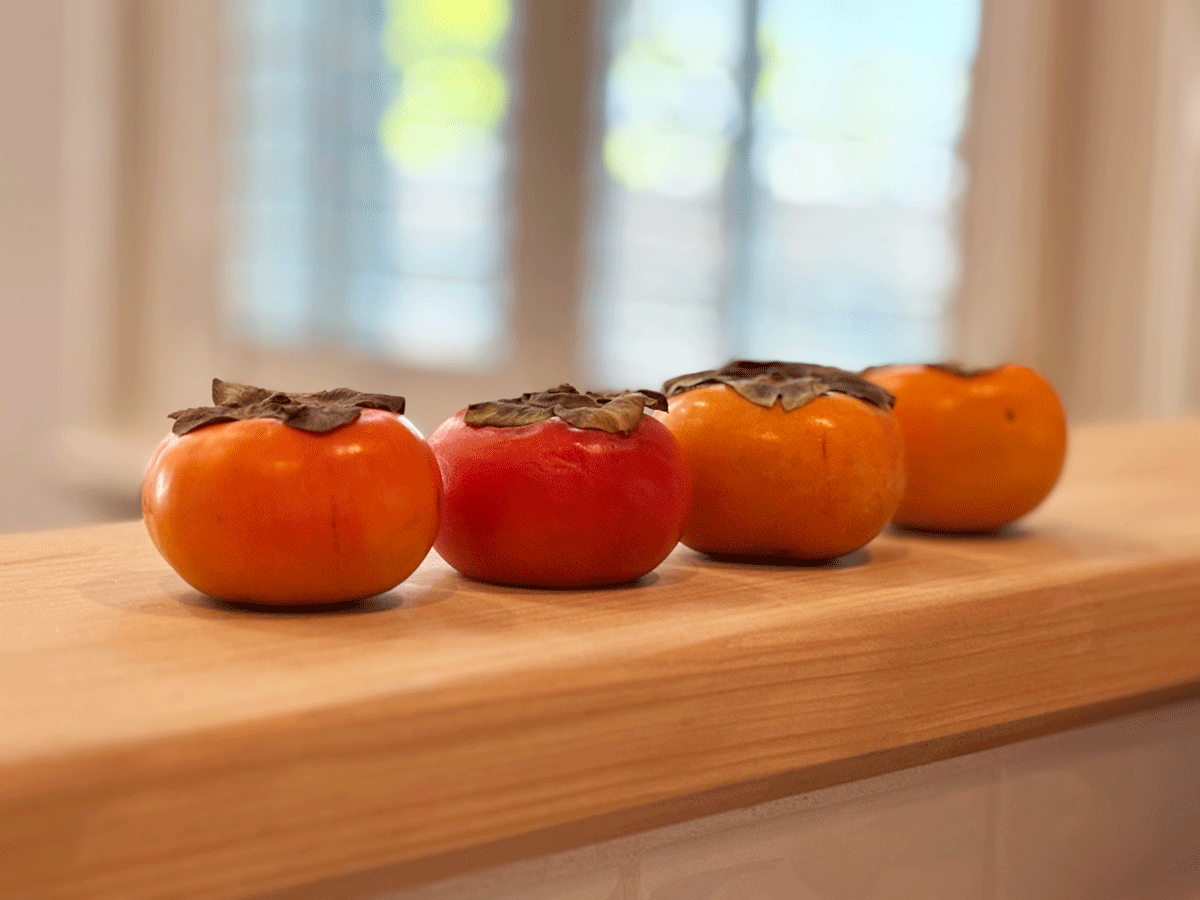
Photo by Kerri Westenberg
Persimmons, a fruit with a subtly sweet flavor described as “honey with a tang,” approach ripening throughout Louisiana’s summers, with their season arriving each fall.
For lucky Louisianans with persimmon trees nearby, each autumn the fruit drops at their feet—bright orange and ready to eat, a weighty invitation to indulge.
The berry swells as sunlight, moisture, and heat—the defining components of Louisiana summers—concentrate in its flesh. At peak ripeness, its interior gone soft with sugars, the berry becomes too heavy for its branch. The stem snaps, the fruit plops to the ground, and some lucky creature finds a delectable snack.
Last fall, that was me—again and again. As a relative newcomer to Louisiana, I set out to know this Southern treat that grows across the region but hadn’t yet crossed my lips.
The subtle flavor of a ripe persimmon defies description. Honey without the tang; a gentler version of a nectar snowball; whipped cream touched with citrus, mango, and vanilla: All hint at its distinctive sweetness, but none quite capture it. You really just have to taste this beauty yourself.
I was so happy when I finally did. My persimmon pursuit began after I read about this “deliciously sweet” fruit’s brief season in Melissa Martin’s Bayou cookbook. By late September, I ordered any restaurant dish that showcased it. I dashed to farmers markets before the small harvests sold out, then lined my counter with yellow specimens, eyeing them for the orange hue that signals ripeness. I spoke with horticulturists. Would anyone in my house mind if I made persimmon bread instead of my family’s favorite banana bread? I didn’t ask.
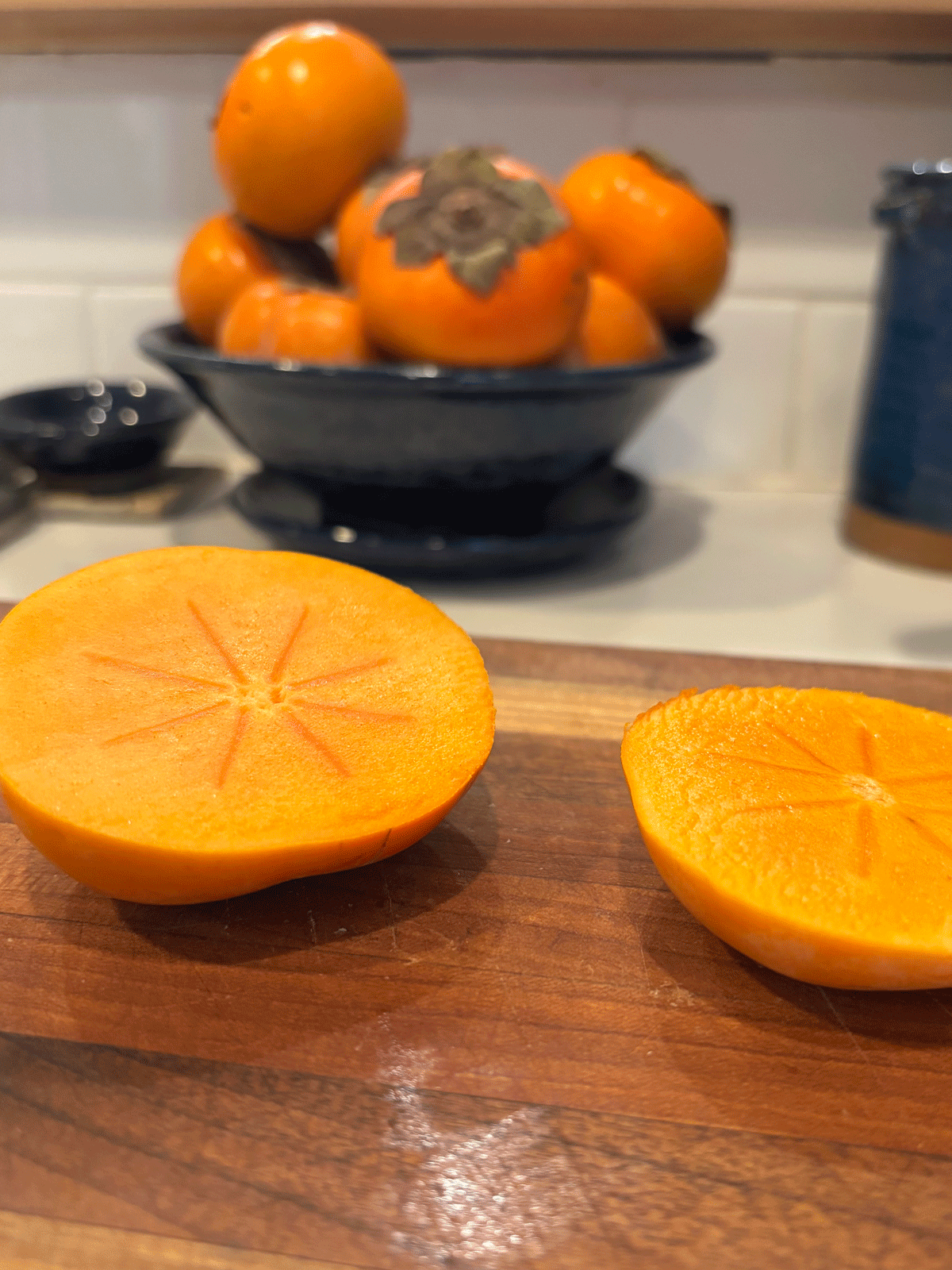
Photo by Kerri Westenberg
By season’s end, I understood a few essential truths. Given that ineffable flavor, persimmons deserve more attention and affection than they get. Still, their finest gift isn’t taste. Beneath the tough skin lies a lesson, the kind that comes from the land but I had forgotten with the get-anything-anytime ease of the grocery store: truly good local produce requires attention and time. To cherish persimmons is to practice patience.
Their season arrives late and leaves quickly, running from autumn through early winter. The fruit itself can punish anyone who bites in too soon with a puckering tartness. “It’ll make your mouth grow hair,” one friend warned.
Unripe persimmons can be so loaded with tannins that they suck the moisture from your mouth. The mistake, once made, could repel any attempt at a do-over. That risk, plus the short season, may explain why persimmons remain woefully overlooked.
They also demand more study than fruits you can mindlessly pop into your mouth. Louisiana hosts three types. Native persimmons are small, seed-filled, and sweetened only after the first frost. Non-astringent varieties, often called Fuyu, contain far less tannin and can be eaten firm, though they improve with a little softness; their structure makes them ideal for salads. Then there are the astringent Hachiya types—the pucker-makers—which become extraordinary only when fully ripe, their insides nearly jelly. Both Fuyu and Hachiya were introduced from Asia because they produce larger berries with fewer seeds, making them easier to eat and use in recipes.
Beneath the tough skin lies a lesson, the kind that comes from the land but I had forgotten with the get-anything-anytime ease of the grocery store: truly good local produce requires attention and time. To cherish persimmons is to practice patience.
I first dipped my spoon into a Saijo persimmon (a Hachiya variety), plum-sized, oblong, and dripping with so much goodness that I wanted to know more.
Martin’s cookbook notes that Plaquemines Parish was named for the fruit, derived from the Native American word for the fruit, piakimin. Persimmon trees, once so abundant that they defined the place for the French, are dwindling there, the victims of hurricanes. I worried that I’d found a treasure just as it was fading.
At Louisiana State University’s Hill Farm research station, horticulturist Ed Bush reassured me. Coastal trees have suffered, he said, but persimmons thrive across the state. In fact, native trees are so well adapted to Louisiana’s extremes—damaging hurricanes excepted—that growers graft Asian varieties onto native rootstock to make them stronger.
As he spoke, Bush led me to a tall tree. Its bare branches held a few bright fruits high overhead. Using a long pole, he knocked one down and handed it to me.
The LSU persimmon joined my growing stash, which I tested in a range of recipes. Quick breads and muffins, I found, masked the delicate flavor with an abundance of nutmeg and clove. A persimmon curd, adapted from a lemon curd recipe, let the fruit shine; I spread it on scones and highlighted it on a tart. The true standout, though, was a custard-like persimmon pie scented with vanilla and cinnamon—just enough to lift the fruit’s natural warmth without overpowering it.
The recipe’s success shouldn’t have surprised me. It came from my brother-in-law, Duane Darcey, passed down from his grandmother, Rose Kempf of Marrero. She understood persimmons because she had been among the fortunate. A backyard tree had showered her with fruit year after year.
Kerri Westenberg, a New Orleans writer, has been an editor at numerous magazines, including National Geographic, Bon Appetit, and Cooking Light. She wrote the award-winning article “Warning: This Article May be Banned” for 64 Parishes.
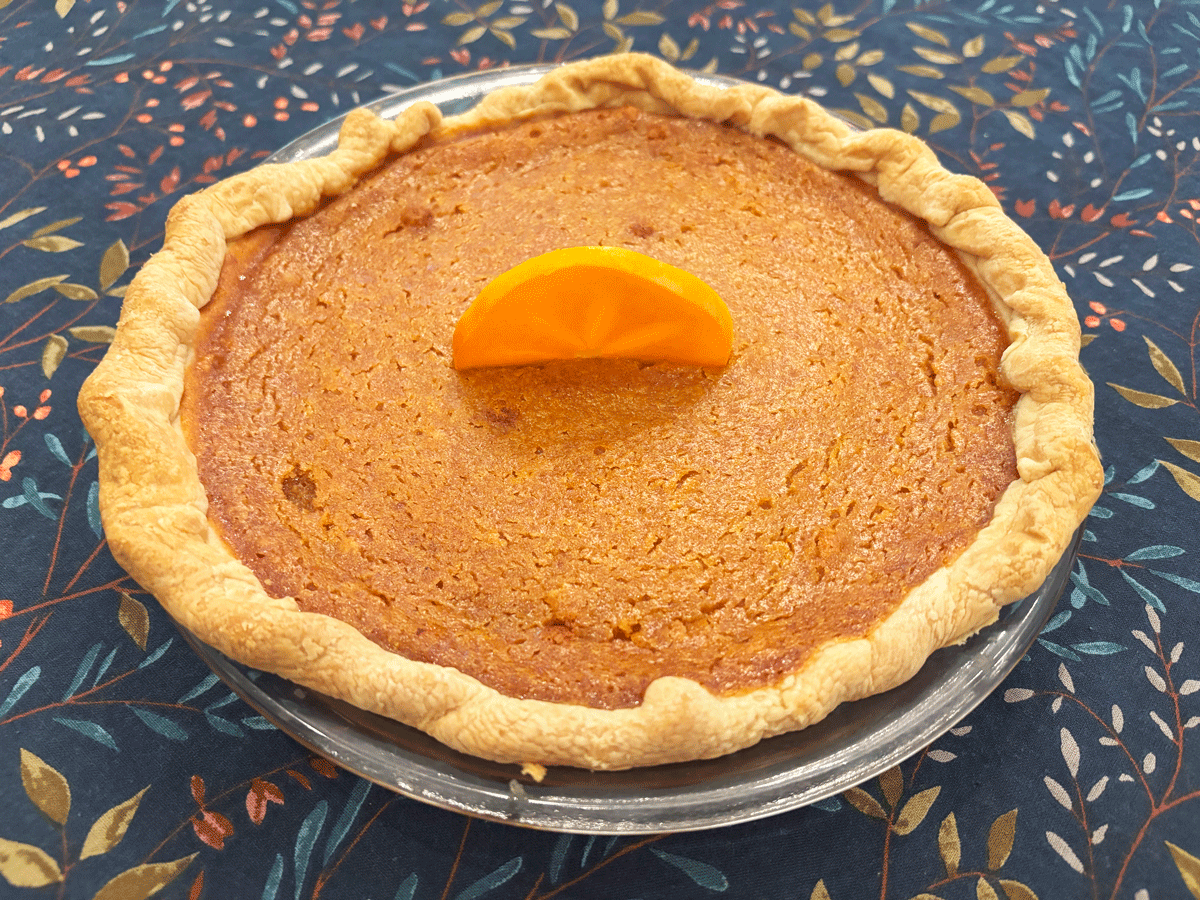
Rose Kempf’s Persimmon Pie
1 cup all-purpose flour
3/4 cup sugar
1/2 teaspoon baking powder
1/4 teaspoon salt
1/4 teaspoon ground cinnamon
Dash ground nutmeg
1 cup persimmon pulp (from about 3 persimmons)
1/3 cup milk
1 egg, beaten
1 teaspoon vanilla extract
1 unbaked 9-inch pie crust
Warm oven to 350 degrees. Line pie plate with crust.
Combine dry ingredients, mix well. Stir in persimmon pulp, milk, egg, and vanilla. Pour into the pastry shell and bake in a 350-degree oven for 30 to 35 minutes or until a knife inserted in the center comes out clean.