Winter 2025
More Than a Game
Coach Wilbert Ellis and the legacy of Grambling State University baseball
Published: December 1, 2025
Last Updated: March 1, 2026
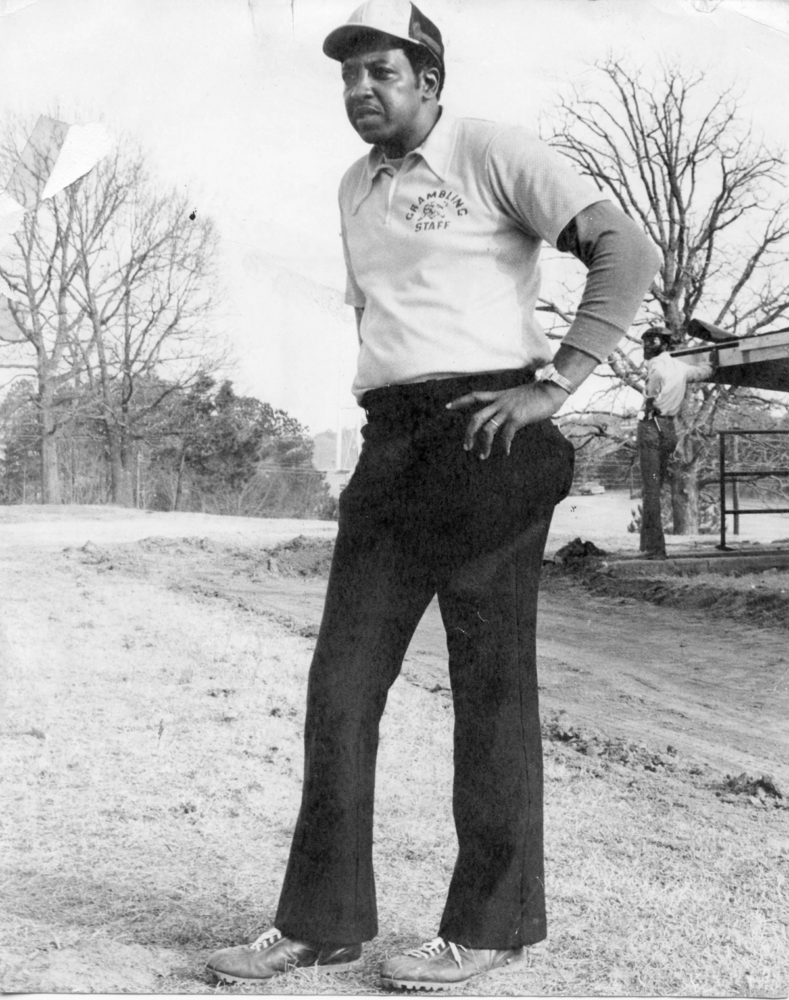
Courtesy of Grambling State University
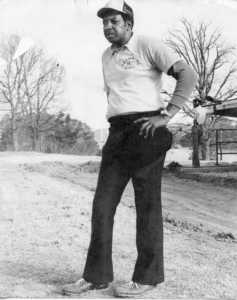
Coach Wilbert Ellis
At the age of nine, Wilbert Ellis found his vocation. Whereas some children dream of playing sports, Ellis decided on a different career path: coaching. From organizing and running games with a hundred fellow kids as a youth, he would go on to serve as the second head coach of the Grambling State University baseball team from 1978–2003. Over the course of twenty-six seasons, he amassed a 745-462-1 record, led his team to three Southwestern Athletic Conference (SWAC) championships, and sent nearly fifty players to sign with Major League Baseball teams. The myriad awards and accolades for this seven-time SWAC Coach of the Year include induction into the American Baseball Coaches Association Hall of Fame (2007), the SWAC Hall of Fame (2011), the Grambling Legends Hall of Fame (2012), the Louisiana Justice Hall of Fame (2022), the Louisiana Sports Hall of Fame (2024), and the National College Baseball Hall of Fame (2024). Those who know Coach Ellis would note that what undergirds this greatness is a humility and focus on the fundamentals. As Coach Ellis mused when asked about his career, “I have never thought so much about Wilbert Ellis as I do about other people.”
Ellis arrived at Grambling State University, then Grambling College, much like many individuals do today: as a student. Born in Chatham, Louisiana to Houston and Mattie Ellis, he was raised in the nearby city of Ruston. Throughout his childhood and adolescence, he heard about what was going on at Grambling, the predominantly Black university and town, and he was educated by teachers who got their degrees from Grambling. But it was a formative field trip led by Doris Robinson, English teacher and wife of Grambling’s football coach Eddie Robinson, that cemented his desire to attend. After meeting Eddie Robinson, President Ralph Waldo Emerson Jones (known as Prez Jones), and others on campus, Ellis decided that when he finished high school he needed to “get to Grambling.”
In a period where Division I powerhouses were recruiting African American players away from historically Black colleges and universities like never before, Ellis put forward formidable winning teams that drew attention from national baseball circles.
Ellis played baseball at Grambling; though he says he was an average player, his passion for coaching was evident. It was especially so to Prez Jones, who in addition to being the university president was also the university’s first baseball coach. He offered Ellis a position as assistant baseball coach upon his graduation in 1959. For the next seventeen seasons, Ellis aided Prez Jones in teaching the fundamentals of baseball and life to the players. He meticulously attended coaching seminars and workshops to stay immersed and at the forefront of the game, always selecting to sit at the front of the room with notebook in hand. He also helped the team negotiate the Jim Crow South as they traveled to and from ballparks. Ellis remembers having the dining hall “fix food for us . . . our lunches, milk, juice, and stuff like that so we would have it on the bus” alleviating the team’s need to search for safe places to buy food on the road. He also recalls a fateful stop on the way to Prairie View, Texas, where he had to get off the bus to speak to a police officer that had pulled them over. Fortunately, “everybody knew Eddie Robinson and Ralph Jones wherever you would go,” Ellis remarked, “and we were able to move on.”
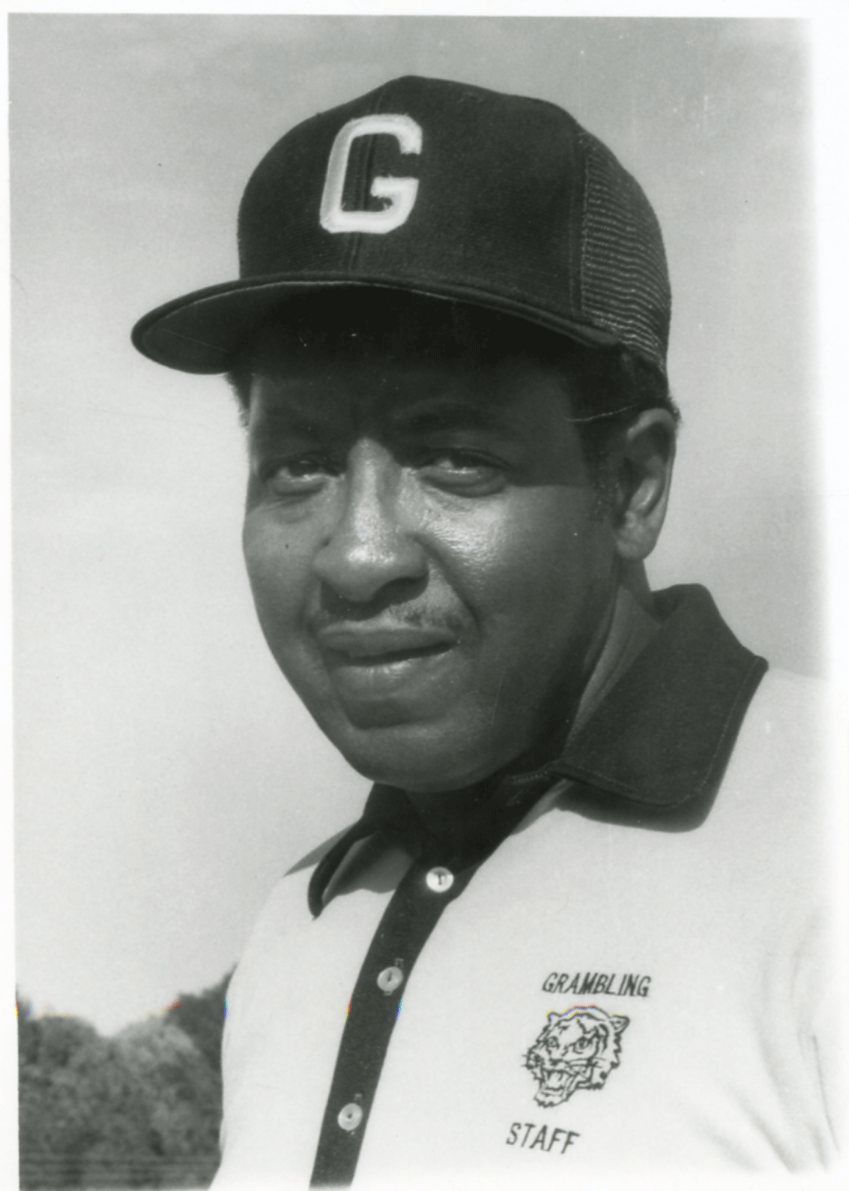
Courtesy of Grambling State University
Ellis was so dedicated to his job that during the search for Grambling’s second head baseball coach, he was on the recruiting trail to find “whoever got the job some players.” He was at an information tent at the Texas state fair when Roy Jackson, Executive Director of Grambling State University Foundation and Alumni Affairs, asked him if he’d seen the newspaper. Puzzled and concerned, Ellis replied no and asked if something had happened or someone was hurt. This is how Ellis learned of the headline announcing Wilbert Ellis as the new head coach at Grambling State University.
In 1978, Coach Ellis became the third member of the legendary Grambling triumvirate of coaches, joining the ranks of Eddie Robinson (football) and Fred Hobdy (basketball). Remarking on their interactions, Ellis noted that it was “the greatest thrill of my life to be with those men.” The big three of Ellis, Hobdy, and Robinson could be found socializing, eating, but more often than not working together to “do everything we can to make Grambling greater.” As players like Matt Alexander, Gary Eave, Ralph Garr, and Gerald Williams were drafted to the major league, Ellis would make sure that they would come back to develop the next generation of Grambling athletes. For Eave, it was instilled in the team’s ethos to come back, as “Coach said to always be ready to give back what has been given to you.”
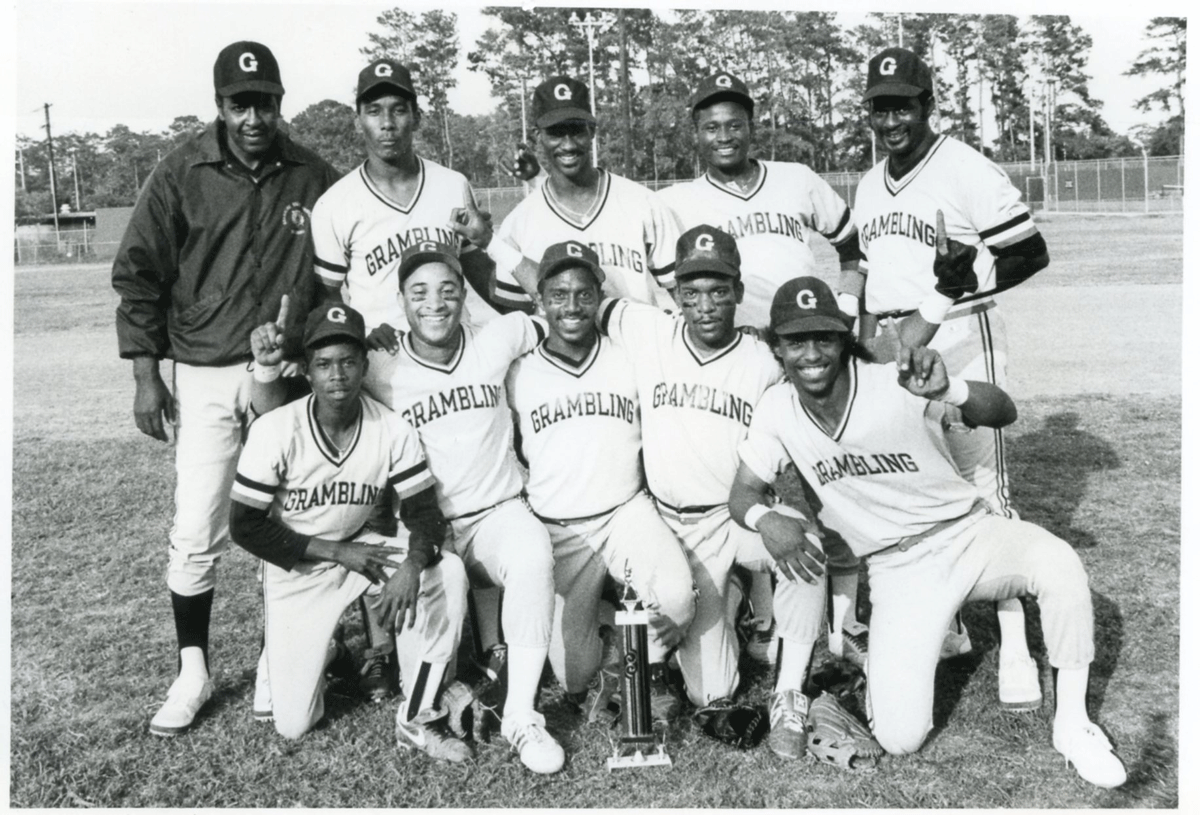
Courtesy of Grambling State University
Such a model of player involvement was essential for Ellis to make sure there was a framework in place to “get Blacks into baseball” and to ensure the work of sports integration did not become a memory of the past. Like his mentor Prez Jones, Ellis would infuse life lessons into his coaching, not only drilling fundamentals with the player but also developing the person. At the start of each season, he would quote Martin Luther King Jr.—“the time is always right”—drawing further Biblical inspiration from Ecclesiastes that this was the players’ time not only to win championships but to become great students and great men. In a period where Division I powerhouses were recruiting African American players away from historically Black colleges and universities like never before, Ellis put forward formidable winning teams that drew attention from national baseball circles. In the 1985 College World Series regionals—their third straight appearance at this level—Grambling State University competed in two close games with the University of Texas and the University of Oklahoma, both losses, but no doubt putting these well-resourced institutions and their fanbases on notice.
To speak of Coach Wilbert Ellis is to speak of Grambling baseball, Grambling State University, and the city of Grambling, as his story is interwoven into their fabric.
This winning spirit also resulted in a remarkable relationship with the New York Yankees. Early in the 1970s, Eddie Robinson convinced George Steinbrenner, owner of the Yankees, to support the Whitney M. Young Jr. Memorial Football Classic not only through a financial contribution but also by hosting the contest between Grambling State University and Morgan State University at Yankee Stadium. Impressed both by Grambling’s victorious football team and also what he learned about their baseball team, Steinbrenner forged a friendship with Robinson, Ellis, and Grambling State University. As a result of this relationship, Steinbrenner brought the New York Yankees to Grambling on three occasions (1978, 1989, and 1997) to play exhibition games. Two of those games (1978 and 1997) came on the heels of the Yankees winning the World Series, and the teams were replete with superstars such as Reggie Jackson, Don Mattingly, Darryl Strawberry, and Derek Jeter.
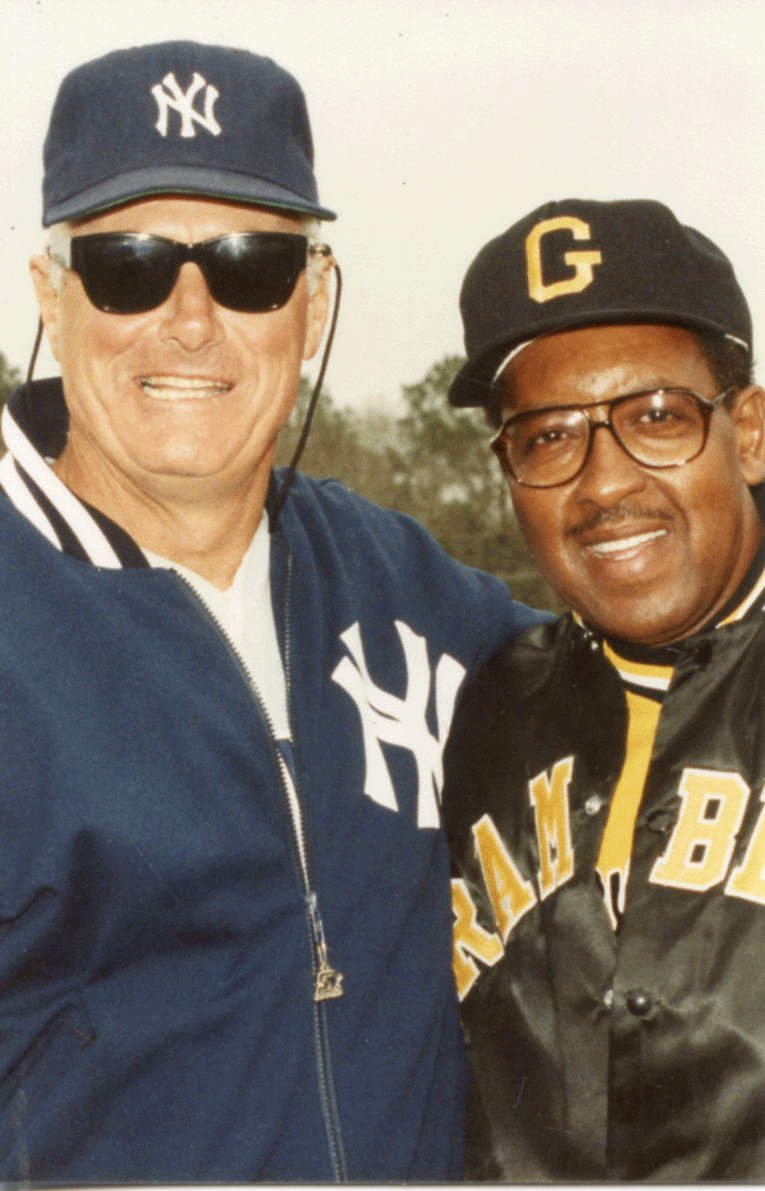
Coach Ellis with New York Yankees Manager Bucky Dent. Courtesy of Grambling State University
The resulting crowds were treated each time to a show of great playing by both teams; although the Yankees won, the news package for the 1989 game shows all-star Steve Sax being struck out by Grambling pitcher Gregory Rideau. The final event in 1997 also served as a fundraiser to build the baseball stadium that is today named after Prez Jones, with the field named after Coach Ellis. Prior to the stadium’s construction, the University did not have adequate facilities nor enough bleachers to support the crowds that would come to watch the exhibition games. Ellis would call area high schools and borrow enough stands to line the whole field. Even this proved insufficient; he recalls people were scrambling up trees to get a better view. There was also another problem: so many area students wanted to attend that superintendents and principals called asking what to do about their school day attendance. Ever the promoters of the University, Robinson and Ellis informed them that they were to turn it into an experiential learning event, school was to be cancelled, but the students had to report on the game.
His 2003 retirement from the position of head baseball coach did not mean that Coach Ellis slowed down—he just became available for new opportunities. At a coaching convention in the early 2000s, Ellis approached Dennis Poppe, Director of Championships for Division I Baseball and the College World Series, to ask about ways he could stay involved with the game following retirement. Poppe then charged him with being a regional director for the College World Series. He was situated at Stanford University for his first assignment; after a glowing report from the Stanford support team, he was asked to stay on and direct the super regionals. At the national level, Ellis hosted a clinic in Omaha during the College World Series, teaching kids the fundamentals of baseball.
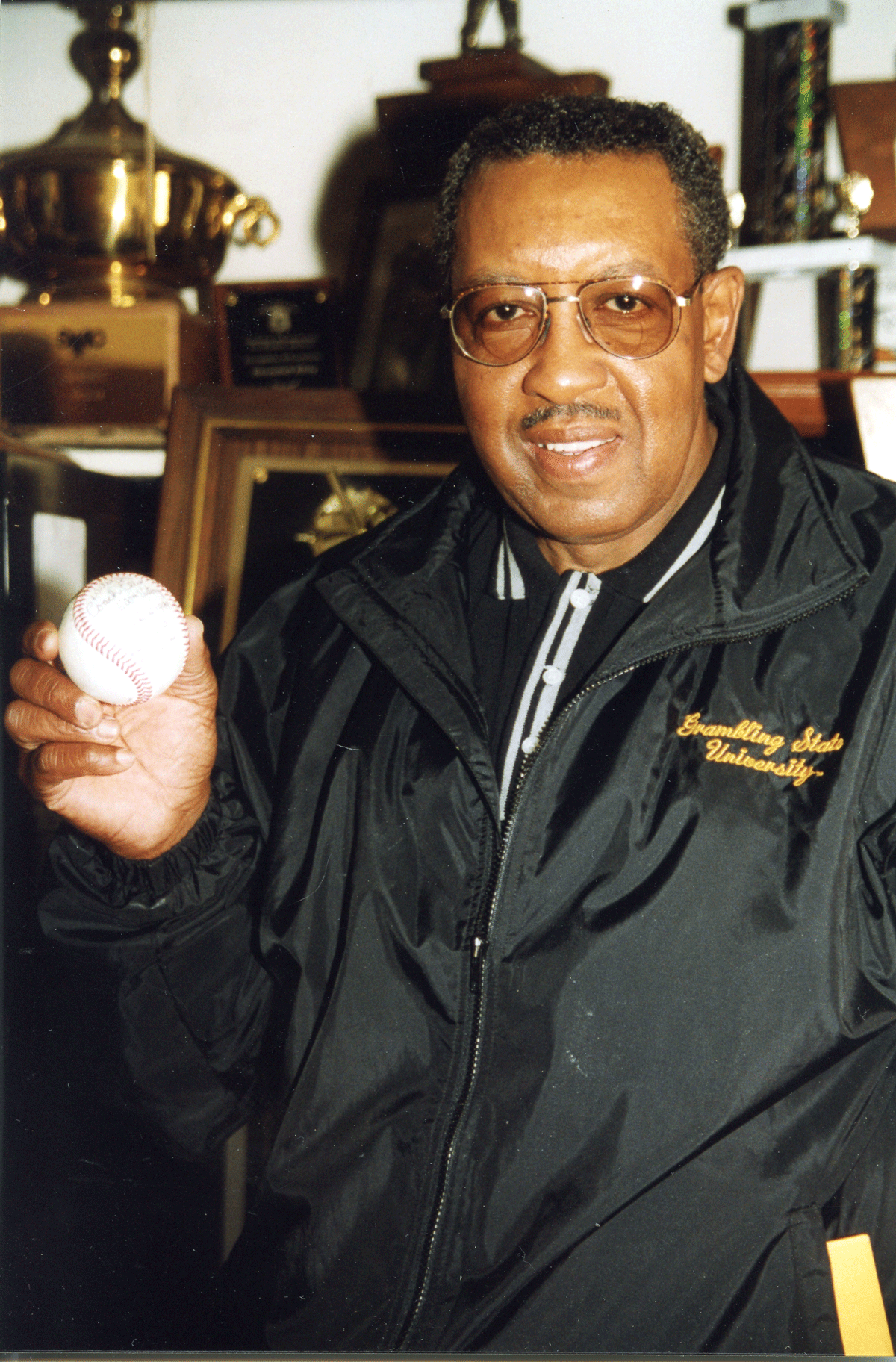
Coach Wilbert Ellis. Courtesy of Grambling State University
He also conducts baseball instruction close to home, with 2025 marking the fifteenth annual Wilbert Ellis Baseball Camp, a free baseball clinic in Ruston that not only educates youth about baseball but also engages the whole family through various enrichment seminars with law enforcement, pastors, mental health advisors, financial planners, and more. And to this day, Ellis can be seen around the stadium supporting the Grambling team. In a recent interview for the MLB Network, Roy Wood Jr. asked Ellis about his approach to retirement: Doesn’t retirement mean you get to stay at home? Ellis responded that Grambling baseball is his home.
The theme of community betterment continues to resonate in Ellis’s involvement with numerous community boards. He’s active as a deacon for Zion Traveler Baptist Church in Ruston and serves as a member in Kappa Alpha Psi Fraternity, Incorporated. This commitment to the community has resulted in several humanitarian awards from the Ruston–Lincoln Chamber of Commerce, as well as recognition from the Louisiana State Legislature, the local NAACP chapter, and the Louisiana Justice Hall of Fame.

Coach Wilbert Ellis. Courtesy of Grambling State University
Finally, Ellis works tirelessly to support the legacy of Grambling through his role as the chairman of the Friends of the Eddie Robinson Museum. Pivotal to the foundation of the Eddie Robinson Museum enterprise was Ellis’s work to get funding. He recalls a meeting with the Lindsey Foundation, facilitated by former Grambling football star Willie Davis. At the conclusion of Ellis’s presentation to the chairman of the board, the chairman pledged two hundred thousand dollars to the museum and invited Ellis back for a second meeting with the whole board. This presentation garnered another hundred thousand dollars, and Ellis was able to return home knowing that the museum was on its way to its 2010 opening on Grambling’s campus. Today he can often be found providing tours and meeting with visitors at the museum or working from his office among the administrative staff in the museum basement.
Former player Gary Eave sums up the legacy of Wilbert Ellis as a “remarkable man who has been true to himself, to the call of athletics and coaching, as well as a faithful man in his walk.” Ellis’s 2024 induction into the Louisiana Sports Hall of Fame was accompanied by the honor of being only the second recipient of the Louisiana Sports Ambassador Award, which recognizes exemplary and long-term contributions to the Louisiana sports landscape. To speak of Coach Wilbert Ellis is to speak of Grambling baseball, Grambling State University, and the city of Grambling, as his story is interwoven into their fabric. Just ask Coach Ellis about it and he will tell you: “Hell baby . . . we Grambling!”
Dr. Edward L. Holt is the Department Head of History at Grambling State University, where he is an associate professor and holds the Benjamin A. Quarles Endowed Professorship. He is the principal investigator for the Voices of Grambling initiative, which records and interprets the African American experience in northern Louisiana.
A more extensive interview with Wilbert Ellis can be found on the Voices of Grambling project page (Season 2, Ep. 2,voicesofgrambling.uark.edu/oral-histories) or wherever podcasts are streamed.