Magazine
A New Beginning on the Land
Black farmers & the Louisiana Delta Project
Published: June 1, 2026
Last Updated: September 1, 2026
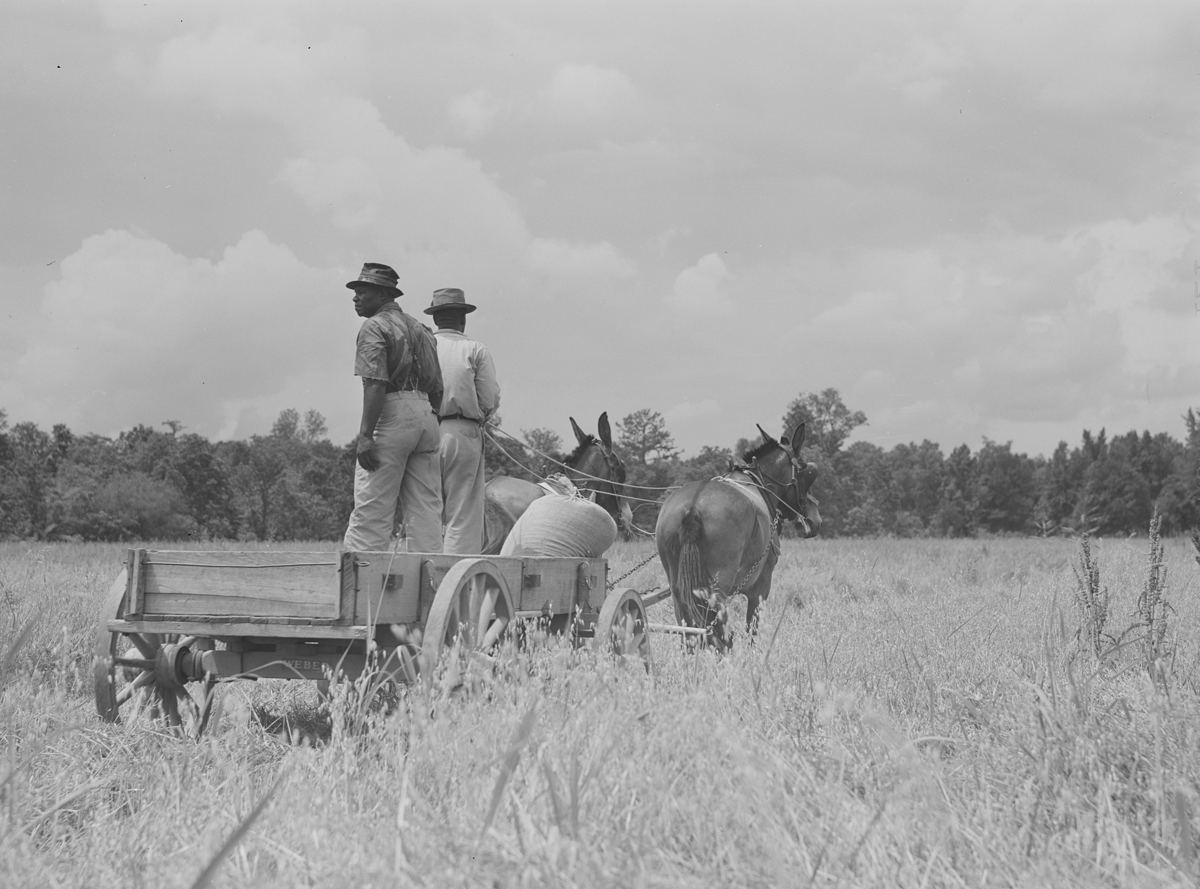
Photo by Marion Post Wolcott, Library of Congress Prints and Photographs Division
Farmers on a wagon gather recently threshed oats. Thomastown, Louisiana, June of 1940.
In the late 1930s, as the nation tentatively recovered from the lingering economic malaise of the Great Depression, the federal government began a land ownership and community development program for Black tenant farmers in the cotton plantation country of northeast Louisiana. Known as the Louisiana Delta Project and centered around several cooperative-type settlements in Madison and East Carroll Parishes, this comprehensive effort undertaken by the New Deal–era Farm Security Administration (FSA) provided long-term, low-interest farm purchase loans to qualified individuals and, to ensure the farmers’ success, incorporated close guidance from professionals trained in the latest scientific farming techniques and home economics principles. Access to improved medical and educational facilities rounded out the Louisiana Delta Project’s appeal to participants. Within a few short years, the farmers and their families proved the program a great success. Even though the FSA itself would be shuttered as the United States mobilized for the Second World War, the communities it established in the Delta continued to provide a base of economic and social stability for their residents in the coming decades of change and upheaval.
Origins of the Louisiana Delta Project
Part of a vast cotton-growing region that included neighboring alluvial areas in Arkansas and Mississippi, the Delta parishes of northeast Louisiana had suffered through not only the catastrophic 1927 Mississippi River flood but also the historic drought of 1930–31. Then, due to over-production, foreign competition, and economic depression, the region’s chief money crop fell to the lowest price on record, the dreaded “nickel cotton” of summer 1932. The desperate plight of the tenants and sharecroppers ensnared by these natural and man-made disasters attracted national attention, but early New Deal efforts under President Franklin Delano Roosevelt (FDR) primarily aided the Delta’s large landowners and planters. Even the limited relief that did filter down to the laboring masses often functioned to prop up the plantation regime, with employers frequently discharging their workers to the government dole for the winter season after they’d brought in the cotton harvest.
Responding to critics from the political Left that he had not done enough to reach this marginalized farm population, FDR created the Resettlement Administration (RA) during the so-called “Second New Deal” of the mid-1930s, with the goal of moving at least some of these people into collectivist-style rural communities planned and supervised by the federal government. He later merged this agency into the newly created FSA in 1937. As part of its charge to integrate the destitute sharecroppers and their families into modern American life, the FSA eventually established several resettlement communities in the deep cotton country of the lower Mississippi Valley. One of these was at Transylvania in East Carroll Parish, a sprawling ten-thousand-acre property composed of several adjoining plantations formerly owned by the Memphis land syndicate of Abston, Crump, and Wynne. An oddly-named place to be sure, Transylvania had been “opened” by early antebellum settlers coming down from Kentucky who presumably christened it after Transylvania University in Lexington, the oldest institute of higher learning in the Bluegrass State. Before resettlement, the property housed a vibrant Black community of over 250 families who had lived on the land since at least Reconstruction, with some no doubt tracing their roots there back to slavery times.
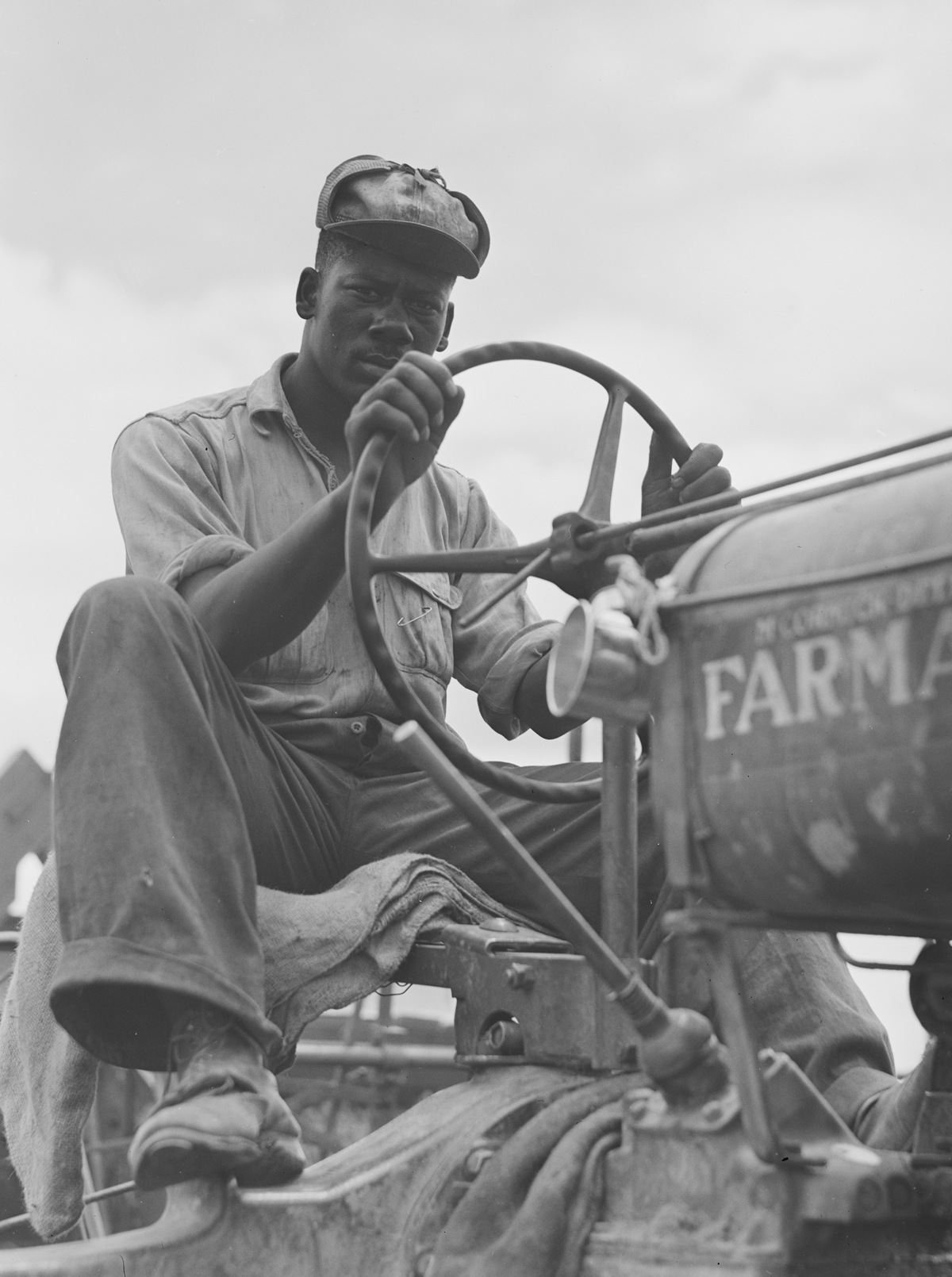
A tractor driver threshes oats on the LA Delta Project. Photo by Marion Post Wolcott, Library of Congress Prints and Photographs Division
Removal from Transylvania
Due to his reliance on white southern politicians for much of his legislative program in Congress, FDR was forced to accept Jim Crow segregation almost without question. This meant that many of the new projects that the FSA established were whites-only, which proved to be the case with Transylvania as well. The Black families living there would have to be removed before the white farmers—most of them new to the Delta—could be resettled.
The Black community at Transylvania did not go without a fight. Indeed, the proposed removal served as a catalyst for a nascent political consciousness as residents took their case to the nation’s Black press and garnered support from the National Association for the Advancement of Colored People, which filed a formal protest with the Roosevelt administration on their behalf. As a compromise, the FSA quickly added plans to develop another resettlement project for the soon-to-be displaced Black farmers and their families. Out of the Transylvania removal, then, came the creation of the Louisiana Delta Project. The FSA Historical Division photographer Russell Lee captured this transition on the ground in January 1939 as the Black community departed and the new white residents arrived, often moving into the cabins previously occupied by Black tenants while awaiting construction of their FSA homes.
Churches and schools had been the first institutions established by the freedmen after the Civil War, and the desire for access to education in the Black community never waned.
Although a small compensation for their lost community life, many of the former residents of Transylvania embraced the opportunity offered by this new beginning, perhaps seeing it as a fulfillment of the mythic “forty acres and a mule” believed to have been promised to ex-slaves after the Civil War. Over seventy of the families relocated to neighboring Madison Parish, where they were spread across several thousand acres of land in three main community clusters: Mound, Thomastown, and Fortune Fork. Another seventy families were established at Henderson Loop in the southern end of East Carroll Parish, close to their old home, while a few others were settled at the Lakeview and Blue Front projects nearer to Lake Providence.
Moving In
When signing up for the Louisiana Delta Project, potential participants underwent a vigorous screening process to best guarantee the government a return on its investment. The FSA wanted success stories, not failures, with the farm supervisors looking for mature farmers (ranging from their early twenties to forties in age) who had solid experience and good recommendations from previous employers. Married men with young children received the highest priority. After being approved, these FSA “clients,” as they were called, then occupied their new farmsteads.
Each farmstead consisted of a five-room model home, built of wood-frame construction with screened windows and doors to keep out mosquitoes, along with a barn, chicken coop, outhouse, and water well. The clients were furnished with farm tools and equipment; livestock such as cows, mules, hogs, and chickens; and home appliances, including a canner and pressure cooker for the preservation of fruits, vegetables, and meats. A typical family might purchase anywhere from sixty to one hundred acres of land under the federal loan program to go with this new farmstead, and pay anywhere from $150 to $200 a year on the whole property. Most paid off their thirty-year mortgages by the 1950s, well ahead of schedule.
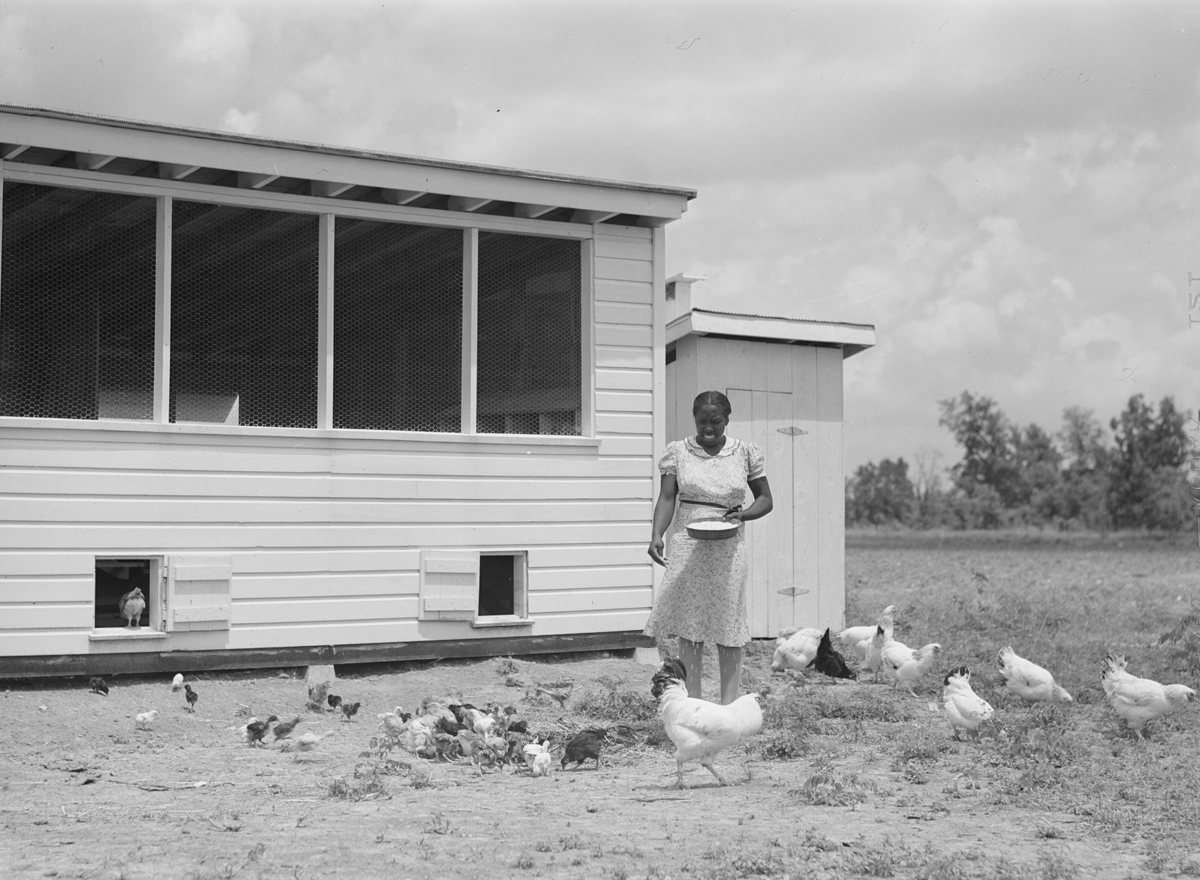
Violet Davenport with her chickens by a new chicken house built as part of the Louisiana Delta Project. Thomastown, Louisiana, 1940. Photo by Marion Post Wolcott, Library of Congress Prints and Photographs Division
Building a Better Farm
The main goal of the FSA in working with the new clients was to instill a farm program based on the cultivation of hay, forage, and foodstuffs, with only a bare minimum of acreage devoted to cotton for “spending money.” To help build such a program, each client received personalized instruction and assistance from a Black farm manager or supervisor. These men came from farm backgrounds but also had acquired a more formal education from one of the A&M schools; they often had previous experience as well in “county agent” roles. In Madison Parish, for instance, R. J. “Fess” Lawrence, a native of south Louisiana, had received a Bachelor of Science degree in agricultural economics from Southern University in 1933 before taking on his role as a mentor to other Black farmers just beginning to adopt the principles of scientific farm management.
Lawrence and the other managers/supervisors were able to bring considerable expertise to their clients as they planned budgets, acreages, and crop rotations. They introduced the farmers to the use of tractors and fertilizers and encouraged them in the planting of crops new to the Delta such as oats, soybeans, and peanuts. The farmers made tremendous crop yields and, combined with their livestock operations, showed steady financial gains. By 1941, the annual net income of families in the Louisiana Delta Project averaged between $800 and $900, much more than the few hundred dollars a sharecropper or wage hand might expect to clear in a year’s time working on one of the region’s cotton plantations.
Strengthening Health & Home Life
Acquiring financial independence through smart farming practices joined hand-in-hand with the FSA’s emphasis on strengthening the health and home life of the resettled clients. As with the farm program, this aspect also came under the supervision of trained professionals. For instance, Alma Nettles, a graduate of Southern University’s home economics program, brought her proficiency in nutrition, food preparation and preservation, sewing and clothes-making, gardening, sanitation, and personal hygiene to the families living at Thomastown, the central locus of the Louisiana Delta Project in Madison Parish. The adult education offered by Nettles and other home supervisors helped build a more rewarding, healthy, and clean environment for the clients and their children. In addition to hands-on training in managing a household, the clients also had access to a community nurse, who was able to test and inoculate for diseases, train midwives, and help prevent or treat such common Delta maladies as malaria, tuberculosis, pellagra, and newborn blindness.
Shaping a New Community
While providing for a better farm and home, the Louisiana Delta Project also sought to create a strong community life for its clients. The establishment of quality local schools proved to be a top priority. Churches and schools had been the first institutions established by the freedmen after the Civil War, and the desire for access to education in the Black community never waned. In this case, the FSA constructed school buildings for both the East Carroll and Madison segments of the Louisiana Delta Project. The school at Henderson went through the eighth grade while the one at Thomastown included grades all the way through high school. The initial building at Thomastown included eight classrooms, a library, kitchen, office, and a large gymnasium that doubled as an auditorium for community gatherings, dances, important speakers, and the like. Teachers’ quarters were located nearby. By 1941, Thomastown enrolled 264 students in the lower grades and 24 in high school.
As part of its efforts to improve Black education in the early 1950s—albeit with the ulterior motive of attempting to stave off desegregation—the Madison Parish School Board demolished the original FSA buildings and replaced them with a modern brick structure that could accommodate over 900 students and close to 40 faculty. Among the latter were Fess Lawrence, who headed the agricultural school, and Alma Nettles, chair of the home economics department, both of whom had found second careers as educators after the FSA closed down in the early 1940s.
The Legacy of the Louisiana Delta Project
Despite the trauma of loss and relocation, most of the resettled farmers and their families responded enthusiastically to the Louisiana Delta Project. The prospect of farm ownership and economic independence proved especially appealing. Indeed, Marion Post Wolcott, another of the troop of FSA photographers who provided a stunning portrait of late 1930s America at work and play, documented the richness of this experience when she visited Thomastown in late spring 1940. Although the “small farm” as a concept and reality became increasingly outdated and economically unfeasible after the Second World War, many of the FSA clients ultimately utilized the stability that their small holdings provided to build a better life for themselves and their children, even as they took day jobs and leased their fields to larger operators.
Importantly, the school at Thomastown remained a vital part of Black community life in the eastern part of Madison Parish long after the FSA had disappeared from the scene. This was especially the case in the tumultuous years of the 1950s and 1960s; voter education and registration drives became a continuation of the political organizing prompted by the community relocation from Transylvania. Many of the children and grandchildren of client families who started their education in Thomastown later continued their schooling at colleges and universities before embarking on successful professional careers in law, medicine, teaching, and the military. Of course, like many other rural southerners, both Black and white, many eventually left their native land for greater opportunities elsewhere. Eventually, the larger trends in later twentieth-century Delta life—corporate farming, desegregation, and depopulation—took their toll, leading to the disintegration of the area’s robust community, including the permanent closure of the Thomastown school itself in the early 2000s. But for a brief period, the school and the larger Louisiana Delta Project resonated as an example of a nation committed to helping some of its most vulnerable citizens achieve a piece of the “American dream.”
Matthew Reonas’s public history experience includes stints with the Louisiana Office of State Parks, Office of Tourism, and the Louisiana State Museum as well as consultant work on a variety of museum exhibit, historic preservation, and cultural heritage projects. He works full-time on natural resources policy for the State of Louisiana in addition to maintaining teaching, research, and writing agendas. His article on a pair of honor killings in Tensas Parish, Louisiana, won the Glenn Conrad Prize from the Louisiana Historical Association for best published article on any aspect of Louisiana history from any source.