Pâté of the South
Beloved by Louisiana, pimento cheese has unexpected origins
Published: August 29, 2025
Last Updated: December 1, 2025
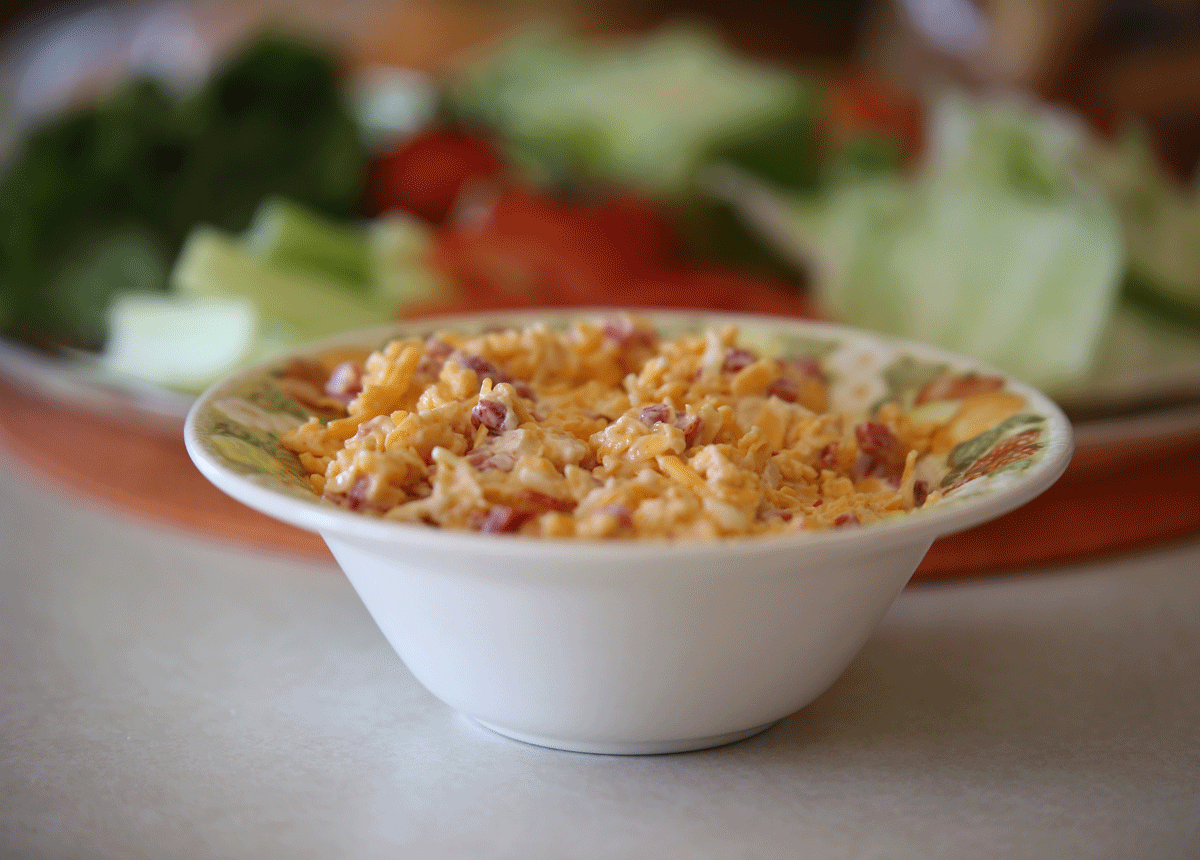
Photo by Carol VanHook via Flickr
Though the origins of pimento cheese are in the Carolinas, it is a beloved staple of Louisiana homes and restaurants, too.
You can find it almost anywhere south of the Mason–Dixon Line. It’s in small plastic tubs in the coolers in the local gas station and in glossy stainless-steel refrigerators in fancy food shops. It fills celery for vintage hors d’oeuvres, is spread on bread for a snack, and even used as a topping for burgers instead of the usual cheddar. It’s so ubiquitous that it has been dubbed the
“pâté of the South.” However, pimento cheese is in fact not Southern at all, but Northern, and an offspring of the American dietary revolution of the late nineteenth and early twentieth centuries. Pimento cheese, it seems, is the most fortuitous love child of the conjoining of home economics and an American agricultural revolution.
In my Northern childhood, I didn’t grow up with pimento cheese. However, in our household I had grown up eating cream cheese and olive sandwiches that I would discover are close country cousins of the South’s favorite spread. I’d thought of no connection until a historical juxtaposition posited by one culinary historian summoned up taste memories and made me understand my relationship to pimento cheese.
According to food historian Robert Moss, pimento cheese got its start in New York, driven by the creation of a soft cheese like French Neufchâtel in the 1870s by dairy farmers in New York state. This cheese would become the ancestor of what we now know as cream cheese. In a parallel time frame, sweet red peppers from Spain became available in the United States. Both new products quickly found favor with practitioners of the newly named domestic science—the woman-led culinary movement that advanced the notion of running a home scientifically, later and more widely known as home economics. The pimentos and the cheese were conjoined in a recipe in Good Housekeeping magazine in 1908.
Pimento cheese is firmly established in the culinary lexicon of Louisiana, with families guarding personal recipes that reflect the spread’s versatility.
In the second decade of the twentieth century, Spanish pimentos became the crop of choice in Georgia, making them cheaper and more readily available throughout the country, and perhaps leading to the connection of pimento cheese with the South. The cheese was still not the cheddar that is used in pimento cheese today. No one is sure when cheddar became the cheese of choice, but as time went on it supplanted cream cheese and the die (not to say dye) was cast. The national heyday of the cheese spread dates to the 1920–1940s, as indicated by the numerous recipes in popular publications and cookbooks.
It seems that pimento cheese is more a food of the Upper South than of the Gulf region. When I asked Lolis Eric Elie, former Times-Picayune columnist, head writer on the HBO series Treme, and culinarian if he’d eaten pimento cheese as a child, he replied that he’d not heard of it until he was a member of the Southern Foodways Alliance. The organization sponsored a culinary competition to select the best pimento cheese in 2003 that garnered over three hundred entries.
Nonetheless, pimento cheese is firmly established in the culinary lexicon of Louisiana, with families guarding personal recipes that reflect the spread’s versatility. Some ring in the changes by using different cheeses such as blue or pepper jack. Others add diced shrimp or crawfish, and still others play with spices and add Cajun seasonings, garlic powders, and more. The dish’s adaptability allows each maker to create a personalized version.
My friend, the late photographer and gourmand par excellence Pableaux Johnson, included his take on the classic southern spread in his 2007 ESPN GameDay Gourmet cookbook.

Jessica B. Harris is the author, editor, or translator of eighteen books, including twelve cookbooks documenting the foodways of the African Diaspora. In March 2020, she became a James Beard Lifetime Achievement awardee.