A Reminder of Our Shared Humanity
HNOC’s Captive State is the Bright Lights Exhibition of the Year
Published: June 1, 2026
Last Updated: September 1, 2026
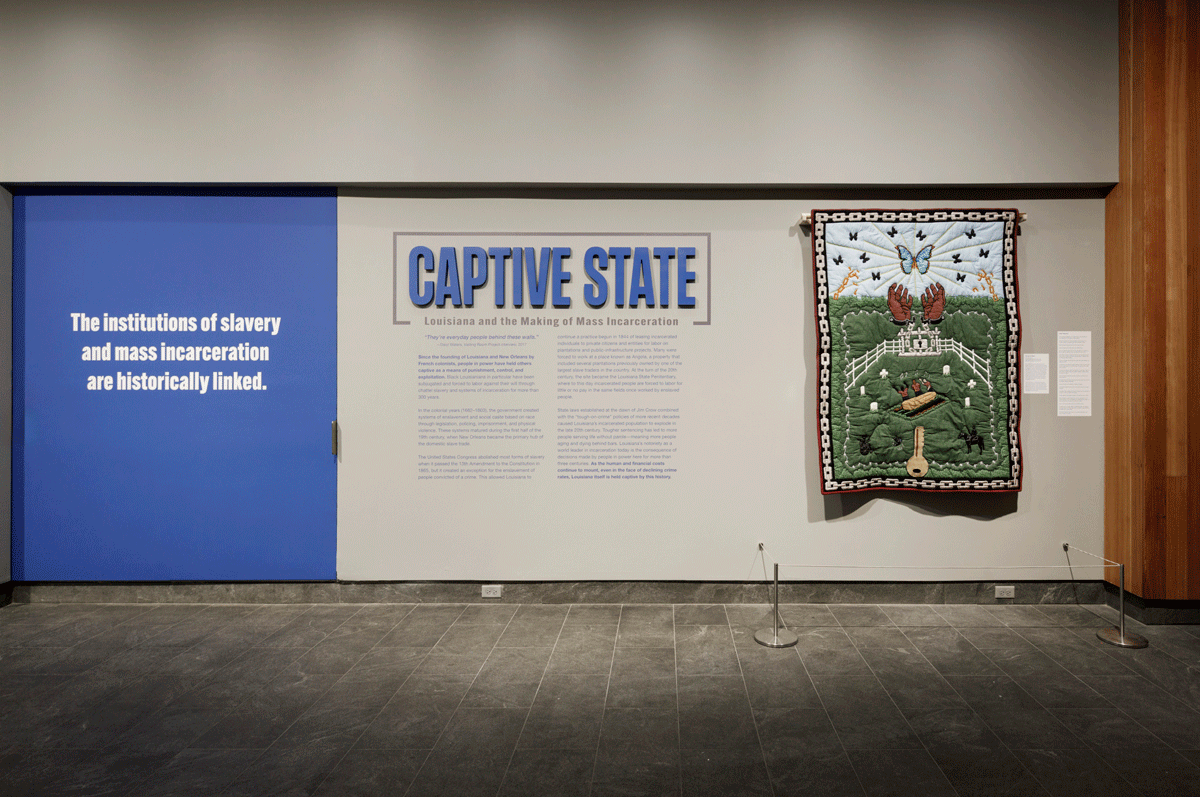
Photo by Amber Johnson, HNOC
While wrist and ankle shackles used inside a local jail are not typically found on a museum wall, they are an essential part of the story told by the Historic New Orleans Collection in Captive State: Louisiana and the Making of Mass Incarceration, the 2026 Museum Exhibition of the Year. “Louisiana incarcerates more of its people than just about any other place in the world, and the impacts of this reality are felt across the population,” said Eric Seiferth, the exhibit’s lead curator. “This contemporary relevancy, along with its clear historic connections to systems of slavery, made it a topic we felt compelled to explore in a public history space.”
Captive State clearly delineated these historical connections in detail. Particularly notable were the labels next to each piece, which not only described what happened to enslaved people, but also listed their names. Due to this careful attention to detail, it was impossible to see the shackles from the jail and not think of the 13.5-pound iron ball and chain that Peggy, an enslaved woman found guilty of murder, was sentenced to wear around her ankle for three years. It was impossible to see those shackles and not think of Rufus Kinsman, a free black man who was falsely arrested as a fugitive slave and forced to work on a chain gang.
Captive State demanded that its viewers grapple with an uncomfortable truth—that the legacy of enslavement is alive and well in systems of incarceration, especially in Louisiana. It is a truth that too often goes unacknowledged, perhaps largely in part because one rarely sees carceral facilities. Captive State pointed out the gradual removal of these facilities from the center of cities to more remote locations.
Captive State emphasized this humanity throughout. When those in power do not view others as fully human, brutality is easily justified.
This physical removal, as Michelle Alexander notes in The New Jim Crow, is often accompanied by social exile. This exile exists not only because those who have experienced incarceration are barred from fully receiving their rights and benefits as American citizens, but also because many experience the isolation that occurs when community turns its back on them.
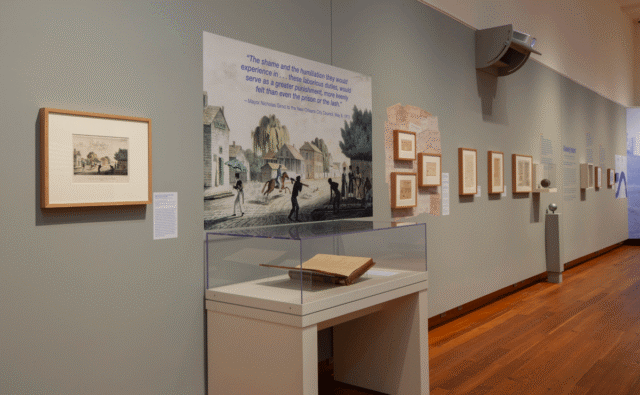
Unsurprisingly, Alexander’s book was among those provided for visitors at the end of Captive State, in a room offering a chance for reflection and resources for further reading. Soon, the exhibit itself would become a resource for further reading; a book also titled Captive State: Louisiana and the Making of Mass Incarceration was released eight months after its closing.
“It quickly became clear to us that there was a demand to preserve this research and its unique narrative presentation in a format that would outlive the exhibition—not simply so it could gather dust on bookshelves, but so that it could be used for educational purposes, in advocacy, and for legal citations,” said editor Nick Weldon. “The book refreshes the data from the exhibition, and takes advantage of the format to present the content of the exhibition in new contexts that support a wide range of uses.”
While the exhibit was driven by research, it was not simply an academic exercise. The wall of yellow sticky notes on which visitors left their reflections attested to its impact on an emotional level as well. Captive State gave visitors a glimpse into the humanity of those so often dehumanized.
Perhaps that humanity was most fully displayed in a series of photographs focused on the volunteer hospice program inside Louisiana State Penitentiary (Angola). Titled Grace Before Dying, the photos depicted an attempt to offer a measure of dignity to those who took their last breath while incarcerated.
Equally powerful was another set of photographs, Deborah Luster’s One Big Self, a collection of hundreds of plates depicting people incarcerated in Louisiana. Flipping through the plates during one visit to Captive State, I encountered an image that brought the exhibit to life. I realized I was holding a photo of A., a woman I met while co-teaching a poetry workshop at Louisiana Correctional Institute for Women. A. loves to read, is proud of her children, and can recite “Invictus” by William Ernest Henley from memory. Holding A.’s photo underscored the exhibit’s urging to look beyond the shackles and prison-issue clothing and focus on the humanity of the person wearing them.
Captive State emphasized this humanity throughout. When those in power do not view others as fully human, brutality is easily justified. Captive State highlighted the ways in which “justification” and “justice” become inextricably linked. And it advocated that the link be broken, once and for all.
Megan Holt, PhD, is executive director for One Book One New Orleans and the Words & Music Festival. In 2021 she gave a TEDx Talk titled “Becoming Part of the Story” on becoming an adult literacy advocate. The Louisiana Endowment for the Humanities recognized her efforts in 2023 with the Light Up for Literacy award.