Magazine
The Queen Brown Sugar Festival
How Iberia Parish’s Black community transformed exclusion into celebration
Published: September 1, 2026
Last Updated: October 5, 2026
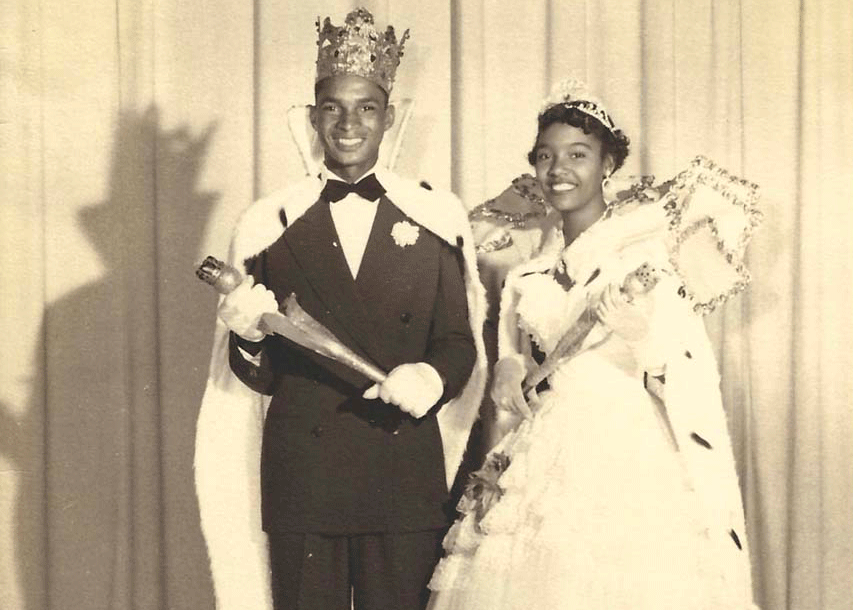
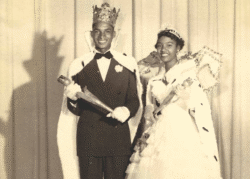
Courtesy of the Iberia African American Historical Society
1953 Queen Brown Sugar Marjorienell Lewis and King Brown Sucrose J. B. Joseph.
I write this as both a community historian and a witness. I witnessed the world from which the Queen Brown Sugar Festival was born. I have lived more than seventy years in Iberia Parish, apart from a brief period spent earning my first university degree at Xavier University in New Orleans. My family has been rooted here for at least seven generations. The bones of my people rest in Iberia’s soil, and their labor shaped its fields, its economy, and its institutions. As a child and young adult, I saw the indignities my grandparents and parents endured under segregation and the calculations required to live in a Jim Crow community. I carry their stories of violence and exclusion, but also of resilience, creativity, and resolve. It is my responsibility, as a descendant of this African American community, to bear witness to its history and to ensure that the voices of its people are preserved, honored, and heard.
The Queen Brown Sugar Festival in Iberia Parish was not simply a celebration, nor was it a sidebar to the local white Sugar Cane Festival. It was a deliberate response to exclusion. Black residents transformed exclusion into agency. When African Americans were barred from participation in the New Iberia Sugar Cane Festival, they organized their own festival. The earliest public mention I have found of the Queen Brown Sugar Festival is in the September 8, 1950, Daily Iberian: “this year the Sugar Cane Festival and Fair is going to be the best yet. Newest innovation is a parade by colored citizens of New Iberia. Their queen will be Queen Brown Sugar I.”
“. . . .to understand the origins of the Queen Brown Sugar Festival, we must first reflect not on pageantry, but on the men and women who insisted that their community deserved visibility during a season built on their ancestors’ labor.”
But to understand the origins of the Queen Brown Sugar Festival, we must first reflect not on pageantry, but on the men and women who insisted that their community deserved visibility during a season built on their ancestors’ labor. As a descendant of the people whose lives shaped this history, I believe the preservation of these stories matters deeply. The interviews, photographs, newspaper accounts, and artifacts associated with the Queen Brown Sugar Festival help document a generation of African Americans who transformed exclusion into institution-building and celebration. Their story is not peripheral to the history of Louisiana’s sugar industry. It is central to it.
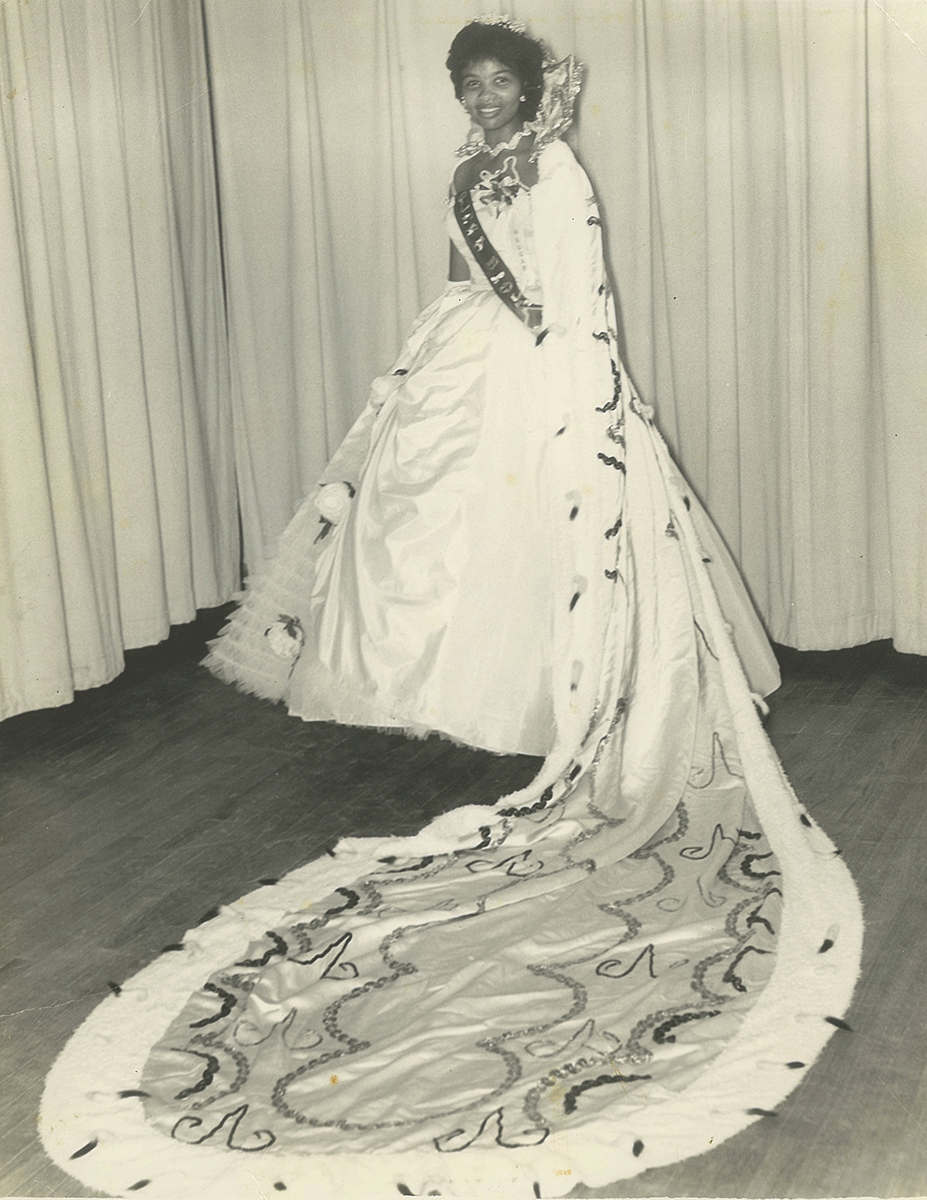
1961 Queen Brown Sugar Mathilda Dianne Landry. Courtesy of the Iberia African American Historical Society
The Start of the White Sugar Cane Festival in New Iberia
An examination of the November 9, 1939, issue of the Weekly Iberian (Sugarcane Festival Edition) suggests that the Louisiana Sugar Cane Festival began in 1937, as the paper announced its third-annual celebration to be held in New Iberia on November 16, 1939. Thousands from across Louisiana were expected to travel to New Iberia to celebrate the importance of the sugar industry to the region’s economy and identity. Yet despite the public character of the festival and the use of taxpayer-funded buildings located within New Iberia’s publicly funded City Park, Black citizens were excluded from participation in many of its most prestigious events.
Festival royalty presided over an elaborate series of social events that included luncheons, coronations, balls, receptions, and teas. Parades were a highlight of the festival weekend, drawing large crowds to Main Street. These parades were grand spectacles featuring floats carrying Queen Sugar, King Sucrose, and members of the royal court, along with dance schools, marching bands from regional high schools, the South Louisiana Institute (SLI) band, Boy Scouts, Girl Scouts, and riders on beautifully adorned horses.
Mrs. McDonald’s Girl Scout Troop marching in the Brown Sugar Festival Parade at the corner of Weeks Street and Main Street, 1960s. Courtesy of the Daily Iberian via Minister Francis L. Davis
Although the spectators who lined the parade route were racially mixed, the parade participants themselves were not. For Black residents of Iberia Parish, the Sugar Cane Festival presented a painful contradiction. African Americans whose ancestors had supplied much of the labor that built Louisiana’s sugar economy—toiling on sugar plantations from sun-up to sun-down for no-to-low wages—could observe the celebration, but they could not fully participate in it.
The History of the Queen Brown Sugar Festival
Eleven years later, Black civic leaders, educators, business owners, and community organizations, primarily from New Iberia’s West End, launched a festival of their own.
In an interview I conducted for this paper, Gwendolyn Deplanter Loud, daughter of Sylvester E. Deplanter Sr., reported that her father, a successful Black businessman, was asked to recruit other Black business leaders to organize a “Negro” parade in 1949. (This interview will be permanently archived in the Iberia African American Historical Society Center for Research & Learning digital archive, ensuring its preservation for future research.) According to Loud, her father reached out to members of his New Iberia social and civic club, the Royal Vanders, and they put together what appears to have been the first Black parade associated with the Louisiana Sugar Cane Festival in New Iberia, serving as the direct precursor to what would become the Queen Brown Sugar Festival and Parade.
Loud further reported that a number of Black business leaders and Royal Vanders members were instrumental in launching the Queen Brown Sugar Festival, which was formally organized in 1950. Highly respected educator John Berry Henderson, principal of Iberia Parish’s all-Black Jonas Henderson High School, was also among the early leaders who played a central role in organizing and sustaining the Queen Brown Sugar Festival. Additional insight into the festival’s leadership emerged through an interview I conducted with Sheila Cooper Hall, daughter of West End businessman Samuel Cooper. Hall described her father as one of the major leaders responsible for organizing and sustaining the Queen Brown Sugar Festival. Her recollections are supported by contemporary newspaper accounts documenting Cooper’s involvement over many years. Festival activities included an elaborate series of balls, teas, dances, receptions, and fundraising events. The success of these celebrations depended on extensive cooperation and collaboration across New Iberia’s Black community. Social events, such as the queen and king’s coronation, were initially held at Jonas Henderson High School. In later years they were moved to the West End Park Community Center.
The Crown of Queen Brown Sugar
The process for selecting Queen Brown Sugar contestants evolved over time and may not have followed a single consistent model. In a September 29, 1950 article announcing the first Queen Brown Sugar Festival, the Daily Iberian reported that contestants were sponsored by Black businesses, schools, and civic organizations rather than selected through parish-wide competitions. Jonas Henderson High School, for example, sponsored Evelyn Fusilier, who became the first Queen Brown Sugar.
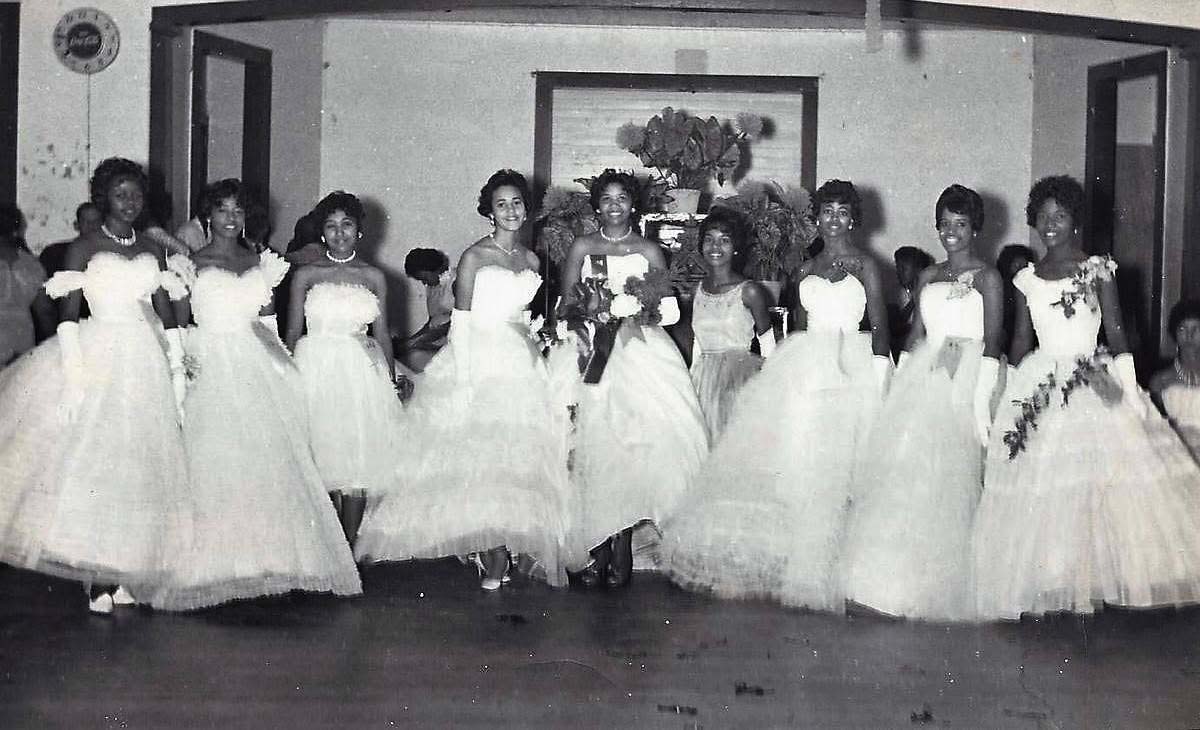
Queen Brown Sugar contestants Ardell Chanette, Lois Jeanlouis, Sadie Bell Julian, Helen Marie St. Julian, Diane Landry, Patricia Castillo, Delores Smith, Carolyn Yancy & Mable Jones, 1962. Courtesy of Frances Hadnott via Minister Francis L. Davis
In later years, however, young women from sugar-producing parishes across Louisiana were invited to compete for the Queen Brown Sugar crown. Contestants first competed for titles within their home parishes, such as Miss Lafayette, Miss St. Landry, and Miss Iberia, and the winners of those parish titles then became eligible to compete for the title of Queen Brown Sugar.
The eligibility requirements for Queen Brown Sugar were clear: contestants were to be high school students, high school graduates, or college students; between the ages of fifteen and twenty; unmarried; and residents of sugarcane-producing parishes.
These rules were enforced throughout the festival’s history. In 1954, when Queen Brown Sugar Eleanor Arceneaux married before completing her reign, she was required to resign and was replaced by her first maid, Mabel Broussard. A similar transition occurred in 1962, when Brenda Cahn replaced Queen Brown Sugar Brenda Manuel after Manuel married during her reign.
The Queen’s escort became known as King Brown Sucrose. To be eligible to become King Brown Sucrose, the gentleman had to be at least thirty-four years old and a sugarcane farmer.
An official portrait of Queen Brown Sugar and King Brown Sucrose was taken by Alexander Breaux Studio Photography of New Iberia, the official photographer of the Iberia Sugar Cane Festival.
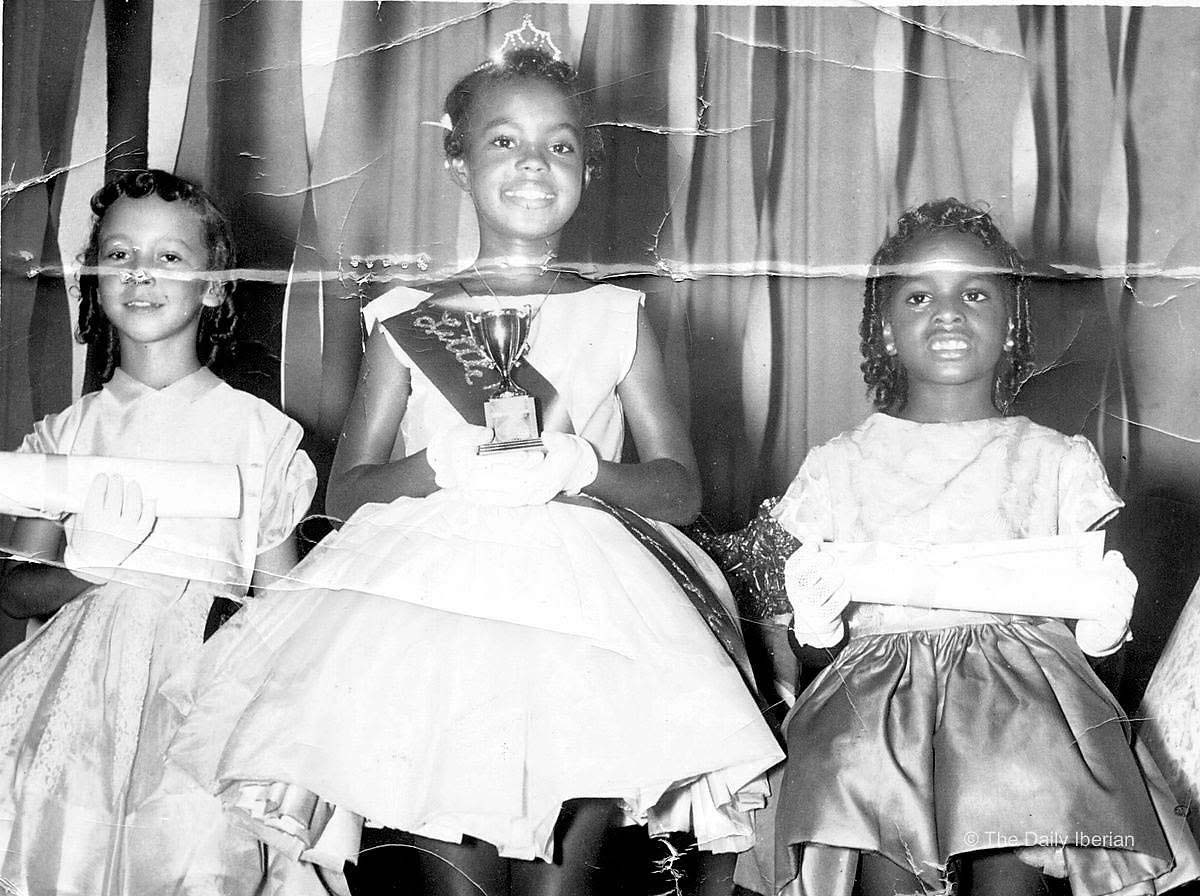
Little Miss Sugar contestants Nedra Durall, Geraldine Joseph, and Carolyn “Noonie” Broussard. Courtesy of the Daily Iberian via Minister Francis L. Davis
The Parade
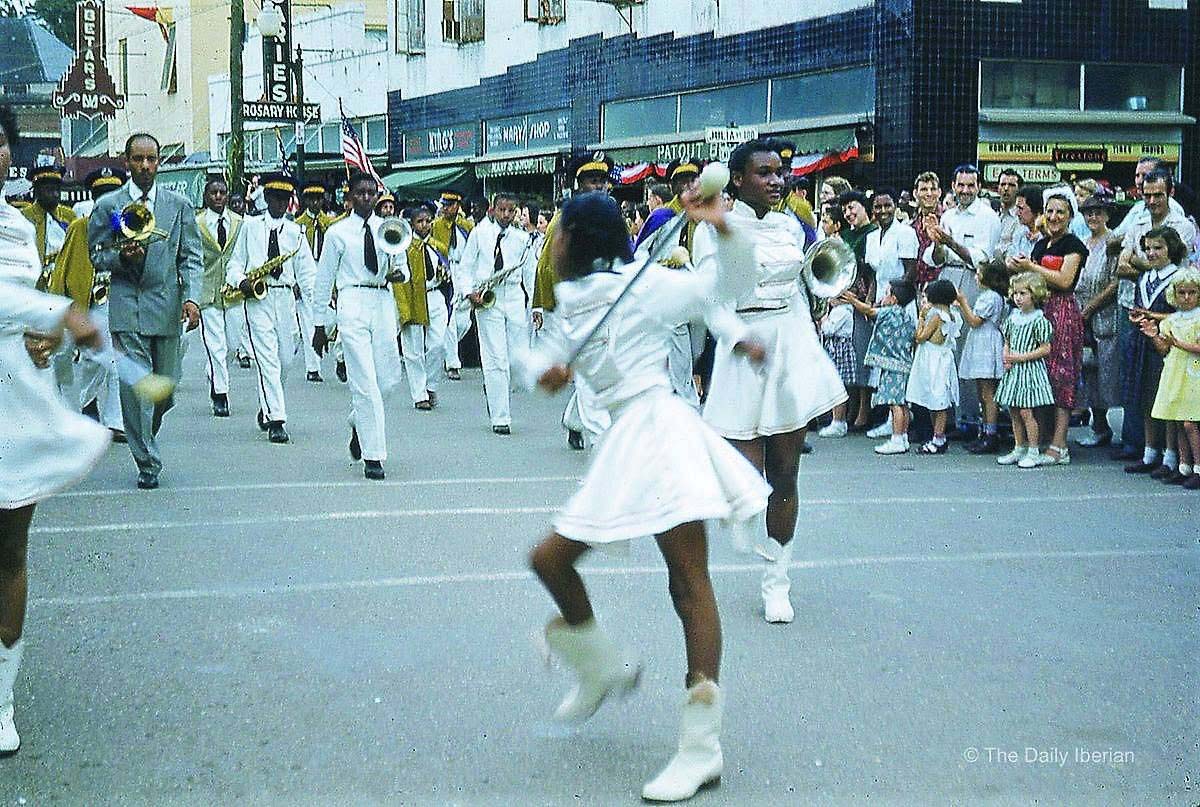
The Queen Brown Sugar Festival parades remain vivid in the memories of many longtime Iberia Parish residents. Elaborately decorated floats carried Queen Brown Sugar, King Brown Sucrose, maids, attendants, and child members of the royal court through the streets of New Iberia. According to the September 29, 1950 Daily Iberian, the first Queen Brown Sugar Festival parade featured fifteen floats, reflecting the considerable level of organization and community participation that marked the festival from its inception.
Held on Saturdays, the parades attracted both Black and white spectators and became major events within the community. Public enthusiasm for the parade was substantial. Reporting on the 1960 parade, the Daily Iberian observed that “[t]housands of spectators jammed the New Iberia streets for the Queen Brown Sugar Parade.” The parade route extended from Bank Avenue to Main Street, then to Hopkins Street, before concluding at West End Park, New Iberia’s segregated recreational space for African Americans.
The parades featured marching bands from segregated Black high schools throughout South Louisiana, including schools such as J.S. Clark High School in Opelousas, Adam Carlson High School in St. Martinville, and Park Avenue High School in Franklin. Horseback riders, dancers, and community organizations also participated, creating a spectacle that mirrored many of the traditions associated with the white Sugar Cane Festival while simultaneously expressing Black pride and visibility.
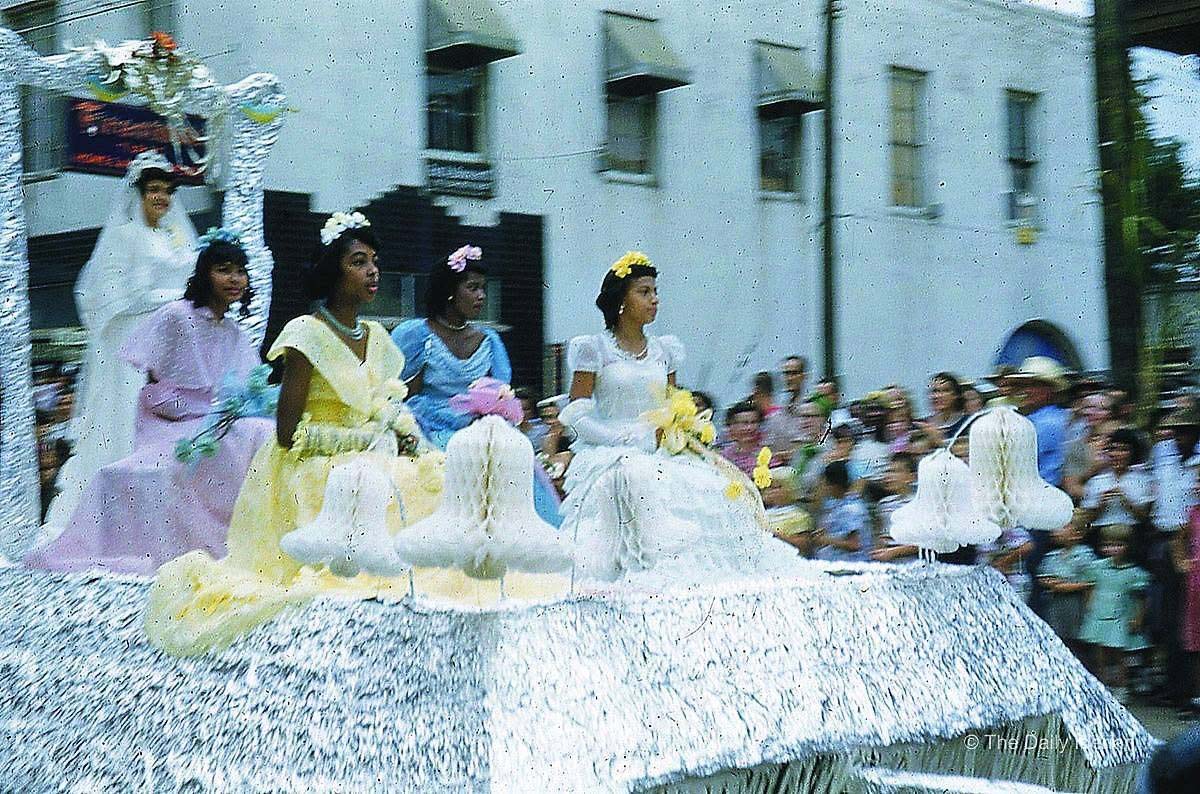
The Queen Brown Sugar Parade in downtown New Iberia was a beloved community staple from 1950 until the mid-1960s. Courtesy of the Daily Iberian via Minister Francis L. Davis
What Remained Unspoken
Using local newspaper accounts, I have been able to document the Queen Brown Sugar Festival and Parade from 1950 through 1964. The final mention of the festival I’ve located thus far appeared in 1964, when Joanne Gordon was selected as Queen Brown Sugar. Whether the festival formally ended after 1964 or simply received diminished newspaper coverage remains unclear and warrants further investigation.
Equally telling is what the festival did not acknowledge. I have found no evidence that the role of slavery or the exploitation of Black labor was explicitly acknowledged in the festival’s events. This absence is striking, given the centrality of enslaved and exploited labor to the development of the sugarcane industry.
Through the Queen Brown Sugar Festival, [Iberia’s Black community] asserted visibility, community pride, beauty, and dignity within a system designed to deny them all four.
It may suggest a reluctance among twentieth-century Black participants to foreground this painful history within a celebratory context, or it may reflect the influence of the larger Sugar Cane Festival organization in shaping and constraining the festival’s public narrative.
In time, the Queen Brown Sugar Festival was formally incorporated as the West End Division of the Sugar Cane Festival and Fair, making it an official component of the larger festival, even as segregation maintained separate spaces and events for Black and white participants. Carnivals and other public festivities for Black families were held at West End Park. Separate carnival activities for whites were held at New Iberia’s City Park. Segregation shaped every aspect of festival life, even as both festivals celebrated the same agricultural industry.
The Present
Today, memories of the Queen Brown Sugar Festival remain remarkably strong among both Black and white residents of Iberia Parish. Former queens and kings, parade participants, musicians, and spectators continue to recall the excitement of the festival season, the beauty of the royal courts, and the pride associated with representing one’s parish and community.
The urgency of preserving these memories has become increasingly clear as the generation that experienced Queen Brown Sugar passes from living memory into the historical record. In recent days, New Iberia lost two former queens: Marjorienell Lewis (1953) and Mary Alice Fontenette (1959). Their passing reminds us that the stories of the women who wore the crown, and the communities that celebrated them, must be collected and preserved while they can still be told.
Although the original Queen Brown Sugar celebration no longer exists, its legacy continues. At its core, this is a story about who was permitted to celebrate publicly and who was not, and how exclusion prompted organization, leadership, and cultural affirmation among the Black community. Through the Queen Brown Sugar Festival, they asserted visibility, community pride, beauty, and dignity within a system designed to deny them all four.
In recent years, community members throughout New Iberia’s historically African American West End neighborhoods have revived its spirit by bringing back the music, block dances, foods, and traditions associated with the festival. Today, a diverse coalition, including Black and Asian community members, works together to preserve and celebrate this important chapter of New Iberia’s cultural history, ensuring that Queen Brown Sugar remains part of the community’s public memory for future generations—not as nostalgia, but as evidence of how African Americans claimed public space, meaning, and belonging.
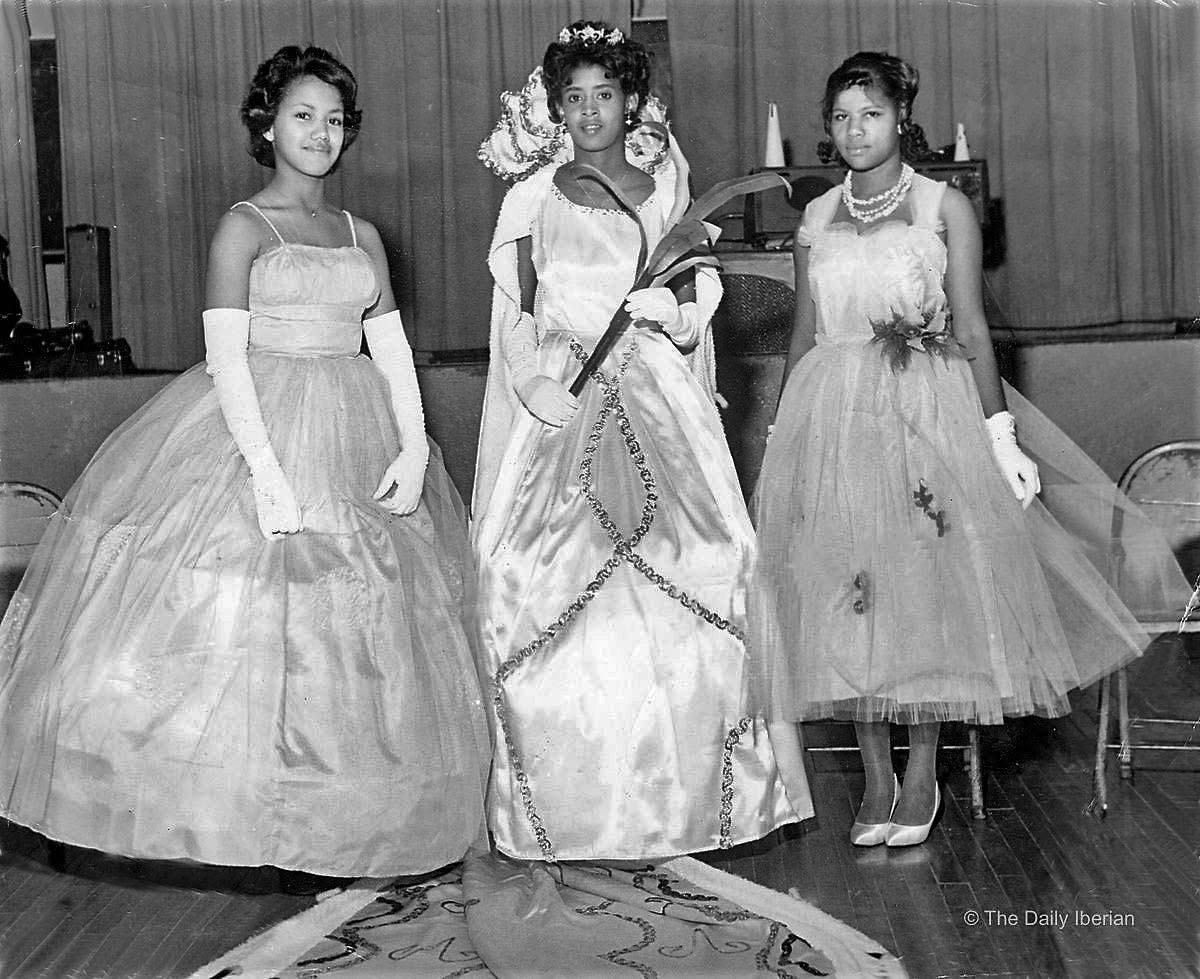
Junior Miss Brown Sugar contestants Myrna Foreman, Willa Hall Dean Alexander, and Evelyn Manuel. Courtesy of the Daily Iberian via Minister Francis L. Davis
Reconstructed List of Queen Brown Sugar Titleholders
The information used to generate this list is based primarily on contemporaneous newspaper accounts published during the years of the festival itself, particularly articles appearing in The Daily Iberian of New Iberia announcing the selection of Queen Brown Sugar, King Brown Sucrose, and members of the royal court.
Because the list was reconstructed from surviving newspaper coverage, photographs, family records, and community memory, some names, parishes, and related details may be incomplete or missing. This ongoing effort represents an attempt to restore and preserve the names of the women who represented their communities during the era of the Queen Brown Sugar Festival.
1950
Queen Brown Sugar: Evelyn Fusilier
King: Leonard Julian
(Both from Iberia Parish)
1951
Queen Brown Sugar: Ellen Wagner
King: George Sigue
(Both from Iberia Parish)
1952
Queen Brown Sugar: Theresa Batiste
King: Clarence Pierre
1953
Queen Brown Sugar IV: Marjorienell Lewis
King: J. B. Joseph
(Both from Iberia Parish)
1954
Queen Brown Sugar: Eleanor Arceneaux
King: Efrain Bernard
Eleanor Arceneaux married before completing her reign and was replaced by First Maid Mabel Broussard of Iberia Parish.
1955
Queen Brown Sugar: Mary Ann Broussard (Lafayette Parish)
King: Lawrence Batiste
1956
Queen Brown Sugar: Geraldine Joseph (Lafayette Parish)
King: Nicholas Wilson
1957
Queen Brown Sugar: Reta (or Rita) Grace Collins (Baton Rouge)
King: Joseph Rochon (Iberia Parish)
1958
Queen Brown Sugar: Barbara Miller (Iberia Parish)
King: Milton Plauche
1959
Queen Brown Sugar: Mary Alice Fontenette
King: Gabriel Lee Sigue
(Both from Iberia Parish)
1960
Queen Brown Sugar: Mary Rhona Dauphine
(Iberia Parish)
1961
Queen Brown Sugar: Mathilda Diane Landry
(Iberia Parish)
King: Junius Simon
(St. Martin Parish)
1962
Queen Brown Sugar: Brenda Manuel
King: T. C. Livingston
(Iberia Parish)
Brenda Manuel married before completing her reign and was replaced by First Maid Brenda Cahn.
1963
Queen Brown Sugar: Lydia Frank
(St. Landry Parish)
King: Henry Jones
1964
Queen Brown Sugar: Joanne Gordon
King: William Franklin
(Both from St. Landry Parish)
Phebe A. Hayes is a native and lifelong resident of Iberia Parish and Dean & Professor Emerita at the University of Louisiana at Lafayette. Following her retirement, she founded The Iberia African American Historical Society (IAAHS) in 2017, where she serves as President. Her research led to the recent publication of Were You There? A Biography of Emma Wakefield-Paillet (University of Louisiana at Lafayette Press, 2025) which chronicles the life of Louisiana’s first Black woman physician and the first woman of any ethnicityto earna medical degree in Louisiana.