Magazine
They Struggled and Fought, with Courage Fraught
Excerpt from Death or Victory: The Louisiana Native Guards and the Black Military’s Significance in the Civil War
Published: March 1, 2026
Last Updated: June 1, 2026
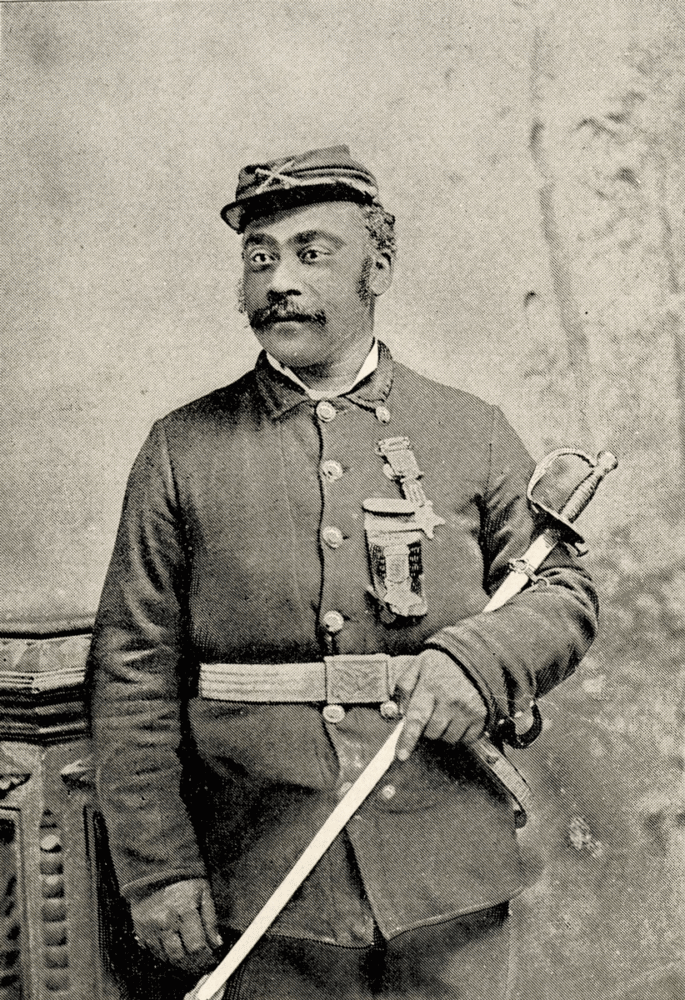
Courtesy of LSU Press
Joseph T. Wilson, veteran of the Louisiana Native Guard and author of The Black Phalanx (1888).
In July, General Banks praised the Corps d’Afrique, by which time their service had become legendary. Banks issued a special commendation to the regiments for their actions at Port Hudson and their defense of Louisiana during numerous raids. Their commanding general even told his superiors, “No troops could be more determined or daring” than the Corps d’Afrique. Privately, however, Banks wrote to General Halleck that he believed they were better suited for fatigue duty, but because of their numbers and his manpower needs, he would keep them in the field. Totaling over ten thousand men among all the regiments by August, the Corps d’Afrique was more important to the Department of the Gulf than any other one group. When the Corps d’Afrique was reviewed after the siege, the units were deemed still fit for duty, the soldiers’ military bearing good and proper, and all of their weapons ready for use. Given that the Corps d’Afrique had been key to gaining access to the Mississippi, positive sentiment about their service increased further. The prominence of the entire Department of the Gulf grew when Congress passed a resolution thanking Banks and all of the men who took part in the siege. Amid growing praise for African American soldiers, the War Department asked Fredrick Douglass to recruit farther South in the areas of Vicksburg and Port Hudson, and Banks could only watch as the once small regiments under his command began to grow.
 . . . . Many southern generals recognized how dangerous the enslaved were to their war aims. Confederate soldiers patrolled their quarters and broke up any assemblies among them for fear they were conspiring to aid the U.S. Army. One officer wrote directly to Confederate Secretary of War James Seddon that they could never allow any Black men to serve because doing so would prove that their entire reason for starting the war was wrong. Later, another southern general petitioned directly to Jefferson Davis, arguing that slavery was no longer a boon to the Confederacy. He argued for arming the most loyal enslaved men, noting that they would only fight if they and their families were guaranteed freedom afterward. The general also argued that slavery was the reason why Europe would never recognize the Confederacy, and only by turning away from slavery could the Confederacy become a country. By his logic, through arming and freeing enslaved men, they could solve their personnel shortages, earn recognition from Europe, free themselves from an impediment that slowed their army, and use Black men as the Union had done. But these arguments and the success of units like the Corps d’Afrique did not convince Davis of the merits of freeing enslaved people. To do so would have negated the entire purpose of the war.
. . . . The actions of the Corps d’Afrique changed the Union army. The quartermaster general’s official report to the secretary of state, William Seward, read, “The newly raised negro regiments showed great valor and devotion, and forever in this country dispelled all doubts as to the capacity of this oppressed race for the defense of their newly acquired liberty.” In a letter to the president, Stanton commented on what the African American soldiers in Louisiana meant to the nation and the war effort in 1863: “Many persons believed, or pretended to believe, and confidently asserted that freed slaves would not make good soldiers; they would lack courage, and could not be subjected to military discipline. Facts have shown how groundless were these apprehensions. The slave has proved his manhood, and his capacity as an infantry soldier, at Milliken’s Bend, at the assault upon Port Hudson, and the storming of Fort Wagner.” Stanton’s views about arming enslaved men from New Orleans had thus shifted. Invoking manhood, Stanton mirrored the language Frederick Douglass had used in his broadside. General Lorenzo Thomas echoed this sentiment, writing to Senator Henry Wilson that Port Hudson and Milliken’s Bend “demonstrate the value of the colored troops” to the U.S. Army. President Abraham Lincoln expressed a similar sentiment: in a letter to James Conkling, he wrote that many of the military’s victories in the summer of 1863 had only been possible thanks to soldiers of color, and that, when the war was over, it would be apparent that regiments like the Corps d’Afrique had saved the nation. The president wrote, “You say you will not fight to free negroes. Some of them seem willing to fight for you; but no matter. Fight you, then exclusively save the Union.” Indeed, officials at every level of government recognized the success and value of the regiments.
. . . . This heroism of the members of the Corps d’Afrique dramatically shifted attitudes about Black soldiers. The corps’ men combated racism in the ranks and from the general public, an unsupportive commanding general, and the loss of African American officers. Despite these challenges, they proved themselves men. Now widely acknowledged as heroes, the dead at Port Hudson were described in one newspaper as “a better Proclamation of Freedom than even President Lincoln’s.” George Williams summarized it best in 1887 with a poem that closed his history of African American service in the Civil War, titled “The Negro Volunteer”:
They struggled and fought, with courage fraught,
With love for the cause of the Nation;
They knew in the strife for the Union’s life
They must buy Emancipation.
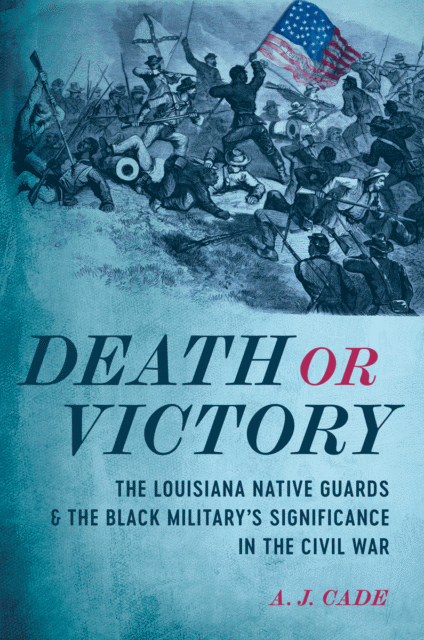
EXCERPT FROM: Death or Victory: The Louisiana Native Guards and the Black Military’s Significance in the Civil War
by A. J. Cade
Hardcover, $49.95; 416 pp.
Louisiana State University Press
February 2026