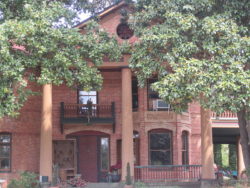
Architecture

James Freret
Entry covers the life and work of New Orleans architect James Freret.
Entry covers the life and work of New Orleans architect James Freret.

Alexandria native James Wells served as governor of Louisiana from 1865 until 1867, leading the state's initial efforts at Reconstruction.
A radical civil rights advocate during the Civil War and Reconstruction, Jean Baptiste Roudanez helped found two historic Black newspapers.

Ancestors of the Jena Band of Choctaw Indians avoided resettlement and remained in Louisiana following the Indian Removal Act of 1830.
The Jena Band of Choctaw Indians is one of four Louisiana tribes recognized by the federal government and one of fifteen recognized by the state.

Born and raised in England, John Antrobus immigrated to the United States and relocated many times, including a period in Louisiana, where he opened a studio and executed a series of landscape paintings.

John Genin as primarily known as a portrait painter, but he also produced historical, genre, and landscape painting in nineteenth century New Orleans.
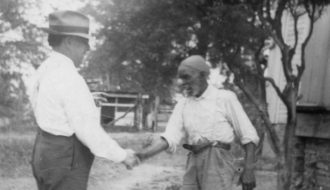
John Avery Lomax was a folklorist and musicologist who, with his son Alan Lomax, made the first recording of the Louisiana blues guitarist Huddie Ledbetter (Lead Belly) at the Louisiana State Penitentiary at Angola.
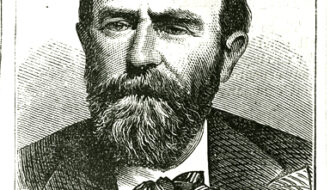
In 1872 John McEnery was elected governor in one of the most controversial and bizarre elections in Louisiana history.
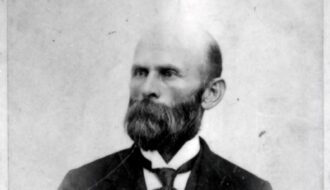
The namesake of McNeese State University, John McNeese was a late-nineteenth-century champion of public education who led the creation of numerous schools in southwest Louisiana.

John T. Ludeling served as the chief justice of the Louisiana Supreme Court from 1868 to 1877.

Democrat John Watkins served as a US representative from northwestern Louisiana from 1905 to 1921.
One-Year Subscription (4 issues) : $25.00
Two-Year Subscription (8 issues) : $40.00