Magazine
What We Can Know About Edmond and Basile
The 2026 Bright Lights Film of the Year
Published: June 1, 2026
Last Updated: September 1, 2026
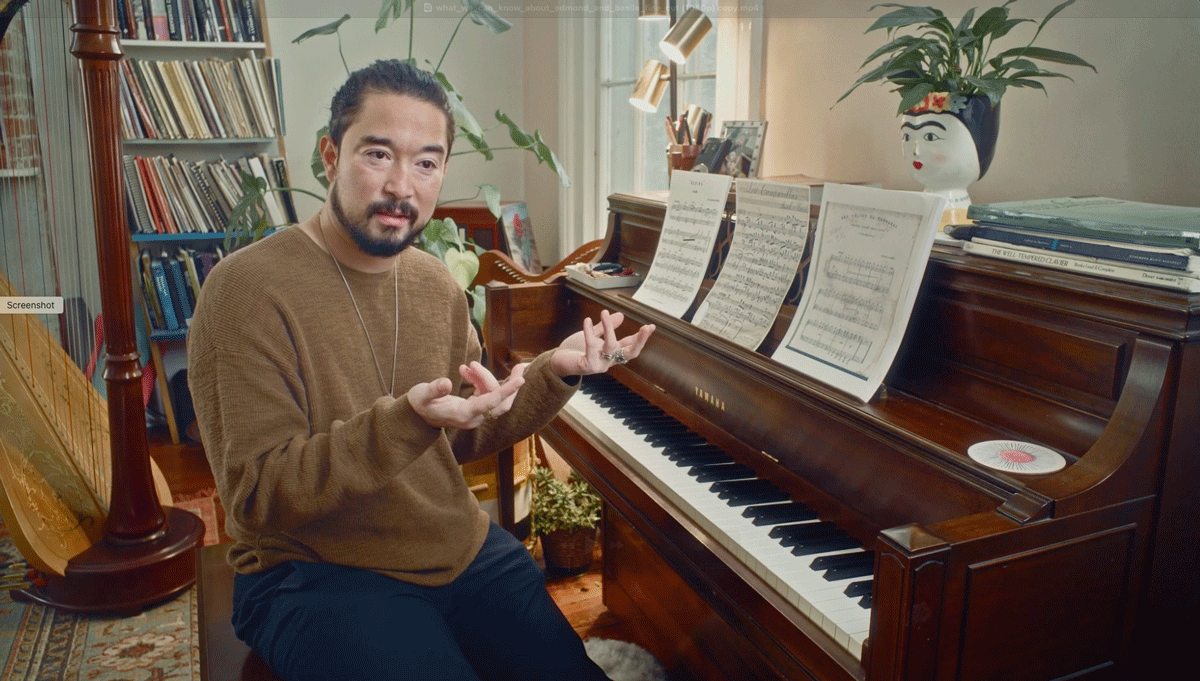
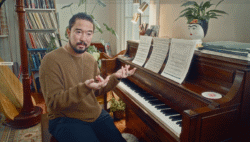
Oscar Rossignoli rehearsing “Los Campanillas”, Basile Barès’ unpublished work.
Still by Sascha Just
Sheet music found in a drawer, believed to be more than 130 years old and never performed publicly, was the catalyst for What We Can Know About Edmond and Basile, filmmaker Sascha Just’s latest documentary about New Orleans musicians. The Berlin-born Just, who released a feature-length documentary, Ellis, about jazz patriarch Ellis Marsalis Jr. in 2022, goes back to the pre-jazz age of New Orleans music in her new work, screened locally in 2025 at the New Orleans Film Festival.
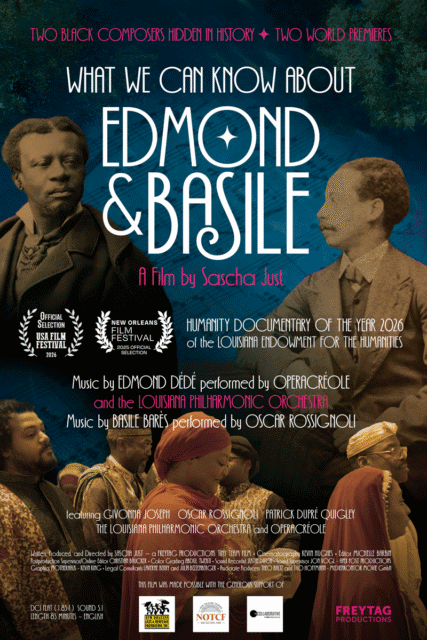 In this film, viewers are taken into the interior lives of two New Orleans–born Creole classical composers: Basile Barès, who was born enslaved, and Edmond Dédé, who was born free. Both men, self-determined and brilliant, found ways to thrive as musicians in spite of a world that so frequently failed to recognize the humanity of people of color.
Barès, born in 1845, was held in bondage by enslaver Adolph Pierre, a music store owner. He not only composed original music but also was able to ensure his own copyrights while enslaved. Edmond Dédé, born free in 1829 but still experiencing the impact of the South’s racism, eventually fled to France. Dédé’s four-act opera, Morgiane, ou Le Sultan d’Ispahan, was never published; recognized as the earliest surviving complete opera by a Black American composer, it is performed for the first time in this documentary.
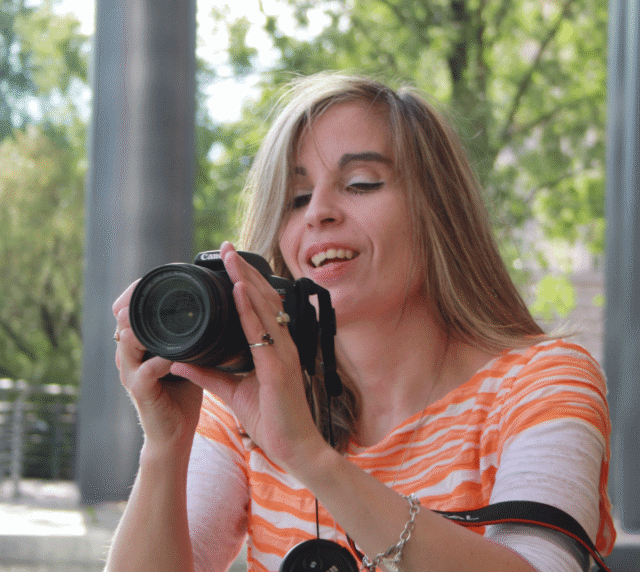
Filmmaker Sascha Just.
A range of historians, musicians, experts, and heirs share stories and useful insights to help viewers imagine the complex lives and challenges of the men and their music in the South and overseas. By exploring the inheritance of classical and operatic roots in New Orleans, Just gives viewers a glimpse of how music and entertainment were produced before and after Reconstruction and the impact of that music on the artistic history of the Crescent City.
Early in the film, we see Givonna Joseph, co-founder of OperaCréole, and Black opera singers practicing vocal arrangements of Dédé’s opera with guest conductor Patrick Dupre Quigley. As the scene plays out, we witness not only the embodiment of OperaCréole’s mission “to research and perform lost or rarely performed works by composers of African descent,” but proof that the work of Barès and Dédé lives on.
By the end of the film, viewers are given a front-row seat at two significant premieres: Celebrated pianist Oscar Rossignoli plays Barès’s unpublished compositions at Snug Harbor in the New Orleans Marigny neighborhood, and OperaCréole performs Dédé’s work with the Louisiana Philharmonic Orchestra at St. Louis Cathedral in the New Orleans French Quarter. Though the film does not provide all the answers to every aspect of these composers’ lives, it reveals their courage and musicianship, giving the world more music from New Orleans to celebrate.
Kelly Harris-DeBerry is a poet and the author of Freedom Knows My Name. Read and listen to more of her work at kellyhd.com.