Magazine
Patches of Prairie
Louisiana Grass Roots seeds enthusiasm for an imperiled landscape
Published: September 1, 2026
Last Updated: September 1, 2026
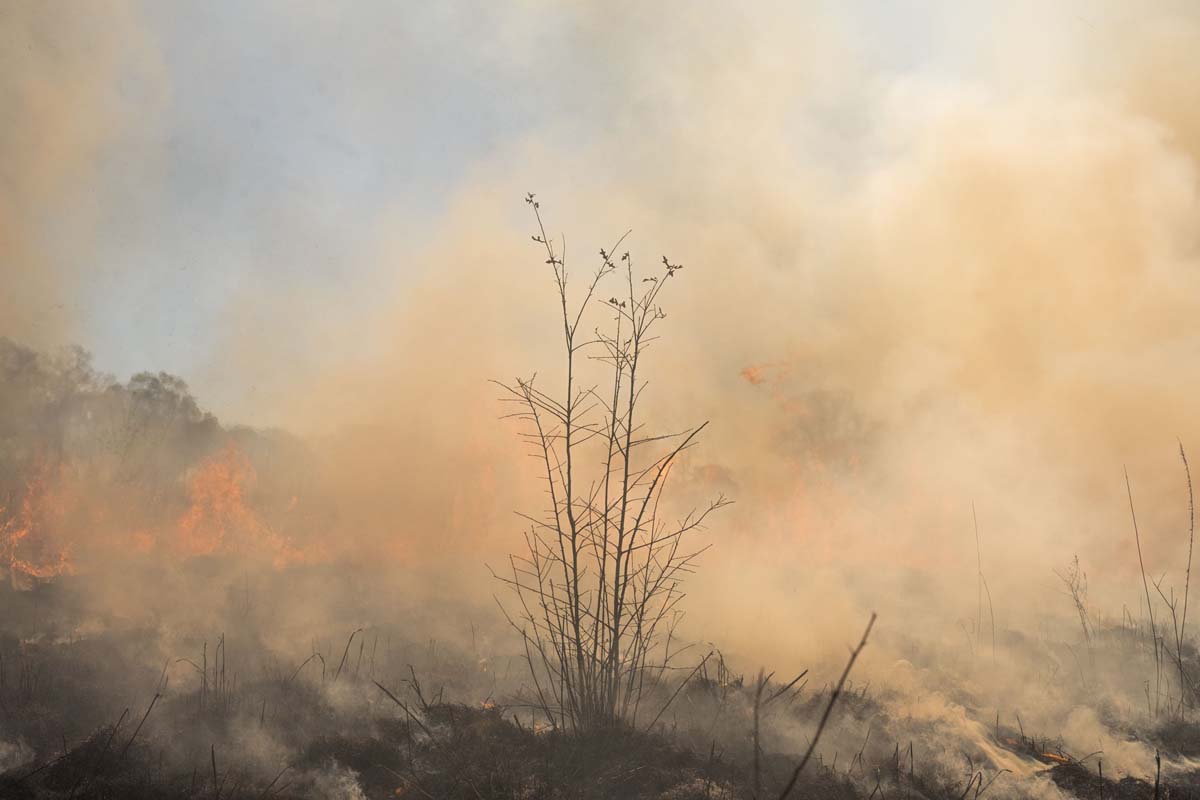
Still by Rush Jagoe
Louisiana Grass Roots aired on Louisiana Public Broadcasting in spring 2026.
If Dr. Phyllis Baudoin Griffard lived out near Taos or Phoenix, she says she’d be obsessed with the desert. But the biochemistry professor is in southwest Louisiana—Sunset, to be exact—so it’s the undulant coastal prairie that has her heart.
Griffard has taught all over the world. “Everywhere we went—whether it was in China, or Qatar, or Natchitoches—it was important that my students connected with the biology in their own backyard, the landscape, whatever their natural history of their area is,” she said. “Whatever the ecosystem is, I would just really want the public to be connected to what a jewel it is. You have to understand it to care about it, or care about it to understand.”
Now her ecological enthusiasm has a wider audience. The new documentary Louisiana Grass Roots, produced by Griffard and directed by Jillian Godshall, highlights the historic prairie and the advocates of its revival.
Godshall is not native to Louisiana but has lived in the state for the past ten years and used her work to explore Louisiana legends like the rougarou and Evangeline. “We moved from Baton Rouge to Lafayette in 2020, which was a rough time to be making new friends, and we also had a new baby,” said Godshall. She and her husband, fellow filmmaker Zack Godshall, joined the Louisiana Master Naturalists on a tour to a Eunice prairie restoration site, where Godshall met Griffard and many others featured in the documentary.
“I was really taken with Phyllis. She had a nice way of communicating as though she was speaking to anyone and everyone,” said Godshall. The two began to discuss the possibility of a documentary.
Restoring the coastal prairie is about seeding enthusiasm as much as it is seeding the ground with native plants.
Sustaining Griffard’s gift for engagement, the short film acts first and foremost as a wake-up call. See those wildflowers in the ditches between highway and rice farm? More than a bright pepper of roadside beauty, these plants are remnants of an ecosystem reduced now, in some estimates, to less than one percent of acreage that once dominated the region from Corpus Christi to Lafayette.
“It’s just too easy for us down here in Louisiana to drive down a country road and not know that that used to be prairie,” said Griffard. “A lot of people dismiss it: That’s just the pasture. That’s the back pasture.”
Grass Roots traces the history of the prairie landscape from the days of the ranging Atakapas tribes to the arrival of Europeans and Acadians and the rise of rice farming and suburban development. Poignant illustrations show the encroachment of people on the land. Row crops, cattle, houses, and roads crowd in until vast prairie becomes a mere thatch of grass.
Concerted restoration efforts began in the late 1980s, when scientists Dr. Charles Allen and Dr. Malcolm Vidrine noticed traces of the ecosystem in individual plants and led a volunteer project to re-seed a ten-acre site in Eunice with native species. “They were very charismatic proponents,” said Griffard. “Malcolm says they never did anything without Charles calling the paper and getting the media in.”
Thus awareness has grown, as has the cohort hoping to play a part in prairie restoration. “I had no idea until I was forty that the land my family farmed was historically prairie,” says farmer and botanist Larry Allain in Grass Roots. He’s channeled his regret into the regenerative, twelve-acre Cajun Prairie Farm, in Arnaudville, which he operates with his son Andre.
The film, with a yearning, fiddle-rich score by Blake Miller, explores the interaction of the people and land, and the cultures that are inextricable from this fading landscape. “Prairie is part of our people’s lineage and heritage,” says Dr. Jeffery Darensbourg, member of the Atakapa–Ishak Nation, in an on-screen interview. Practices employed by the Indigenous peoples in the region were gleaned over millennia and kept the prairie healthy. When bison and controlled burns were displaced by agriculture and highways, “we lost most of our lands, and it’s had long-ranging environmental consequences.”
Restoring the coastal prairie is about seeding enthusiasm as much as it is seeding the ground with native plants. One is coming more easily than the other.
“We had a workshop a couple of years ago,” said Griffard. “We got all of the state and federal and nonprofit people involved in this kind of work in one room, and had a full-day strategy session for how to increase seed production. And there was a plan going forward. This happened ten or fifteen years ago also. But then it just dies. We were told there would be money coming that we could apply for or [University of Louisiana Lafayette] could apply for. And that program never emerged.”
Griffard applauds the coastal restoration of the late 1990s and the accompanying Breaux Act. “That was a real coup for the whole movement. And Louisiana now pays attention to the coast. The rest of us who are working in other ecosystems want to be able to replicate that. The prairie butts up against the coast and it interdigitates. And the coast would be in better shape if our prairies were in better shape because it traps sediment, traps nutrients, recharges aquifers. So it may take something more grassroots to do this, and we don’t know what it’s going to be. I mean, Jill and I only have so much power to build or to stoke political will, but at some point picking ourselves up by the bootstraps may be what it takes.”
Louisiana Grass Roots aired on Louisiana Public Broadcasting in spring 2026 and is available for screening in communities, with a companion traveling exhibit, Hidden in Plain Sight. A screening in Lafayette was particularly poignant for Godshall. She’d filmed the installation of prairie at Moncus Park, a hundred-acre public greenspace opened in the center of Lafayette in 2022. “At the beginning,” she explained, “I did a lot of filming as a way to research and immerse myself in this world without fully knowing where it was going to lead. Then we were able to come back and screen the film two, three years later, and the prairie was much more developed.” The film showing was paired with an invitation for the public to collect seed from the park’s prairie site to take home and start their own plots.
Godshall felt the night to be a full-circle moment. “We screened the film under the oaks. It was raining, and people still stuck around and were super into it.” One woman approached Godshall after the movie to share her recent, growing interest in native plants and prairie restoration. She said, “I’m so inspired. I want to go home and plant a prairie right now, but it’s dark outside. So I’ll have to wait ‘til tomorrow!”
Lucie Monk Carter is a writer and photographer in Baton Rouge.