Peoples of Louisiana
Tunica-Biloxi Tribe
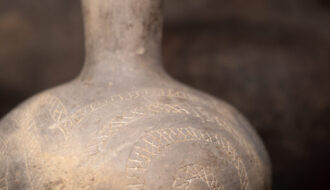
The Tunica-Biloxi Tribe is one of only four American Indian groups in Louisiana recognized by the federal government.
The Tunica-Biloxi Tribe is one of only four American Indian groups in Louisiana recognized by the federal government.
The Tunica people, skilled traders and entrepreneurs who engaged with French colonists in the eighteenth century, merged with several other historical Louisiana tribes in the twentieth century.
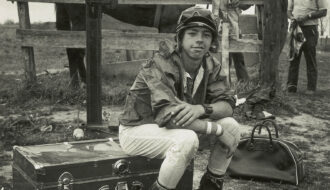
Turner Browne, a still photographer and cinematographer, is best known for "Louisiana Cajuns/Cajuns de la Louisiane," published in 1977.
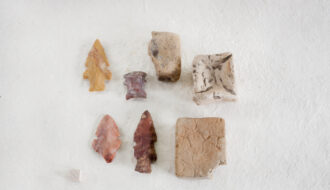
By studying artifacts, archaeologists know that people were in Louisiana at least 13,000 years ago.
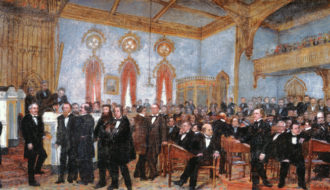
Contrary to conventional assumptions, many Louisianans opposed secession and the Confederacy during the Civil War.
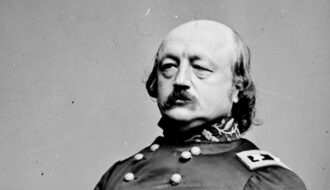
Five thousand to ten thousand white Louisianans fought for the Union during the Civil War.
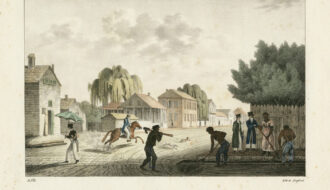
Enslaved people in Louisiana’s cities were engaged in virtually every labor role, from domestic service to dentistry.
Enslaved people in Louisiana’s cities were engaged in nearly every labor role, from domestic service to dentistry.
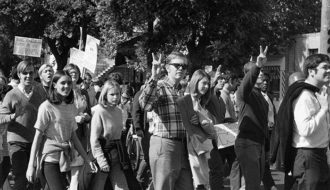
The war in Vietnam polarized the people of Louisiana just as it polarized people across the country.

The architectural firm of Weiss, Dreyfous and Seiferth is best known for designing public buildings in the 1930s, many of which were commissioned by Governor Huey Long.

The West Feliciana Parish Courthouse was built to replace its mid-nineteenth-century predecessor, which had been damaged in the Civil War.
The Florida Parishes were not included in the Louisiana Purchase but were under Spanish control.
One-Year Subscription (4 issues) : $25.00
Two-Year Subscription (8 issues) : $40.00