Magazine
The Architect of Gay New Orleans
Albert J. Carey (1939–2026) from “outlaw to icon”
Published: September 1, 2026
Last Updated: October 5, 2026
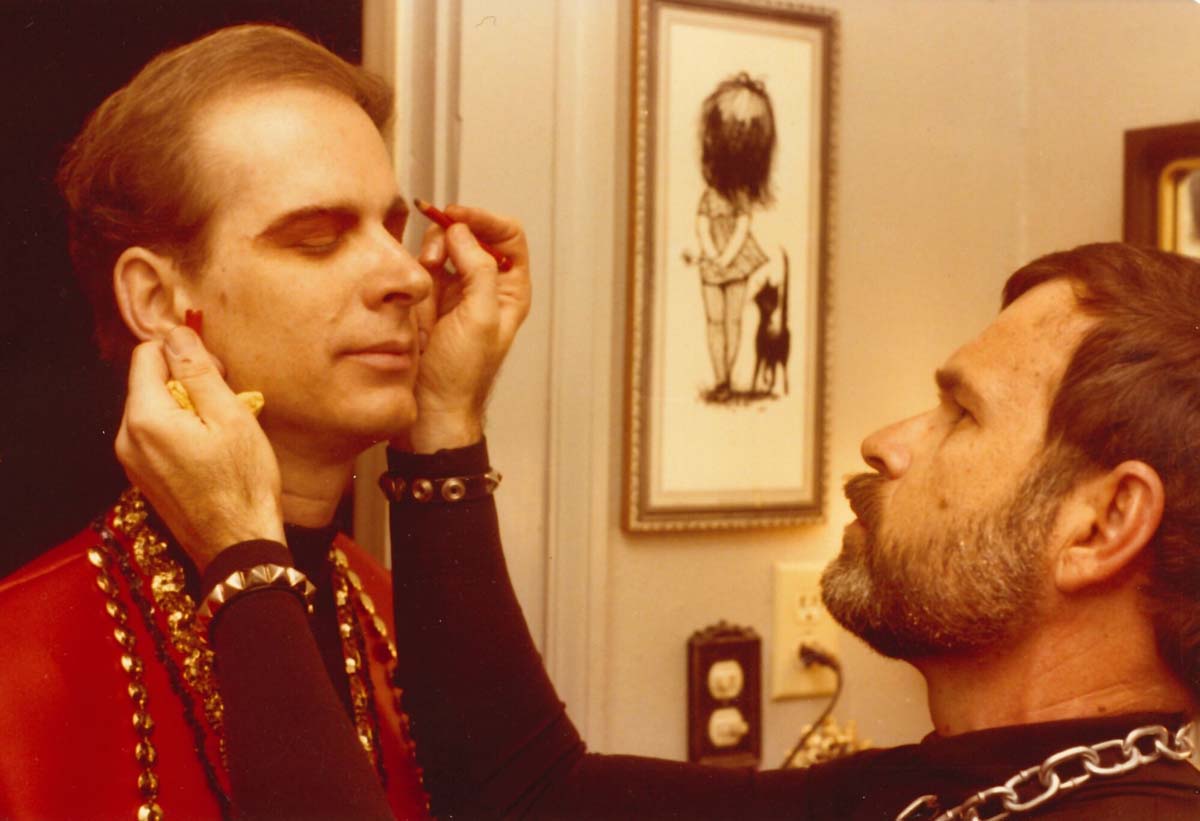
Courtesy of Patty Carey
Albert Carey (right) applies makeup to best friend Jimmie Tarleton (left) during Carnival festivities, 1973.
Editors’ Note 9/24/2026: This article has been updated to include additional context regarding Albert Carey’s personal finances.
Tulane University student Albert Carey walked into a gay bar called the Gaslight Lounge at 738 Toulouse Street expecting a show, and he got one. It was the early hours of Friday, August 10, 1962, and the female impersonator Tempest—a singer otherwise known as Darryl Gibson, who boasted the falsetto range of a soprano—was slated to perform her musical act in women’s attire for a French Quarter crowd. “She was singing rhythm and blues and all of this kind of great New Orleans funky music,” recalled Carey in a January 2021 interview.
Carey, then twenty-three years old, grabbed a seat in time for Tempest take the stage, but a commotion interrupted her performance. “Get your f*****g hands off of me,” someone shouted as Carey turned his head. A young man punched another to the floor. The first then grabbed a barstool and rammed the metal tip of a barstool leg through the second man’s skull. “People started screaming; Tempest started screaming,” recalled Carey. “The guy’s head was crushed in.” The barstool leg quivered grotesquely in place until the first man pried it loose.
Tempest pressed a compress to the bleeding man’s head and asked the entire bar to leave. “My friends and I stayed across the street watching what was going to happen,” Carey recalled. “Police came. We pretended to be clueless.” The New Orleans Police Department Vice Squad raided the Gaslight Lounge that night alongside two other “well-known hangouts for perverts,” as reported the New Orleans States-Item. Names, ages, and addresses of twenty-eight individuals, including Darryl Gibson, were printed in scandalizing coverage. “That section of the paper was treated as required reading by society,” recalled Carey. “Some killed themselves rather than appear in those pages like that.”
Carey, an undergraduate senior studying architecture, had evaded two potentially reputation-shattering incidents, a homicide and a mass arrest at a queer bar; he would spend the next year or so with his head down. No openly gay man in Louisiana could work a licensed profession, due to morality clauses built into licensure, and Carey aspired to work a licensed profession. “It was like Russian roulette with my future,” he recollected. The second man from the Gaslight brawl, twenty-one-year-old Perry Tettenburn, died of his injuries at Charity Hospital, according to States-Item coverage. The first man, twenty-three-year-old Robert “Bob” Livesay, would be tried for murder.
Stakes escalated when the accused murderer turned out to be a paid confidential informant of Pershing Gervais, Chief Investigator for Orleans Parish District Attorney Jim Garrison. According to court testimony, Robert Livesay had previously been deployed “by Garrison and Gervais” as a homosexual decoy for various “crime against nature” entrapments. The victim, Perry Tettenburn, had been contracted by a “third party to have Livesay ‘worked over,’” as reported by the Times-Picayune in August 1962. That third party, said the report, was a French Quarter wiseguy named Eugene C. “Gene” Davis, who “bought some stolen property from Livesay.”
The Gaslight killing had, thus, been a case of overworld vs. underworld operations, or a corrupt law enforcement racket vs. a criminal extortion racket, spilling into public view, and those arrested in the subsequent sweep were scapegoats in a powerplay. It became clear that Garrison had little issue offloading his stooges to the penitentiary if his District Attorney office emerged clean. Carey watched as the female impersonator Tempest (Darryl Gibson) was outed as homosexual under oath when subpoenaed by Garrison to testify in court against Garrison’s own informant; Livesay was found guilty and sentenced to life in prison.
In less than half a decade, Carey had gone from witnessing a Jim Garrison–affiliated homicide to standing before an idol, a simulacrum of Blanche DuBois and Scarlett O’Hara in one living vessel.
These brushes with the DA and his crew taught Carey his first lessons about navigating power in New Orleans: Under Garrison, you could get away with almost anything if you pinned the crime on homosexuals. “I witnessed a murder, and somehow everyone else got blamed but the string-pullers,” Carey observed. Carey graduated with a bachelor’s degree from the Tulane School of Architecture in late May 1963. He moved to Barracks Street and began the process of studying to take the four-day architectural licensing exam while savoring local nightlife. “I went to Dixie’s Bar of Music a lot,” recalled Carey with a chuckle. “And between Dixie’s and Café Lafitte [in Exile]—those were the two Bourbon Street gay bars most men went to—was a stretch of sidewalk called the Elephant Walk.”
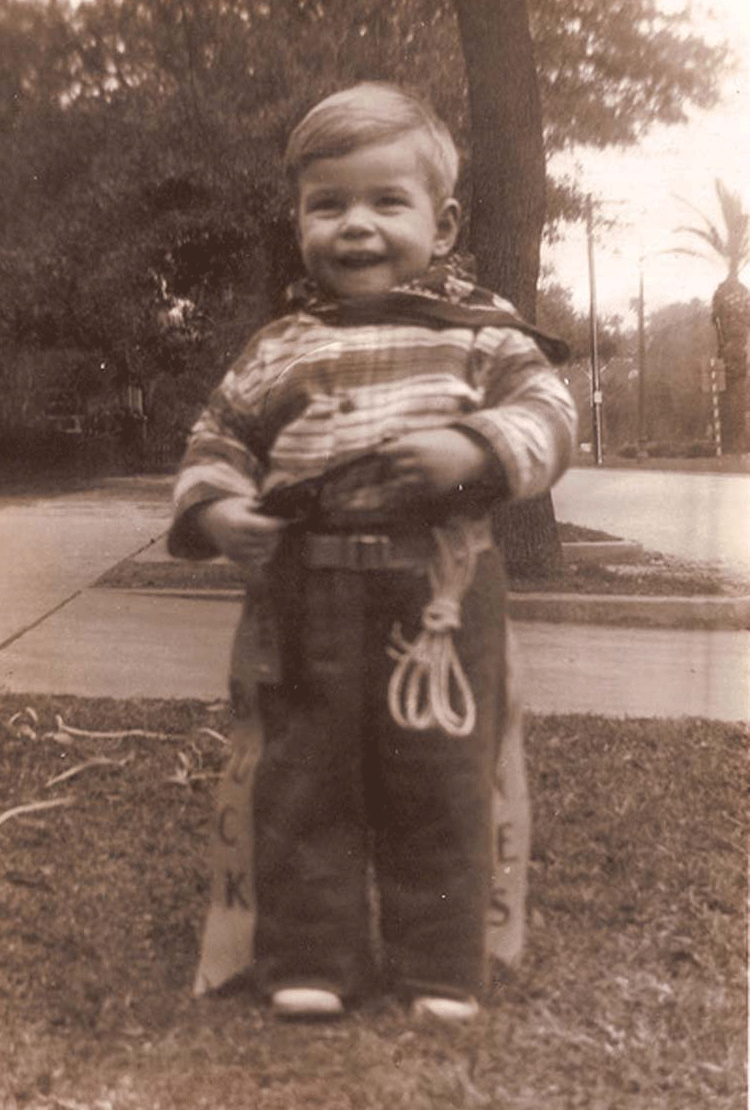
Albert Carey as a young child on New Orleans streets. Courtesy of Barrett DeLong
Albert John Carey Jr., the eldest son of a homemaker and a Shell Oil office manager, was born in 1939 and raised in the New Orleans suburb of Jefferson. “We lived in a three-bedroom house with one bath,” recalled Carey’s youngest sibling Patty in a May 2026 interview. “My daddy came home from work at quarter to five, and we sat down for dinner at exactly five o’clock.” Father and son never quite clicked. Albert Sr. was a competitive fisherman, winning events like the Big Bass Fishing Rodeo at City Park, while Albert Jr. “never wanted to do anything like that,” said Patty. Carey attended the Roman Catholic high school De La Salle on St. Charles Avenue, where he met a boy his age named Jimmie Tarleton.
“Neither one of us cared about sports,” Tarleton explained in an April 2026 telephone interview. “And so when they were electing teams during gym class, Albert and I never got picked. One day, we were both standing there, and I went up to him and said, ‘We’re no good at this, are we?’” Carey doubled over laughing, and the two became almost inseparable. They discovered a mutual love for stage and cinema and side-hustled as ushers at downtown playhouses to see touring productions for free. “We started building our love for Tennessee Williams because all of his plays took place in the South,” Tarleton said.
Lettering in theatre for four years at De La Salle, Carey graduated in 1957 with lingering questions about his adult self. To the Carey family, the boy in browline glasses simply didn’t date, although he was handsome and butch with his blue-collar “y’at” accent and strong chin. While attending Tulane, Carey worked up the nerve to survey what attracted him at Quarter bars, but he never discussed his private life with his parents. “Nobody else in the family knew about what was happening with Albert but me,” attested Patty. “My father, for sure, would never have been able to accept it. Although I’m sure they knew—but it was never ever spoken of.”
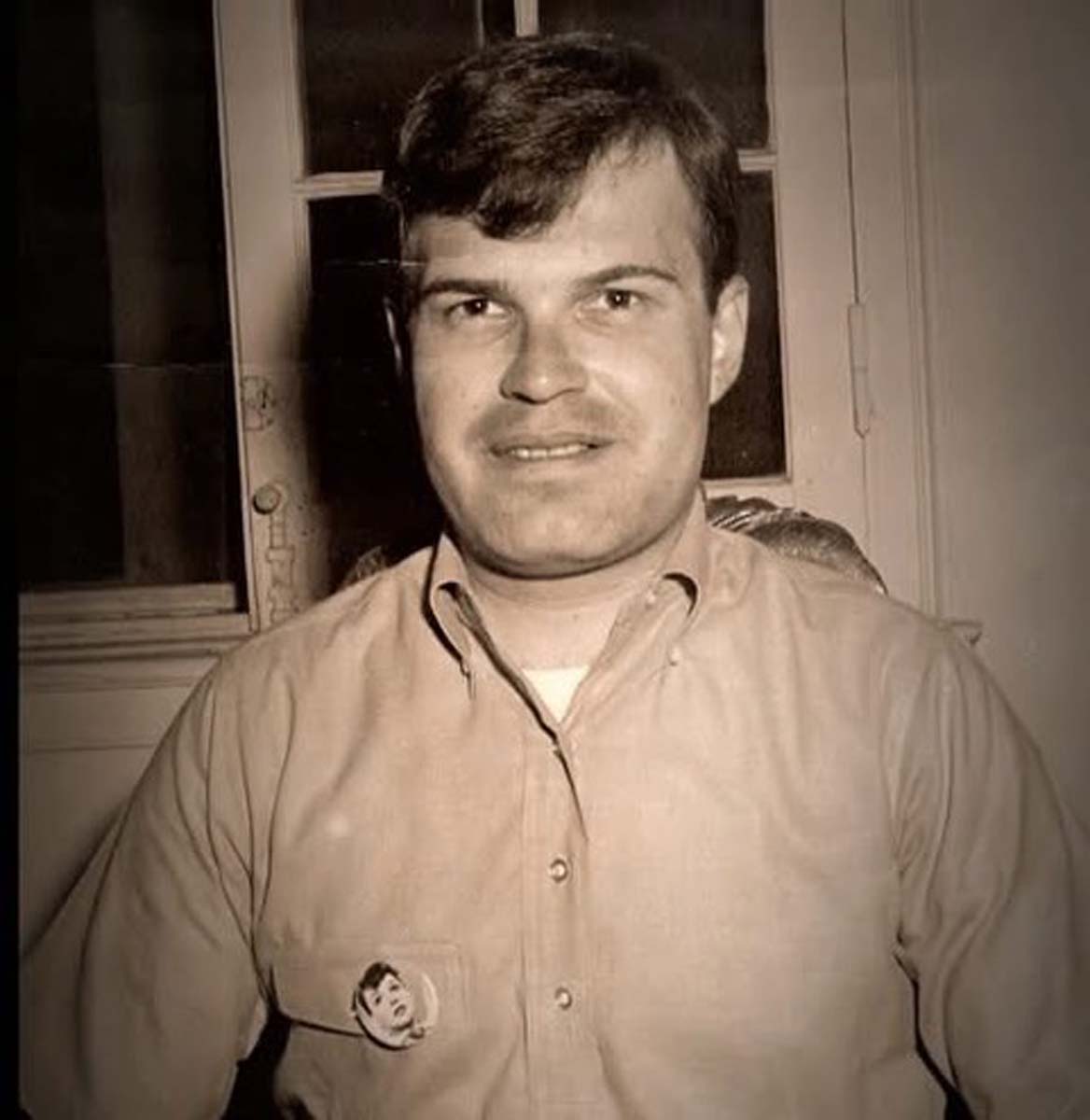
High school-age Albert Carey, who went by the family nickname “Boonie,” 1958. Courtesy of Barrett DeLong
Carey was licensed to practice architecture in March 1965, and he transplanted to Manhattan to manage a branch office for the New Orleans firm Simoni, Heck & Associates, Inc. An avid theatregoer and devotee of Tennessee Williams, Carey all but devoured new Broadway productions with Tarleton, with whom he split rent on an Upper East Side apartment. “We’d go see at least one play a week,” affirmed Tarleton. Tarleton worked for a law firm that helped option plays for studios like MGM. Over time, Tarleton made himself a friendly face to Broadway stars, who’d invite him back to their dressing rooms for gossip.
The following spring, actress Vivien Leigh—renowned for her roles as Scarlett O’Hara in Gone with the Wind and Blanche DuBois in the 1951 film adaption of Tennessee Williams’s A Streetcar Named Desire—appeared in a Broadway production of the Chekov play Ivanov. “By that time I just went backstage after the show and talked to Vivien,” recalled Tarleton. “I took Albert with me.” In less than half a decade, Carey had gone from witnessing a Jim Garrison–affiliated homicide to standing before an idol, a simulacrum of Blanche DuBois and Scarlett O’Hara in one living vessel. “He just stood silent,” Tarleton observed philosophically. “He never approached the stars. They meant too much to him.” It was enough to breath the same air without fainting. Then his city, in crisis, came crying for an architect.
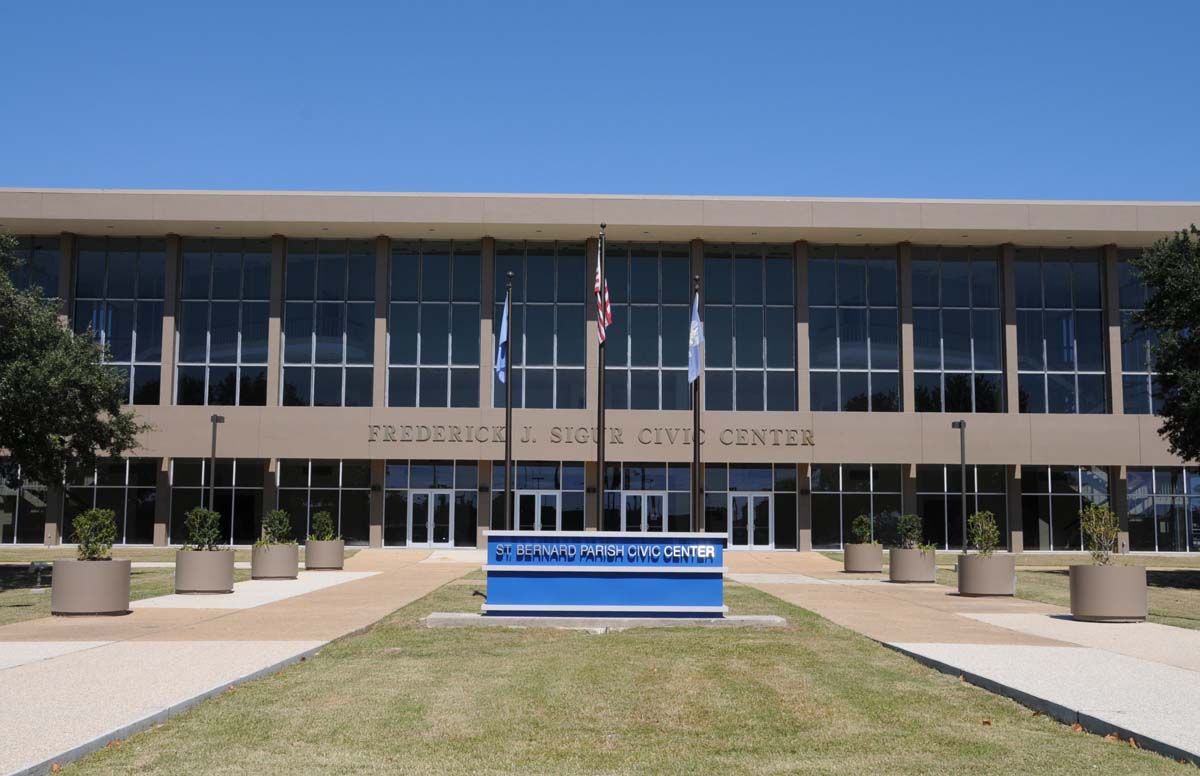
The Frederick J. Sigur Civic Center, designed by Albert Carey, photographed in 2010. Photo by Manuel Broussard for FEMA
Hurricane Betsy, a Category 4 storm, ravaged the New Orleans metro area when it struck in late 1965. The resulting levee breaches led to widespread devastation, including more than eighty deaths and $1.5 billion in property damage, spurring an unprecedented $4.9 million public bond drive to mount a comeback. “A shining example of this is a $1.6 million civic auditorium soon to start building [in St. Bernard Parish],” reported the Times-Picayune in late January 1966, “with a seating capacity of 3,000.”
After securing the contract to build the auditorium, Simoni, Heck and Associates, Inc. recalled Albert Carey from New York. “The plans came in at twice what it was supposed to cost,” said Carey. “So the owner of the company came to me because he knew I love to design. He said, can you bring it in? Can you redo this thing and get it in for the money?” To rescue the project, Carey gutted more than a million dollars in excesses from the structure. “I remember going out to the site for the first time to see,” said Carey. “I said to myself, ‘Why would you want to build a building in the middle of a swamp?’”
The architect reined the development under budget just as the pylons drove into the wet earth. In August 1968, the “House of Glass,” as it was nicknamed by the Times-Picayune for its exterior façade of tinted glass, opened to the public as the St. Bernard Civic Auditorium. Parish mayors, moguls, and law enforcement officials, all of whom Carey gladhanded as powerbrokers, attended happenings at the new venue, such as the December 1968 boxing rematch of Joe Burns versus AJ Staples.
The stagecraft won over the parish, and the success of the Olympus test case signaled that St. Bernard was safe for all gay krewes to book their balls at the auditorium, if so desired.
In short order following his return to the Big Easy, Carey found love. He met a twenty-three-year-old Vietnam veteran named Gerald “Jerry” Hocke. “Albert called me the next day,” remembered Patty, “and he said, ‘I met somebody at the bar last night, and this guy is different. Special.’” Hocke joined an exclusive Carnival organization for gay men called the Krewe of Armeinius, and he convinced Carey to participate in their annual drag balls, held inconspicuously at Black union halls that offered few amenities for productions but also didn’t ask questions. “Albert tells me, ‘Oh, I’m in this gay club, and we have more fun than anything. It’s wonderful,’” recalled Tarleton. Liberated among a gay cohort, Carey was elevated to the role of krewe Captain in 1971 for Armeinius Ball III, which Carey gave the theme “Atlantis Redivivus” and set in the mythical underwater city.
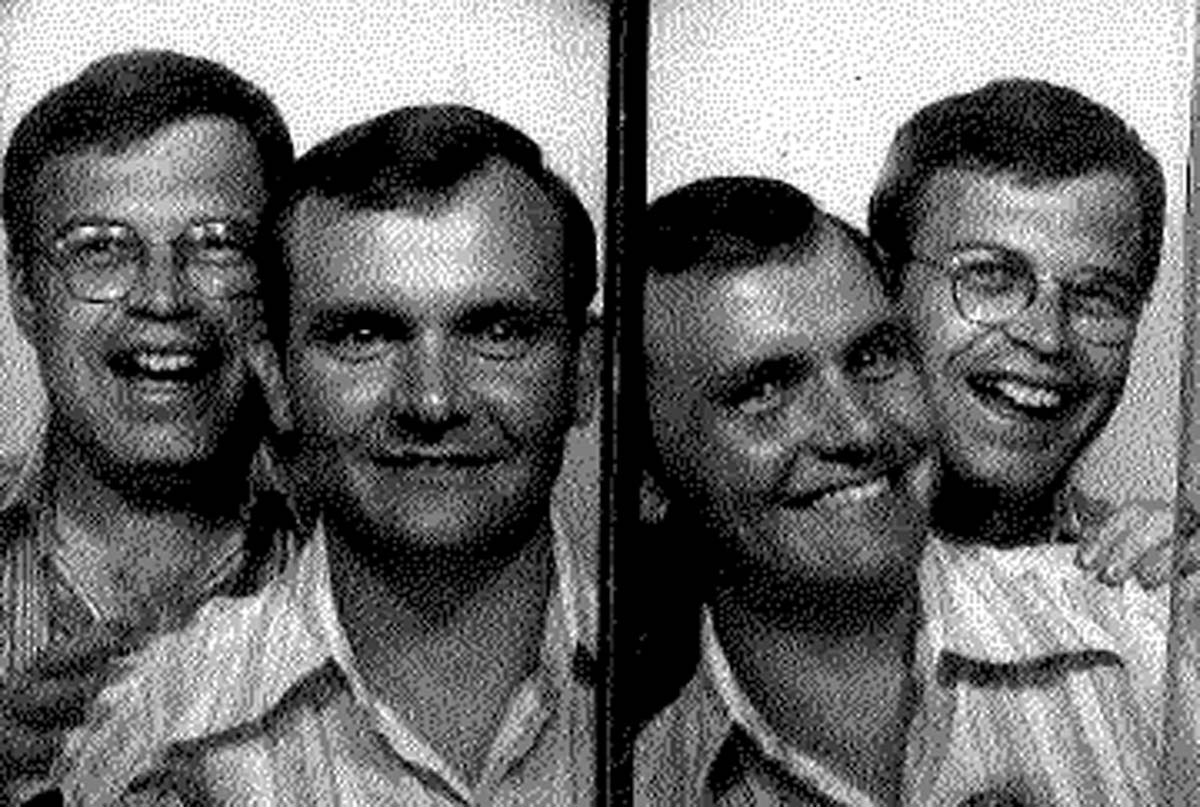
Albery Carey and his partner Gerald “Jerry” Hocke in a photobooth, 1970. Courtesy of Patty Carey
Carey and Hocke purchased a lot at 7371 Cranbrook Drive in the emerging neighborhood of New Orleans East, and the couple custom-built a four-bedroom home with a backyard pool, where they hosted countless soirees. Around this time, Armeinius’ growing membership of twenty perfected a new form of oversized drag costume that rivaled theatre set pieces, using Styrofoam, wire, and backpacking harnesses. Demand for tickets to their invite-only balls outstripped supply. Gay Carnival krewes, in general, needed more seating, higher ceilings, and bigger stages than union halls could provide, but they were caught in a publicity vs. popularity catch-22. They hesitated to approach a major Orleans Parish venue because the disclosure could out their leadership. The neighboring parish to the west, Jefferson, didn’t seem particularly safe either: a ball in Jefferson Parish for the first gay Carnival club, the Krewe of Yuga, had been raided in 1962, resulting in 96 arrests.
Carey sensed a way out of the quagmire—the neighboring parish to the east, St. Bernard. But he was loathe to approach St. Bernard Parish authorities himself, given his professional constraints. “I wasn’t the owner of the architectural firm that I worked for,” Carey said. “I just didn’t want to expose them.”
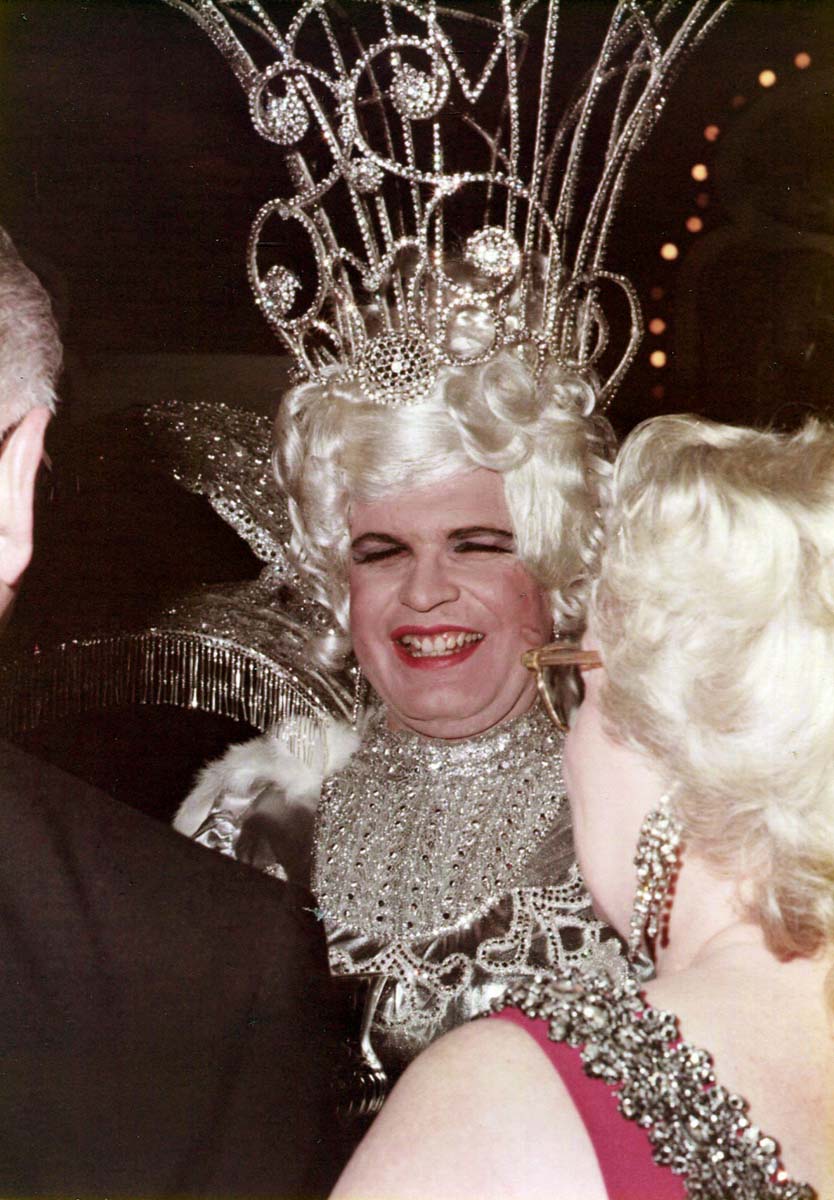
Albert Carey in costume as Queen Armeinius VI “Gilded Lily” at the 1974 Krewe of Armeinius Ball “Lilies of the field.” Courtesy of the Louisiana State Museum
Instead, the gay krewe that made the foray was called Olympus—formed in 1970, captained by a former New York theatre designer named Jamie Greenleaf and led by the director of a New Orleans ballet company named Harvey Hysell. Hysell was the first to stage the full production of Tchaikovsky’s Nutcracker ballet in New Orleans, accompanied by the New Orleans Symphony, which lent legitimacy to the Olympus endeavor. “They’re the ones who went to St. Bernard for the first time,” Carey said. Making the rounds with Hysell in tow, the Krewe of Olympus impressed St. Bernard officials, many of whom requested ball invitations. “They promised it would be a clean show,” explained Carey. “They said, ‘You can bring your wife, you can bring your children.’ They invited the sheriff.”
That February, Olympus brought the legendary “Camelot” ball to Chalmette—a forty-five-minute tableaux of the saga of King Arthur with no narration, as the choreography and music told the full story. “It was probably the best Gay Carnival ball ever,” gushed Carey, who attended in a front row. “It started with Jamie Greenleaf as Merlin, center stage. He’s standing like in a crystal, as if frozen in place; at one point, fire shoots out to dissolve the crystal and bring Merlin back to life. I mean, who could recreate that kind of magic? It was one of a kind.” The stagecraft won over the parish, and the success of the Olympus test case signaled that St. Bernard was safe for all gay krewes to book their balls at the auditorium, if so desired.
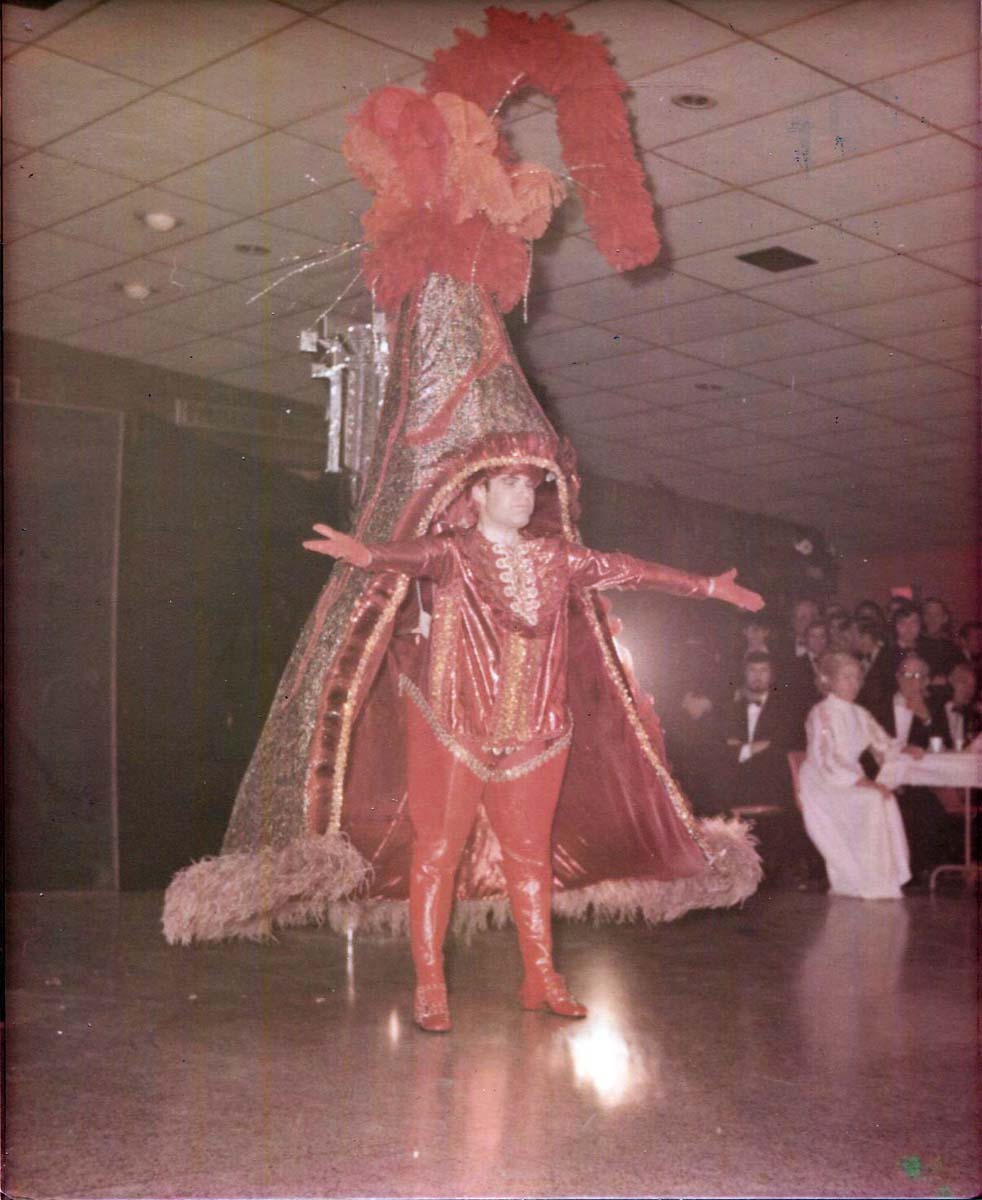
Ball Captain Albert Carey in costume as Volcano at 1971 Armeinius ball “Atlantis Redivivus.” Courtesy of the Louisiana State Museum
Armeinius first ventured to Chalmette for Ball VI (1974). “They appreciated the revenue,” Carey noted. To date, no gay ball at the Civic Auditorium (now called the Frederick J. Sigur Civic Center) has experienced a police raid. “Even though the Parish was conservative and Catholic, we never had an uncomfortable moment,” Carey wrote in the program notes for the 2018 Armeinius ball (“La Plume”).
Endowed with a statesmanlike status as a builder with influence, Carey developed a reputation as a go-to figure to face down crises. “You went from being an outlaw to an icon in a generation,” Carey observed of the elevation of gay leadership. “Albert professionally was an architect,” noted St. Bernard Parish school official and project collaborator Charles Cassar in an April 2026 interview. “His profession wasn’t being gay, right? Of course, officials understood or suspected his identity, but Albert could balance those things.” When DA Jim Garrison was politically wounded in the early 1970s, having lost a personal crusade to destroy the gay businessman Clay Shaw by falsely associating him with the Kennedy assassination, gays who remembered the Gaslight raid and murder pounced on the opportunity. A prominent male couple organized a private fundraiser for the rival DA candidate Harry Connick Sr. in the courtyard of their French Quarter home. “Harry Connick came, and he addressed the Gay Carnival clubs,” said Carey. “I went to that meeting. It was the first political meeting that anybody ever invited gay people to in New Orleans.” Connick unseated Garrison in 1973 with clandestine gay support.
When the AIDS crisis struck, Armeinius lost nearly half of its membership to the disease, and the Archdiocese of New Orleans donated an empty convent in the Marigny to a Franciscan priest named Father Bob Pawell for use as a hospice. “[Pawell] knew me, knew I was an architect, and he said, ‘Can you come help?’” Carey recalled. “I took my tape measure, and I measured the place from top and bottom to figure out how to convert these old cloisters into infirmary rooms . . . Imagine Kings and Queens of Armeinius on their hands and knees scrubbing, just trying to make the place presentable.” When the free community hospice, known as Project Lazarus, opened in 1985, the address had to be kept secret, lest neighbors campaign to evict so-called carriers of the epidemic. “Some good friends of mine ended up there,” remembered Carey. “Friends who, on that first day, scrubbed the floors ended up being residents of the place.”
Jerry Hocke, Carey’s partner of nearly twenty years, grew sick, went blind, and died on April 13, 1989. Overcome by grief, Carey sold their home at 7371 Cranbrook Drive. Like many who survived the plague years, Carey absorbed the maxim that you can’t take money with you. Embarking on a decade-long sabbatical from Armeinius, Carey developed a love for slot machines that, according to Jimmie Tarleton, grew so compulsive that it eventually cleaned out his bank accounts and forced him to move back in with his mother. “Now he got really, really hooked on gambling,” observed Tarleton, who opined that when Carey wasn’t giving back to others, he often felt the urge to gamble. “I could see something bad happening. When you gamble so much you never win, you know?” Carey regained his financial and emotional footing around the millennium, and he renewed his dedication to Armeinius in time for the krewe’s thirty-fifth anniversary ball in 2003.
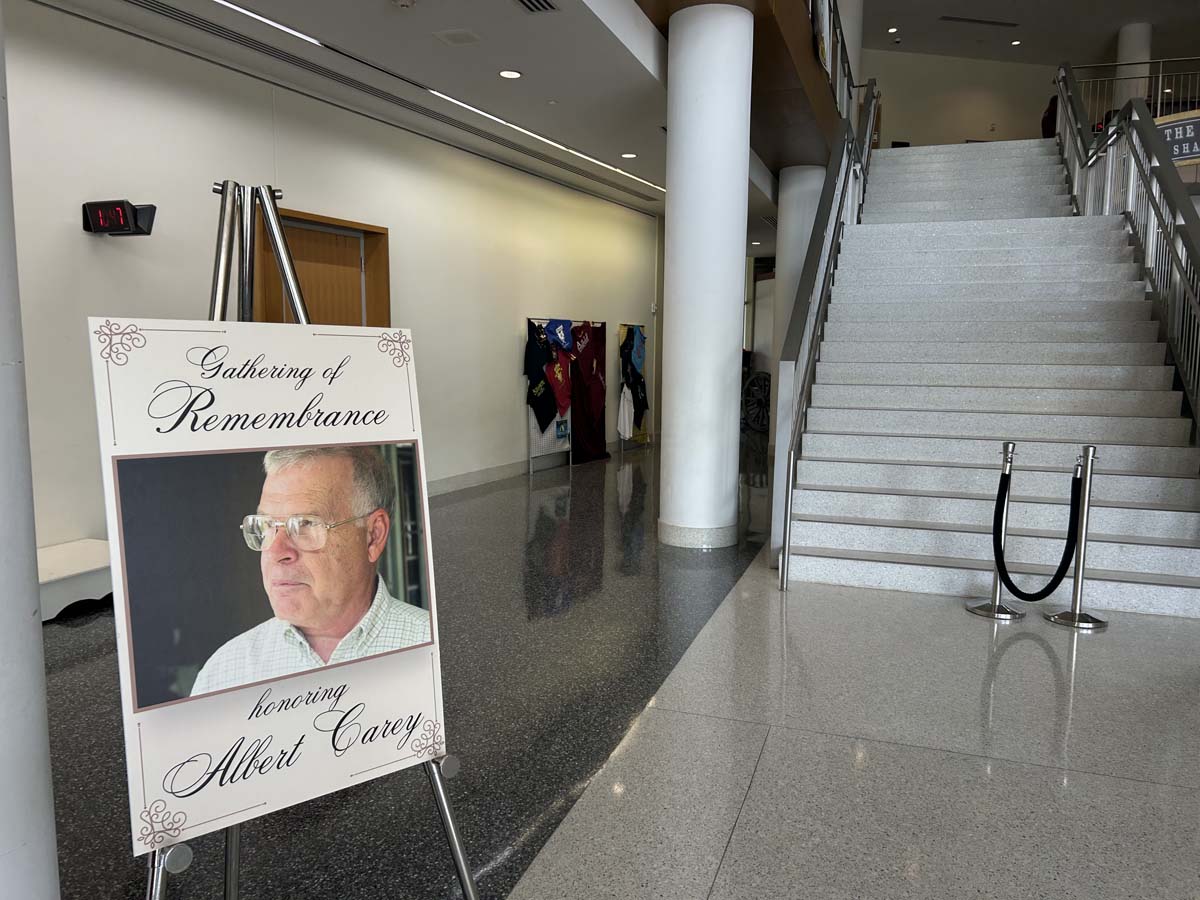
A memorial for Albert Carey on display in April 2026 in the lobby of the Chalmette Cultural Arts Center. Photo by Robert W. Fieseler
In the fallout of Hurricane Katrina, a 2005 Category 5 storm eclipsing even Hurricane Betsy’s turmoil, St. Bernard officials turned once more to Albert Carey to revive their community by rebuilding schools and administrative buildings. Realizing a small fortune through this work, Carey was determined to give back some of the windfall to the city that offered Gay Carnival its safe harbor. In September 2007, he donated $1 million to found the Chalmette Cultural Arts Foundation for the sole purpose of funding theatre productions at the local high school auditorium (called the Chalmette Cultural Arts Center), over which he supervised construction. At Chalmette High School Christmas variety shows in years that followed, “Mr. Carey” would turn up in a Santa Claus outfit with checks from the Foundation for upwards of $40,000.
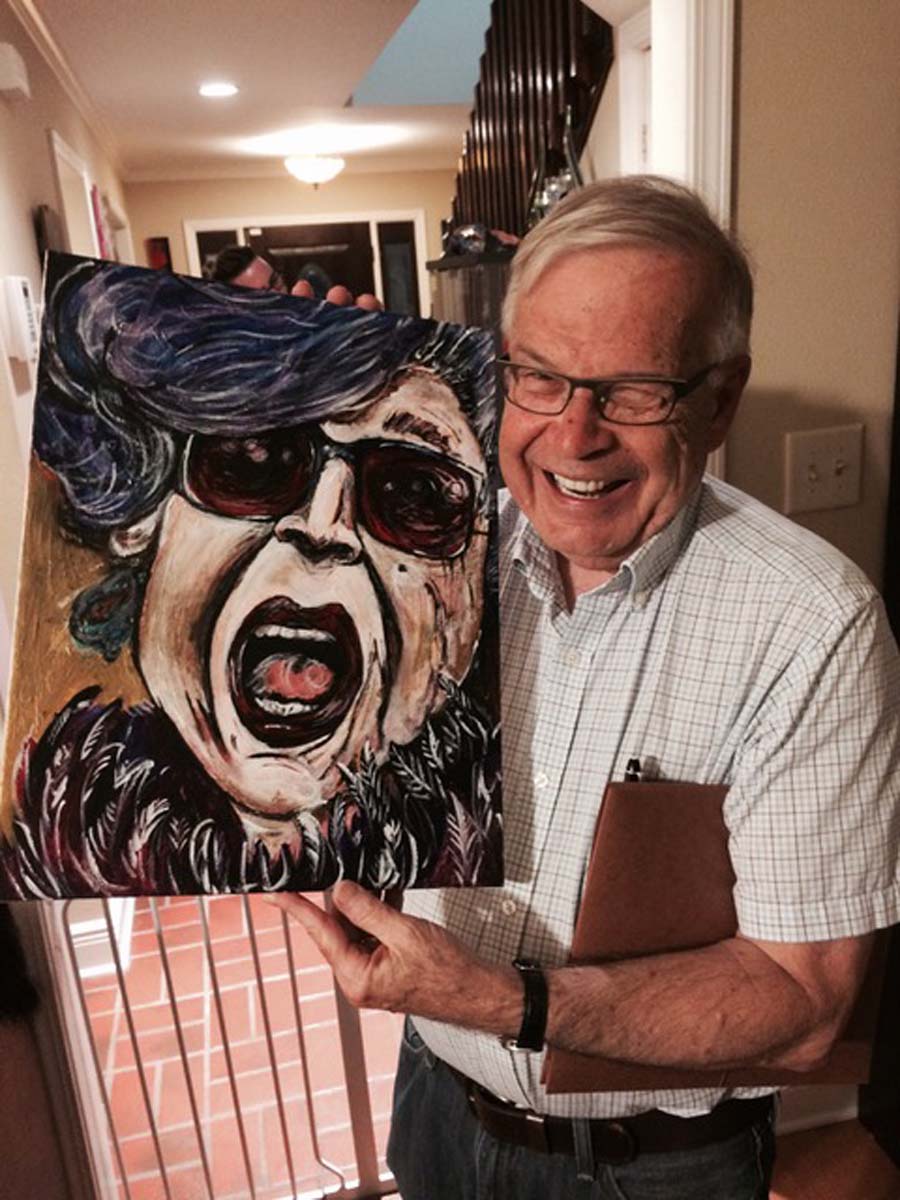
Albert Carey poses with portrait of alter ego “Madame Albertine” painted by artist Madison Faile, July 2015. Courtesy of Barrett DeLong
Carey retired in August 2017 with the completion of the last St. Bernard Parish school on his slate, Arlene Meraux Elementary on Paris Road. He moved with his sister Patty to Cape Cod, where he served as a board member for the Provincetown Tennessee Williams Theater Festival. Eventually feeling the pull back south, Carey relocated post-COVID to Diamondhead, Mississippi, and he paid his old pal Jimmie Tarleton a visit. “Something strange happened when he walked in my house, in my living room,” recalled Tarleton. “He just stood there, didn’t make a sound, didn’t look around. Nothing. He just stood there like in a daze.” It made Tarleton think back to the last time he saw that look on his best friend’s face: 1966, in the dressing room with Vivien Leigh, when he beheld a “little bit of Eternity”—or the closest thing to it, for a Streetcar fanatic who identified with the play’s tragic heroine.
Tarleton conjectured that his beloved Albert, standing frozen in his home, must be peering into the prism of his memories, or staring into the face of death, or hallucinating the visage of Blanche DuBois on her last free walk with a “whoever you are” doctor from the asylum, or having a series of strokes. “It was the strangest visit I’ve ever had,” said Tarleton. “And he never came back.” Albert John Carey Jr., architect of Gay Carnival, passed away the benefactor of numerous causes. He died peacefully but cash poor—with no ready savings besides unsold properties and less than $6,000 in a checking account—on January 2, 2026.
Robert W. Fieseler is a National Lesbian and Gay Journalists Association “Journalist of the Year” and the acclaimed nonfiction author of Tinderbox—winner of the Edgar Award and the Louisiana Literary Award, shortlisted for the Saroyan International Prize for Writing. His second book, American Scare: Florida’s Hidden Cold War on Black and Queer Lives, was released in 2025. He lives with his husband in New Orleans.