Winter 2025
The Womack Family
Preserving the tradition of cane syrup making in St. Helena Parish
Published: December 1, 2025
Last Updated: March 1, 2026
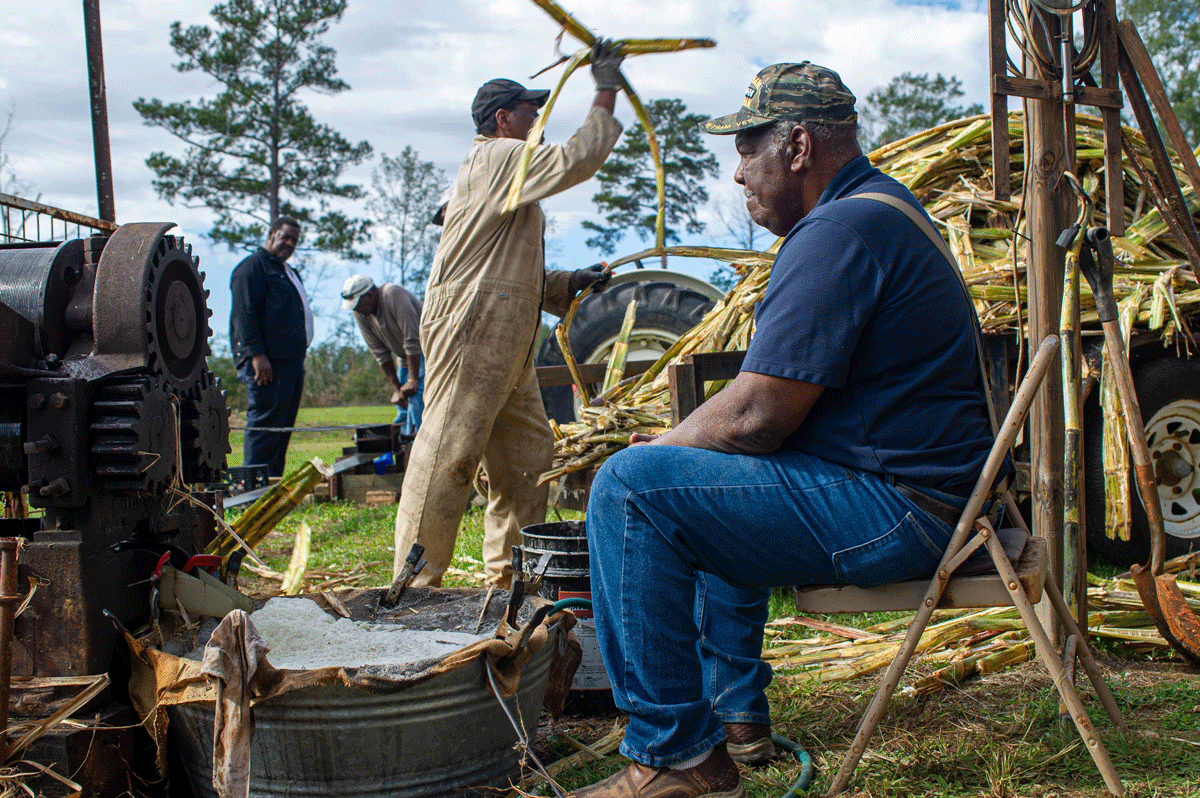
Photo by Donald Davis
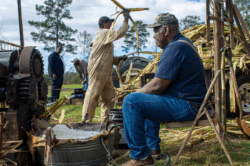
John Womack in St. Helena Parish continues his family’s tradition of syrup making by teaching the process to his son Cedrick.
Agriculture is a form of culture. It shapes local cuisines, traditions, and rituals. Festivals and celebrations often revolve around the harvest cycles and agricultural productivity; agricultural practices contribute to the development of communal values and social structures within farming communities. In the rural communities of St. Helena Parish, agriculture cultivation and dairy farms drove the local economy from the 1920s to the 1980s. The number of dairy and agricultural farms has since significantly diminished. The Womack family farm stands as a notable exception, steadfast in their commitment to producing cane syrup annually. The event brings family and community together, facilitating the sharing of stories, the transmission of skills, and the strengthening of familial bonds.
Following Thanksgiving, the Womacks commence their syrup-making process, employing traditional cane knives to harvest sugarcane stalks from the field, which are then transported to a grinding shed. Here, the stalks are fed into a machine to extract their juice, powered by the family’s 1940s tractor and a repurposed hay baler belt—a significant evolution from the days when mules and oxen performed this labor. Still, sugarcane farming is labor-intensive and takes a physical toll on its workers, whose hands show signs of wear and tear from years of farming. The workers spend long hours in the fields chopping and harvesting sugarcane under the hot sun for a few gallons of cane syrup.
For the Womacks, this practice transcends the production of syrup; it represents a cherished ritual that unites generations.
I photographed and documented the process of producing cane syrup for upcoming exhibitions in the Florida Parishes, aiming to help preserve this fading tradition. The work day began early, with a hearty breakfast to prepare for the demanding labor ahead. Cane syrup production started at dawn and extended late into the night to achieve the desired purity. John Womack and his wife, Mary, meticulously skimmed the extracted juice to eliminate large sugarcane fragments and impurities. Concurrently, John’s brother, Floyd, inserted pine wood into the blazing fire of the handmade red clay stove. Floyd monitored the syrup’s temperature with a refractometer, aiming for 226ºF. With a sharp eye, he carefully monitored the pans. No one dared touch the stove but Floyd, who has mastered this part of the craft through painstaking trial and error. The family acquired their expertise from seasoned syrup makers James Baker and Warner Hall of St. Helena Parish, meticulously observing every stage of the process before attempting it themselves.
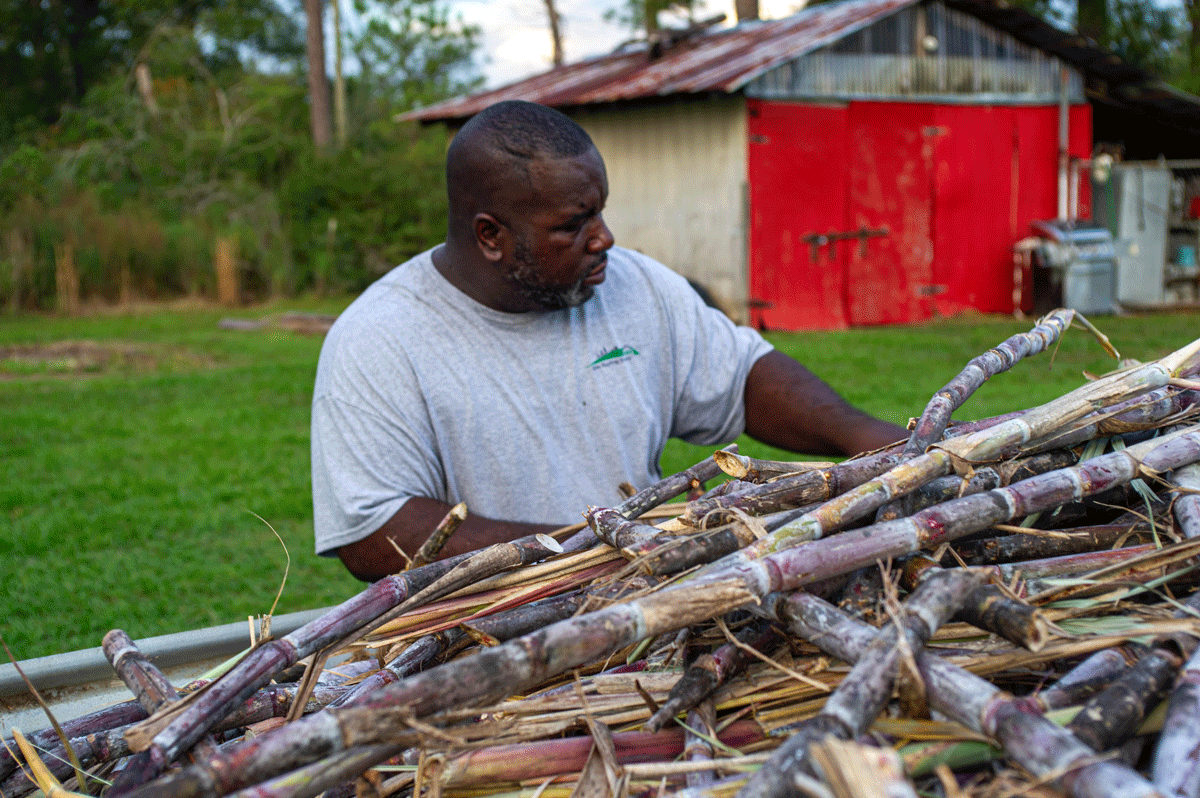
Cedrick Womack gathers and processes sugar cane stalks from which he and his family will make cane syrup. Photo by Donald Davis
For the Womacks, this practice transcends the production of syrup; it represents a cherished ritual that unites generations. The tradition of cane syrup production is waning—a reality that forty-two-year-old Cedrick Womack is resolute in resisting. Having grown up on a farm, Cedrick fondly recalled his early exposure to farming with his father John and grandfather, saying, “I was seven years old when I started riding on a tractor with my dad. I watched them prepare the ground for planting the cane and other crops.” On the old family homestead’s picturesque back road, the Womacks and their friends reminisced about those who were in attendance to make sweet-tasting cane syrup in years past. When they engage with the process, it feels as if they are visiting their ancestors.
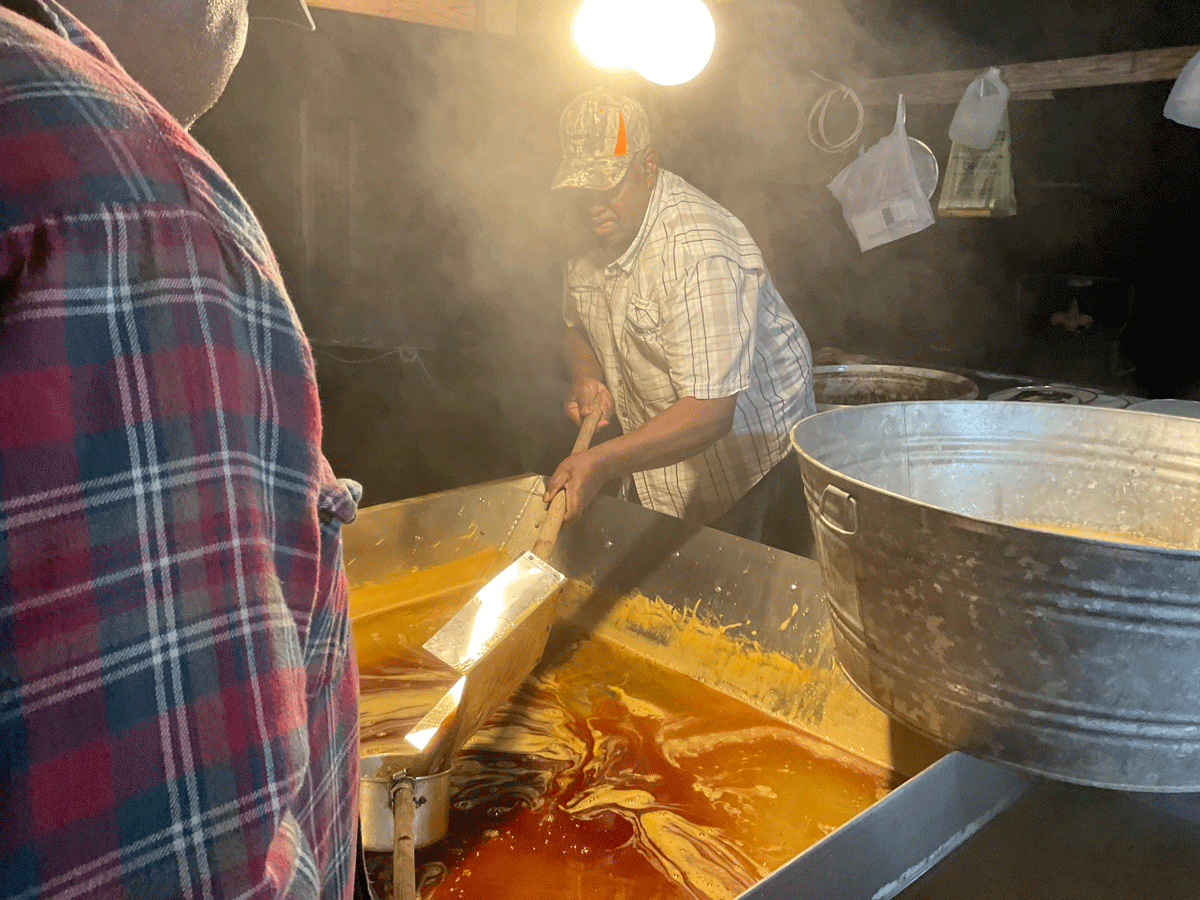
The Womack family processes sugar into cane syrup using old-fashioned methods. Photo by Donald Davis
Cedrick expressed concerns that each passing year may mark his final opportunity to uphold the tradition of cane syrup making. As his parents and uncle grow older, he is uncertain about how much longer they can sustain the craft. Cedrick shared his hope that the legacy could be preserved, saying, “I want to see more young people express an interest in the art of syrup making.” His use of the word “art” is deliberate: “Because we do it for the love and not the money.” He added: “The younger generation knows nothing about that. They want to know how much money they can make.” Cedrick also acknowledged the demanding nature of the process, observing, “I don’t think they want to do the hard work.”
Late into the evening, the scent of freshly baked biscuits and homemade sausage filled the air, signaling the culmination of the Womacks’ syrup-making process. What a great-tasting treat after a long day! Only to start all over tomorrow. Cedrick then bottled the finished product. Though the harvest season only lasts two to three weeks, the resulting syrup will find its use in local recipes all year long, serving not only as a staple ingredient but also as a sweet reminder of the rich historical narratives and collective memories of those who inhabit the region.
Antoinette Harrell, a genealogist, blogger, and author, has made significant contributions as a short documentary producer. She is the author of Images of America: African Americans in Tangipahoa and St. Helena Parishes and the founder of the Untold History Foundation.