Archaeology
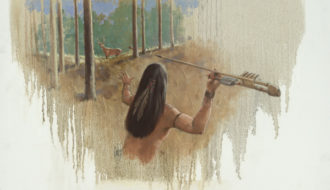
San Patrice Culture
This entry covers the San Patrice culture during the Late Paleoindian and Early Archaic Periods, 8800–6000 BCE.
This entry covers the San Patrice culture during the Late Paleoindian and Early Archaic Periods, 8800–6000 BCE.
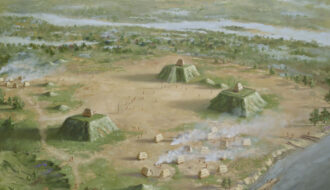
Once covering most of Louisiana, the Coles Creek culture is known for its distinctive ceremonial mound sites.
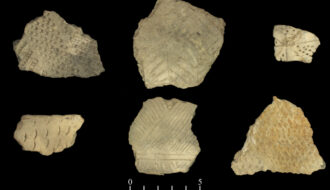
Tchefuncte culture flourished in Louisiana during the Early Woodland Period from 800 BCE to 1 CE.
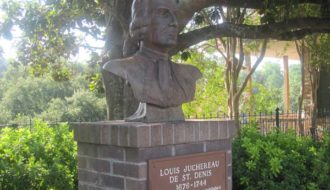
The history of the fort, mission, and settlement of Los Adaes reflects both intercolonial rivalry and cooperation among the Spanish, French, and Native Americans who lived along the border of New Spain and French Louisiana.
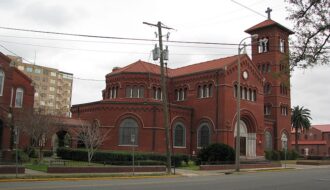
The Cathedral of the Immaculate Conception serves as the seat of the Diocese of Lake Charles, Louisiana.
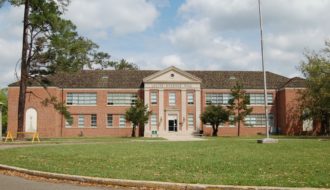
Southeastern Louisiana University, founded in 1925 as Hammond Junior College, was brought into the state system of higher education in 1928.
Badly damaged by the levee failure following Hurricane Katrina, St. Francis Cabrini Church was demolished despite the efforts of preservation advocates.
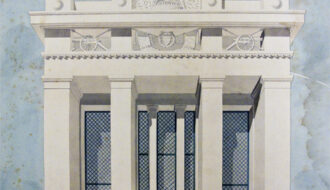
Louisiana architects Charles Dakin and James Dakin designed the Old State Capitol building in Baton Rouge, as well as the St. Charles Hotel in New Orleans, among other projects.
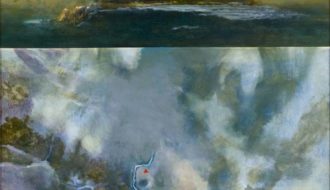
Painter Gaither Troutman Pope is best known for his landscapes of Louisiana's prairies and dark swamps influenced by nineteenth-century Luminist painters.
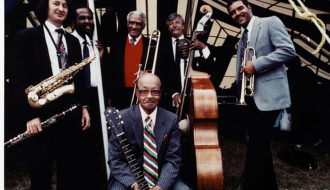
South Louisiana's musical traditions and Carnival celebrations fueled photographer Syndey Byrd's work for more than thirty years.
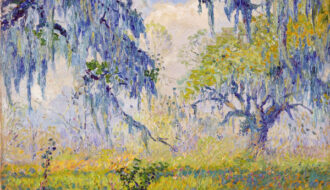
Artist Louis O. Griffith was not a native of Louisiana, but he discovered its charms on a visit to New Orleans and proceeded to depict the city in his artwork.
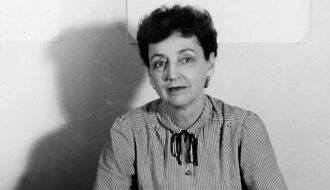
The Federal Art Project and Federal Writers Project helped employ out-of-work artists and writers during the Great Depression.
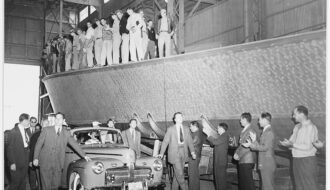
The United States’ entry into World War II spurred Louisiana’s recovery from the economic doldrums of the Great Depression.
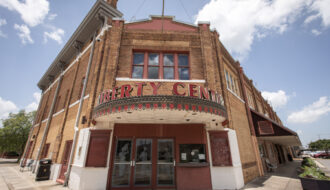
The historic theater in Eunice entertained generations as a movie theater, vaudeville house, and home of Rendez-vous des Cajuns.
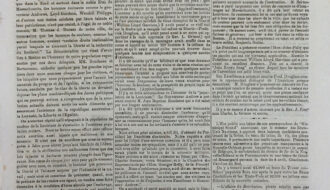
The South’s first Black newspaper, L’Union was an abolitionist journal that promoted full citizenship rights for men of African descent.
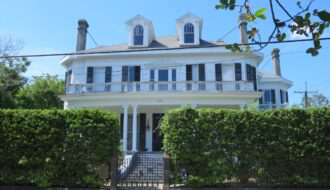
An early participant in the industrialization of film exhibition, distribution, and production, Louisiana adopted the moniker “Hollywood South” in the early twenty-first century.
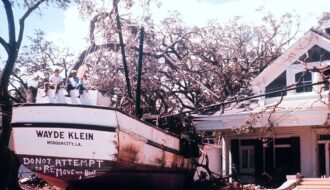
Hurricane Camille struck coastal Mississippi in mid-August of 1969, marking the first designated Category 5 storm and one of Louisiana’s most storied tropical weather events.
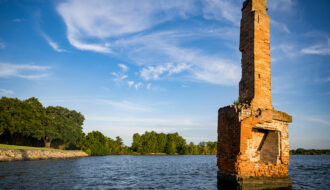
An oil drilling operation at Lake Peigneur accidentally punctured a salt dome, creating a sinkhole that swallowed barges and caused the Delcambre Canal to flow backwards.
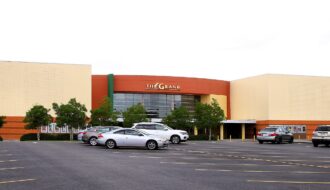
The Grand 16 Theater Shooting was a 2015 mass shooting in Lafayette that left three dead and injured nine, catapulting the city into a national discussion about gun control.
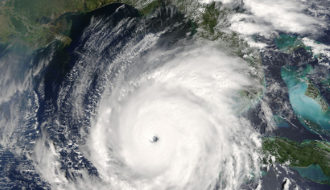
Making landfall in Cameron Parish on September 24, 2005, Hurricane Rita was the fourth-most-intense Atlantic hurricane ever recorded.
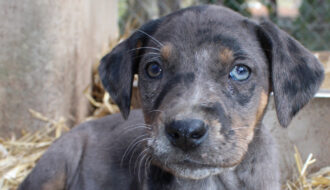
Louisiana's state dog has a distinctive look and personality
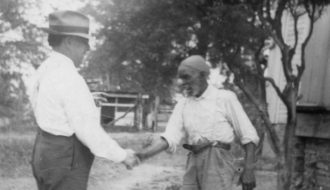
John Avery Lomax was a folklorist and musicologist who, with his son Alan Lomax, made the first recording of the Louisiana blues guitarist Huddie Ledbetter (Lead Belly) at the Louisiana State Penitentiary at Angola.
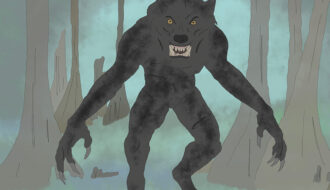
Louisiana’s folktales have been influenced by Indigenous peoples and the many cultural and ethnic groups that have immigrated to the state.
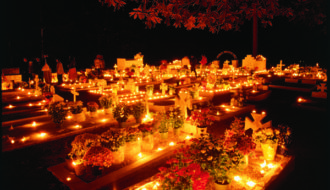
All Saints Day or All Hallows Day is a Catholic tradition honoring the saints and also deceased family members each November 1.

Creole cream cheese is a silky, slightly tart cheese used in sweet and savory dishes throughout Louisiana.
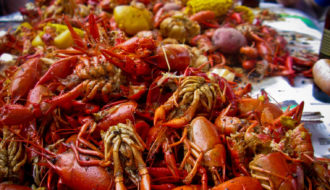
Crawfish boils are a springtime ritual in Louisiana.
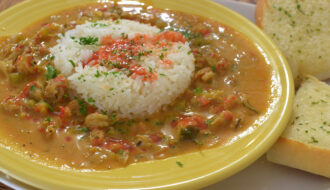
One of Louisiana’s renowned dishes, crawfish étouffée is typically comprised of crawfish cooked in its own juices with other seasonings and served over rice.
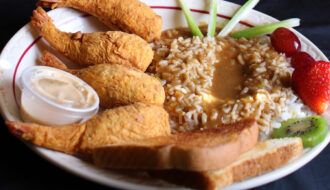
Popularized in the late 1950s, stuffed shrimp is a signature dish of Shreveport.
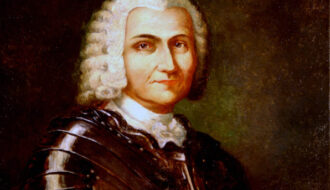
The Natchitoches settlement, founded in 1714, is the oldest in the Louisiana Territory.
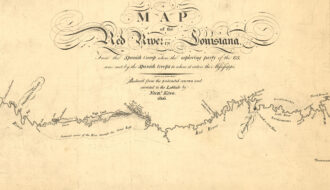
An American effort to explore the Louisiana Purchase territory was hindered by a log jam on the Red River and two hundred Spanish troops.
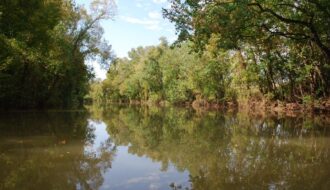
Before railroads and highways, Bayou Teche served as an important transportation route deep into the fertile interior of south-central Louisiana.
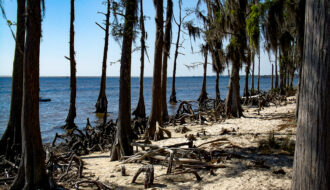
The Fontainebleau State Park bears the name of Bernard de Marigny's sugar plantation, which formerly occupied this site and was itself named after the estate of the French king Francois I.
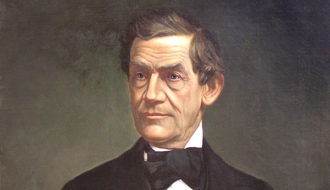
Edwin T. Merrick served as the chief justice of the Louisiana Supreme Court from 1855 to 1865.
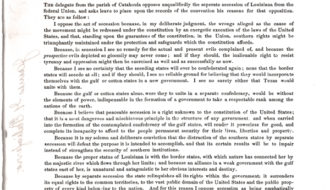
Louisiana seceded from the Union on January 26, 1861, although many in the state opposed the decision.
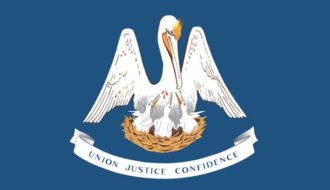
Charles Aubry was the last French governor of Louisiana before it reverted to Spanish control.
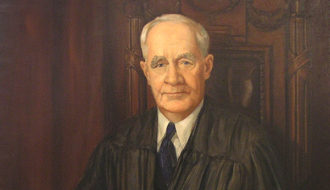
Charles A. O'Niell served as the chief justice of the Louisiana Supreme Court from 1922 to 1949.
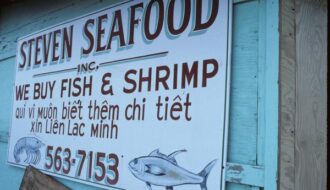
Vietnamese Americans are one of the newest major ethnic groups in Louisiana
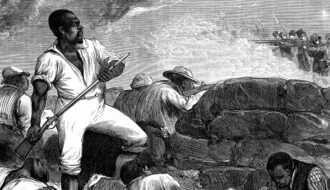
In 1873 white Louisianans responded to Reconstruction policies with violence, resulting in the Colfax Massacre.
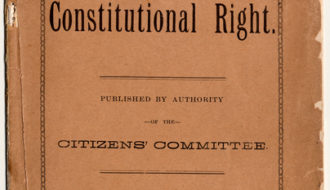
The Comité des Citoyens was an equal rights organization formed in 1891 that played a key role in the events leading up to Plessy v. Ferguson.
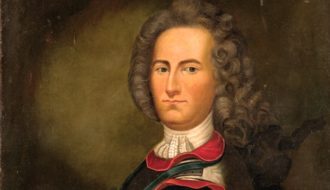
French naval officer Louis Billouart, Chevalier de Kerlerec served as governor of Louisiana between 1753 and 1763.
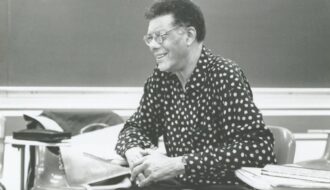
Tom Dent was a New Orleans poet, playwright, journalist, and researcher known for his contributions to literature and the Black Arts and civil rights movements.
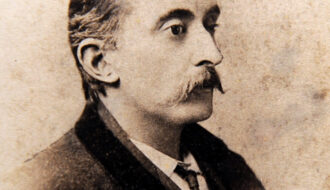
From the time of colonial exploration to the present, Louisiana’s landscape has inspired a rich variety of nature writing.
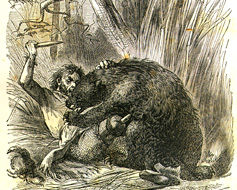
Henry Clay Lewis trained as a doctor in Louisiana and also contributed to the nineteenth-century literary genre of southwestern humor.
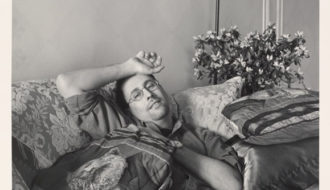
Louisiana drama, like all Louisiana literature, is a rich and diverse subject.
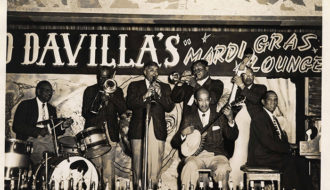
Traditional jazz and early rhythm and blues pianist Joe Robichaux may be best remembered as bandleader of the New Orleans Rhythm Boys.
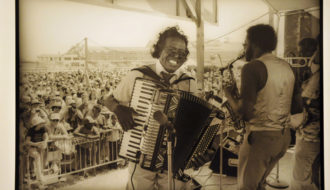
Founded in 1970, the New Orleans Jazz & Heritage Festival, known as Jazz Fest, draws hundreds of thousands of visitors a year to experience the music, cuisine, and cultural heritage of Louisiana.
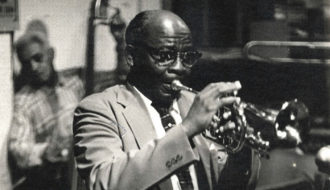
Avery “Kid” Howard began his musical career in New Orleans, performing with the Eureka Brass Band and the Tuxedo Brass Band before going on to lead his own group, the Kid Howard Brass Band.
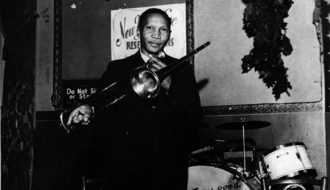
New Orleans jazz musician Jim Robinson's consistency and appealing sound made him one of the most prominent trombonists of his time.
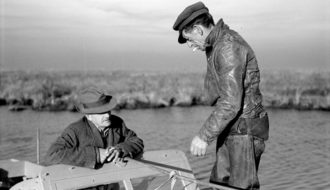
Louisiana's Isleños descend from Canary Islanders who immigrated to the southeastern part of the state in the late 1700s, when Spain ruled the colony.
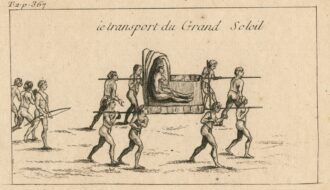
The Natchez are an American Indian group that lived along the Lower Mississippi River during the rise of European colonialism.
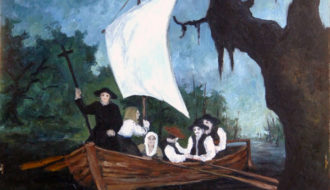
Cajuns are the descendants of Acadian exiles from what are now the maritime provinces of Canada–Nova Scotia, New Brunswick, and Prince Edward Island–who migrated to southern Louisiana.
The Choctaw-Apache Tribe of Ebarb is Louisiana’s second-largest tribe, with more than seven thousand enrolled citizens.
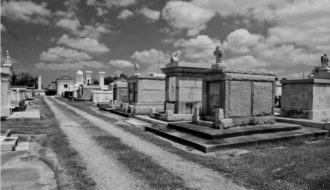
The Cypress Grove Cemetery in New Orleans has a monumental entrance gate suggesting a triumphal passage from one world to the next.
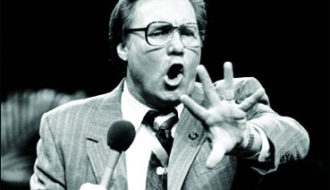
Called the "King of Honky Tonk Heaven" by Newsweek in 1982, Ferriday's Jimmy Swaggart was America's most popular televangelist in the 1980s.
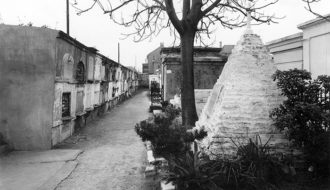
Established in 1789, St. Louis Cemetery No. 1 is the oldest cemetery in the city of New Orleans.
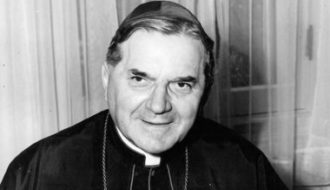
Archbishop Joseph Rummel was among the first religious leaders in Louisiana to proclaim the immorality of racism and ordered the desegregation of Catholic schools in New Orleans.

For a state experiencing land loss at an alarming rate, coastal restoration has become an urgent need.
The United States’ entry into World War II spurred Louisiana’s recovery from the economic doldrums of the Great Depression.
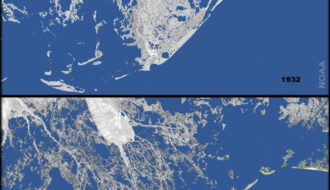
The gradual loss of Louisiana’s coastal wetlands is a slow-moving disaster largely set in motion by a series of human interventions in natural processes.
An American effort to explore the Louisiana Purchase territory was hindered by a log jam on the Red River and two hundred Spanish troops.
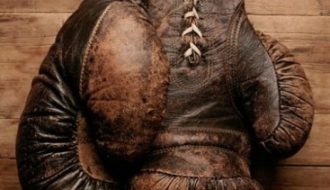
Ralph Dupas emerged from humble beginnings in New Orleans to become a world champion boxer
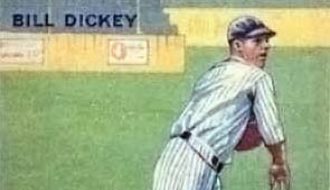
Baseball great William Malcolm "Bill" Dickey, a native of Bastrop, was a Hall of Fame catcher for the New York Yankees.
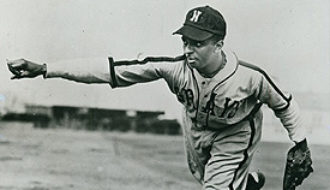
New Orleans native Johnny Wright was one of the first African American baseball players to sign with the Brooklyn Dodgers, but he never reached the major leagues.

Before his retirement in 2002, basketball coach Leon Barmore led the Lady Techsters from Louisiana Tech University to nine Final Four appearances.
One-Year Subscription (4 issues) : $25.00
Two-Year Subscription (8 issues) : $40.00